

Category: Wholeness
-
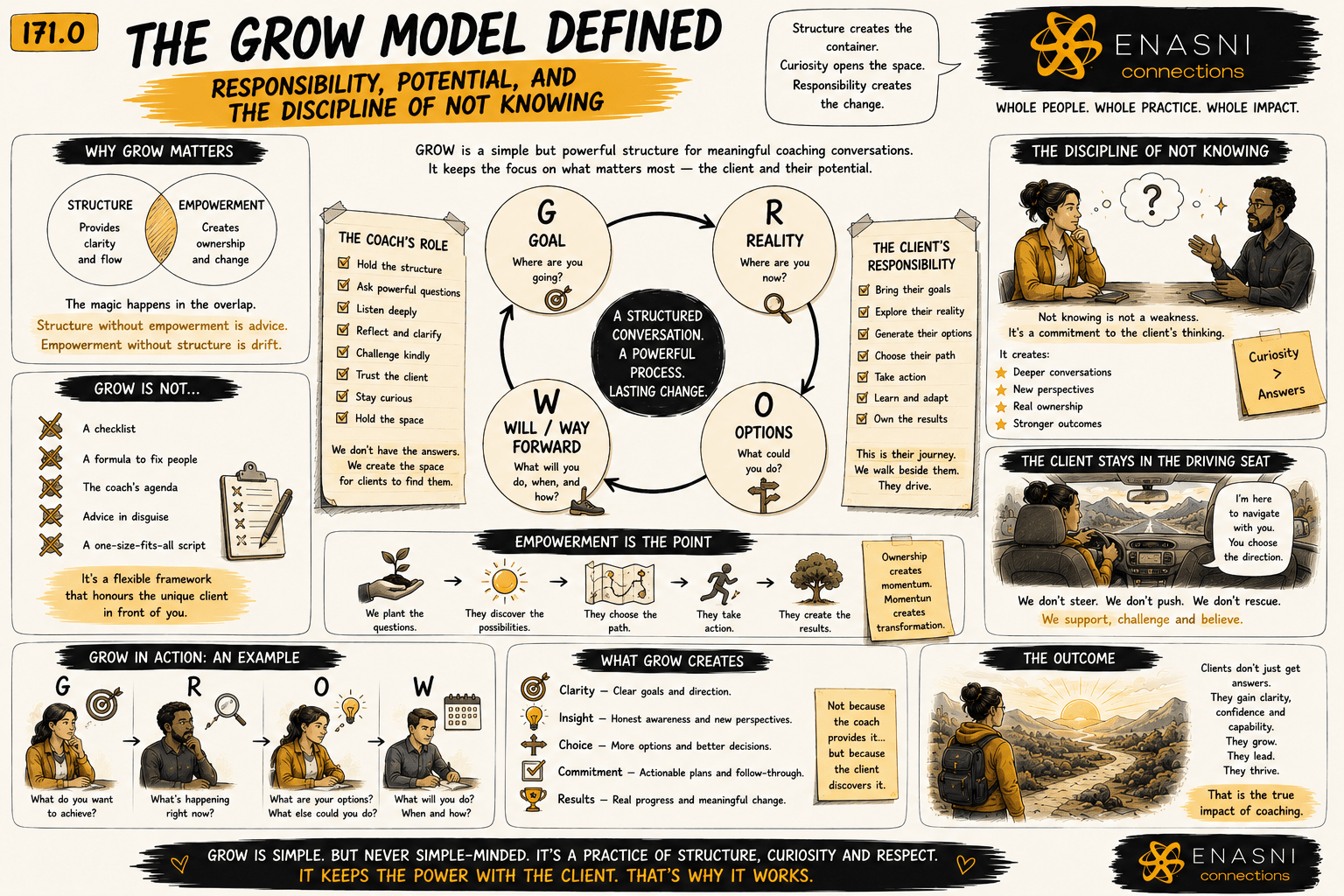
Responsibility, Potential, and the Discipline of Not Knowing The GROW model matters because structure is far removed from empowerment on its own, and especially because coaching only works when responsibility remains with the client rather than transferring subtly to the coach. This post defines the GROW model not as a technique to follow, but as a…
-
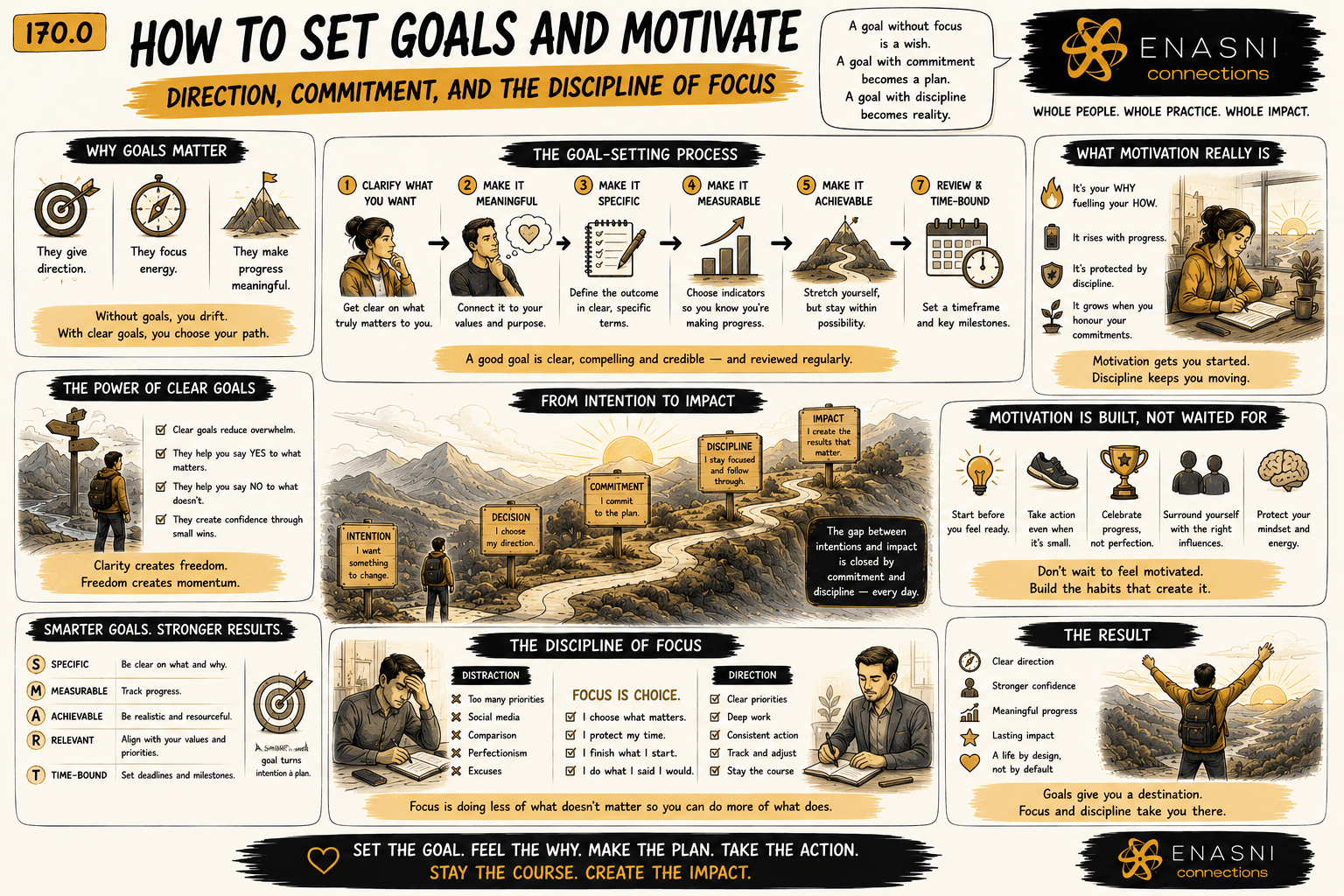
Goal setting matters because desire is far removed from direction on its own, and especially because goals shape behaviour, attention, identity, and stress long before results appear. This post explores how goals actually work, why motivation must accompany them, and how poorly formed goals quietly create pressure, frustration, and self-violence rather than progress from a wholeness perspective.
-
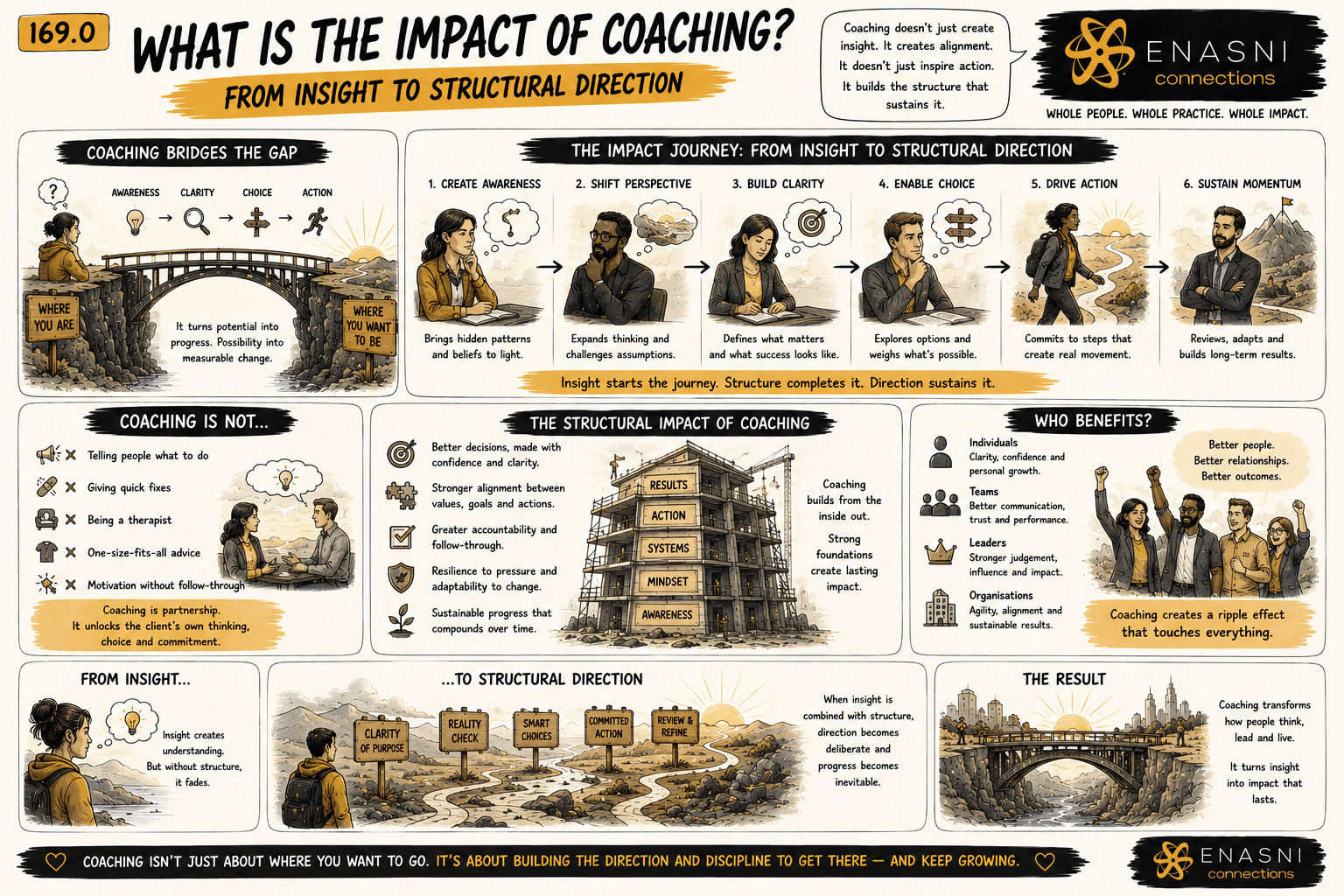
From Insight to Structural Direction The impact of coaching matters because feeling better is far removed from living differently on its own, and especially because coaching introduces a new form of structural direction that reorganises behaviour, perception, and choice over time. This post examines the real impact of coaching as described by lived experience — not…
-
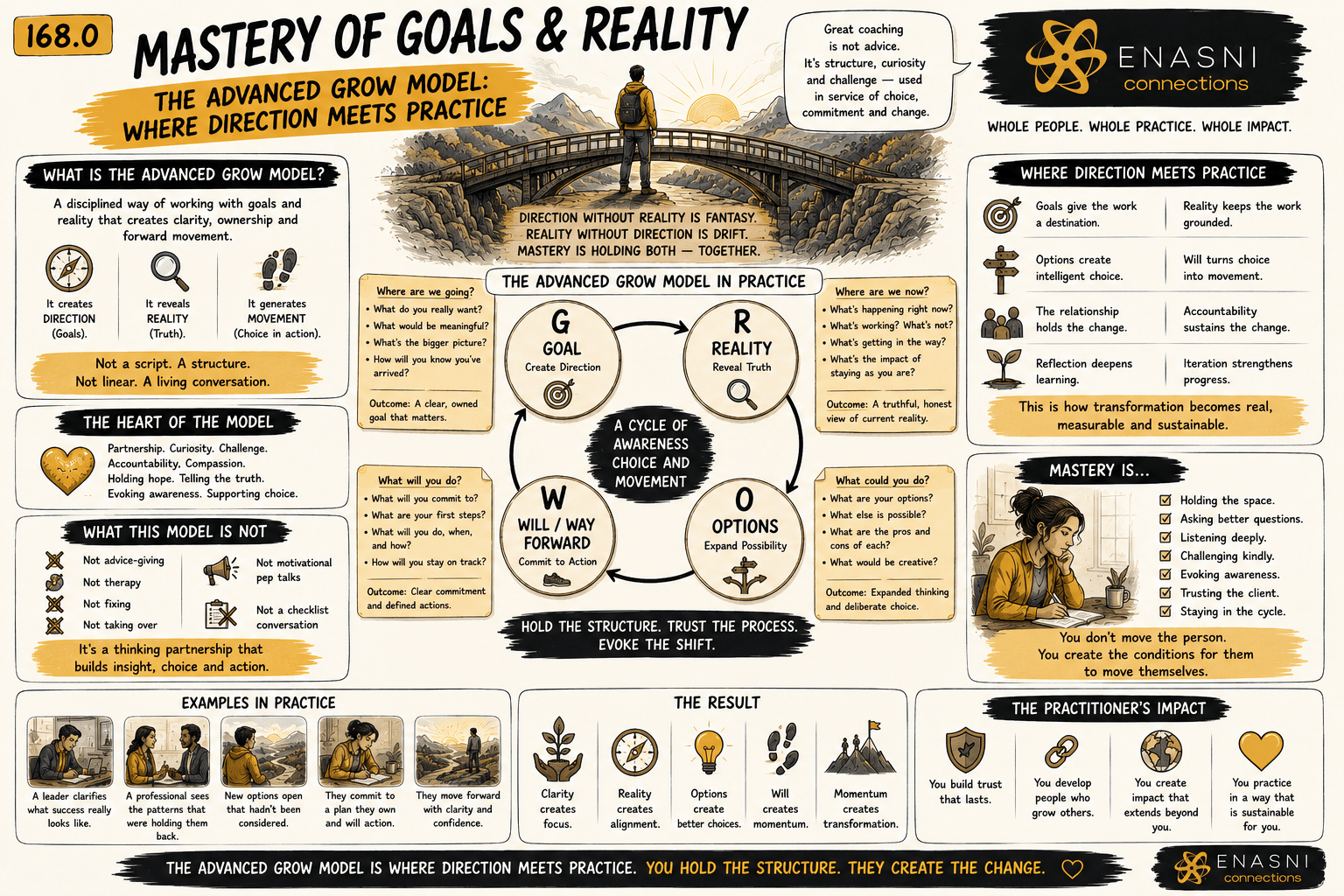
The Advanced GROW Model: Where Direction Meets Practice Chapter 5 begins here because containment is far removed from direction on its own, and especially because goals and reality only become meaningful once they are worked with under real conditions rather than discussed in theory. This post introduces the Advanced GROW focus of Chapter 5, setting…
-
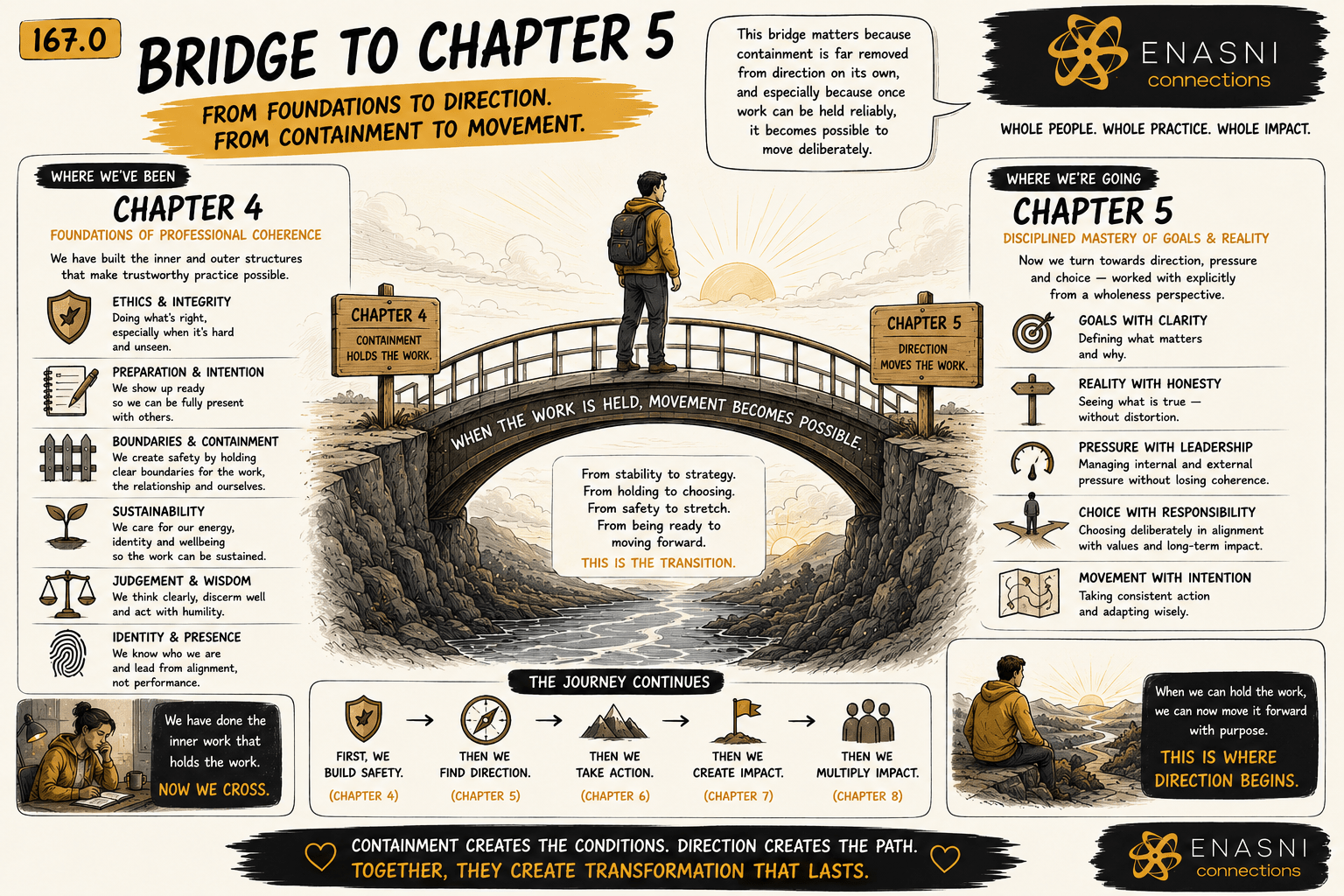
From Holding the Work to Directing It This bridge matters because containment is far removed from direction on its own, and especially because once work can be held reliably, it becomes possible to move deliberately. This post marks the transition from Chapter 4 into Chapter 5 — from the foundations of professional wholeness, ethics, preparation, judgement,…
-
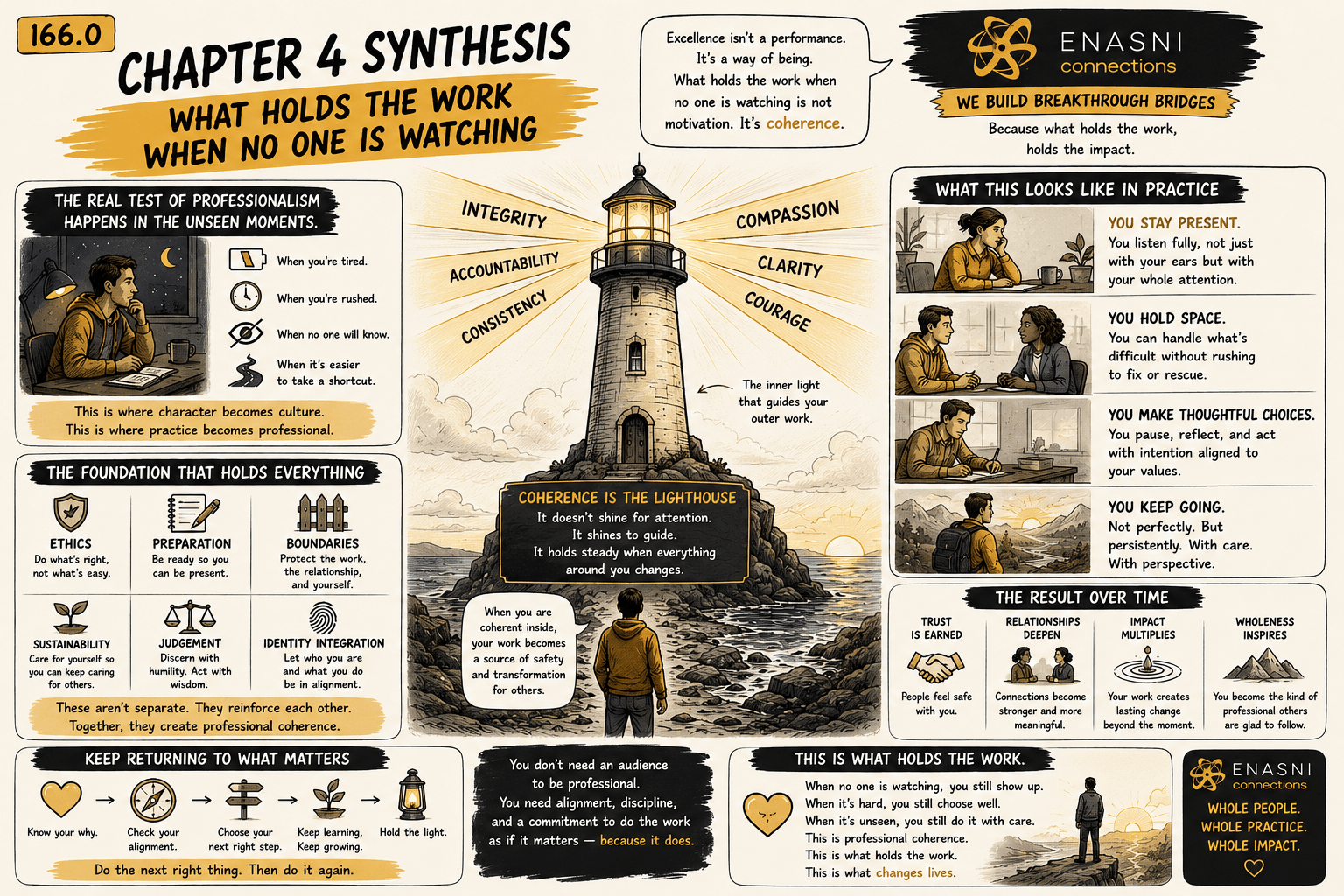
What Holds the Work When No One Is Watching Chapter 4 matters because competence is far removed from trustworthiness on its own, and especially because what defines a profession is not what it teaches, but what it reliably holds under pressure. This synthesis integrates the full arc of Chapter 4 into one organising stance — showing…
-
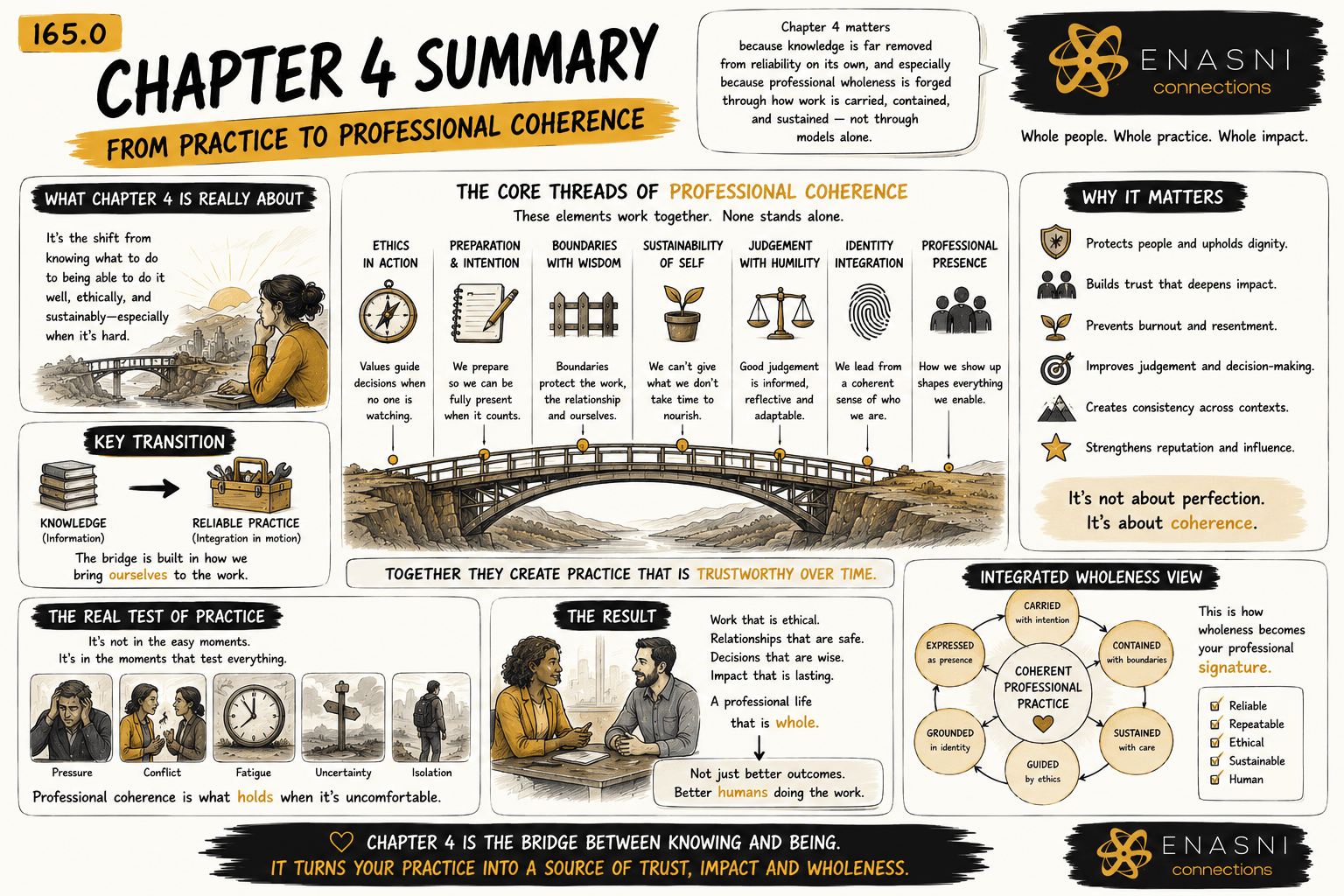
From Practice to Professional Coherence Chapter 4 matters because knowledge is far removed from reliability on its own, and especially because professional wholeness is forged through how work is carried, contained, and sustained — not through models alone. This summary gathers the core threads of Chapter 4 into a single integrated view, showing how ethics, preparation,…