

Category: Wholeness
-
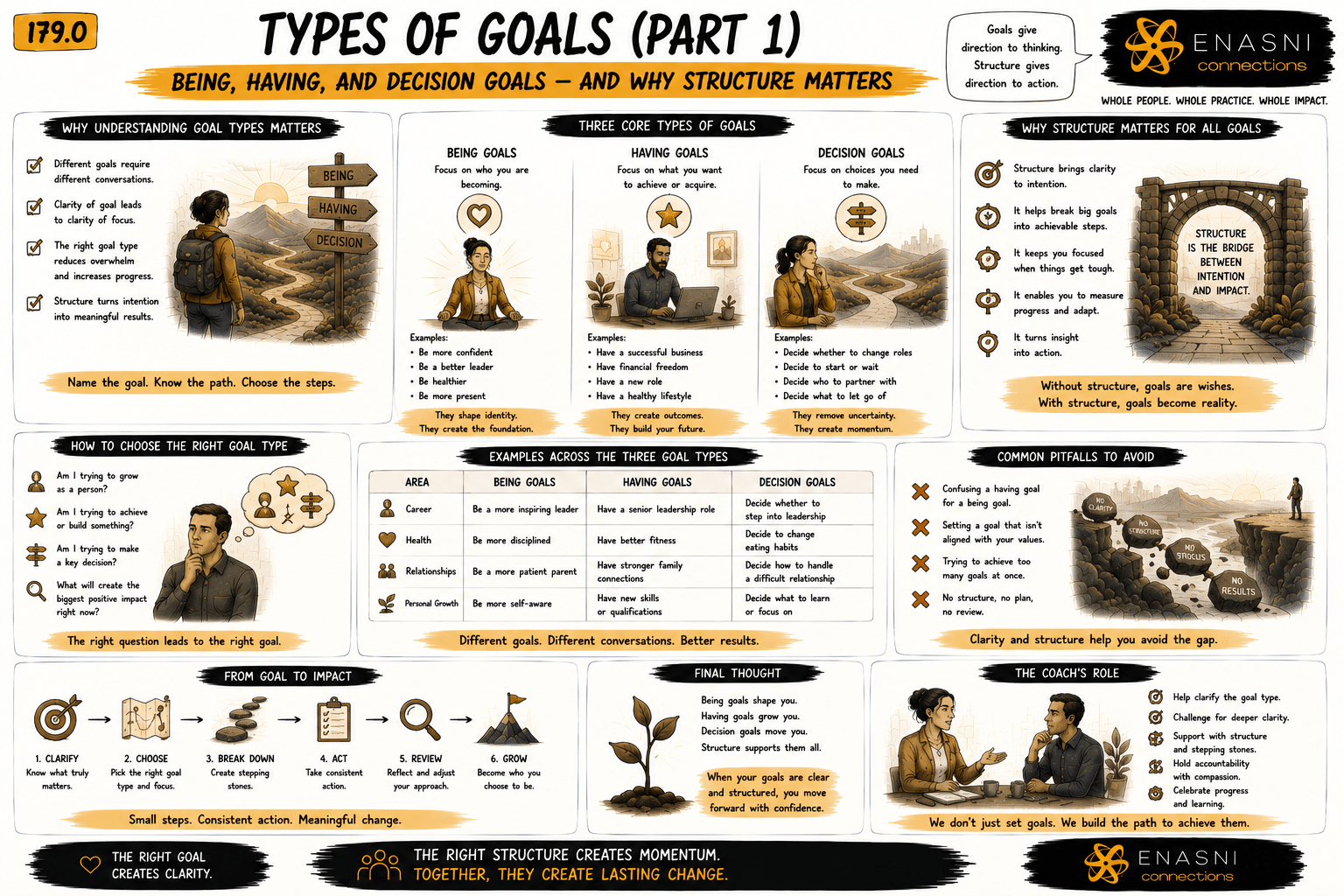
Being, Having, and Decision Goals — and Why Structure Matters Understanding goal types matters because effort is far removed from progress on its own, and especially because confusing different kinds of goals leads to misplaced action, frustration, and stalled momentum. This post introduces three core goal types commonly brought into coaching — Being Goals, Having Goals, and Decision Goals —…
-
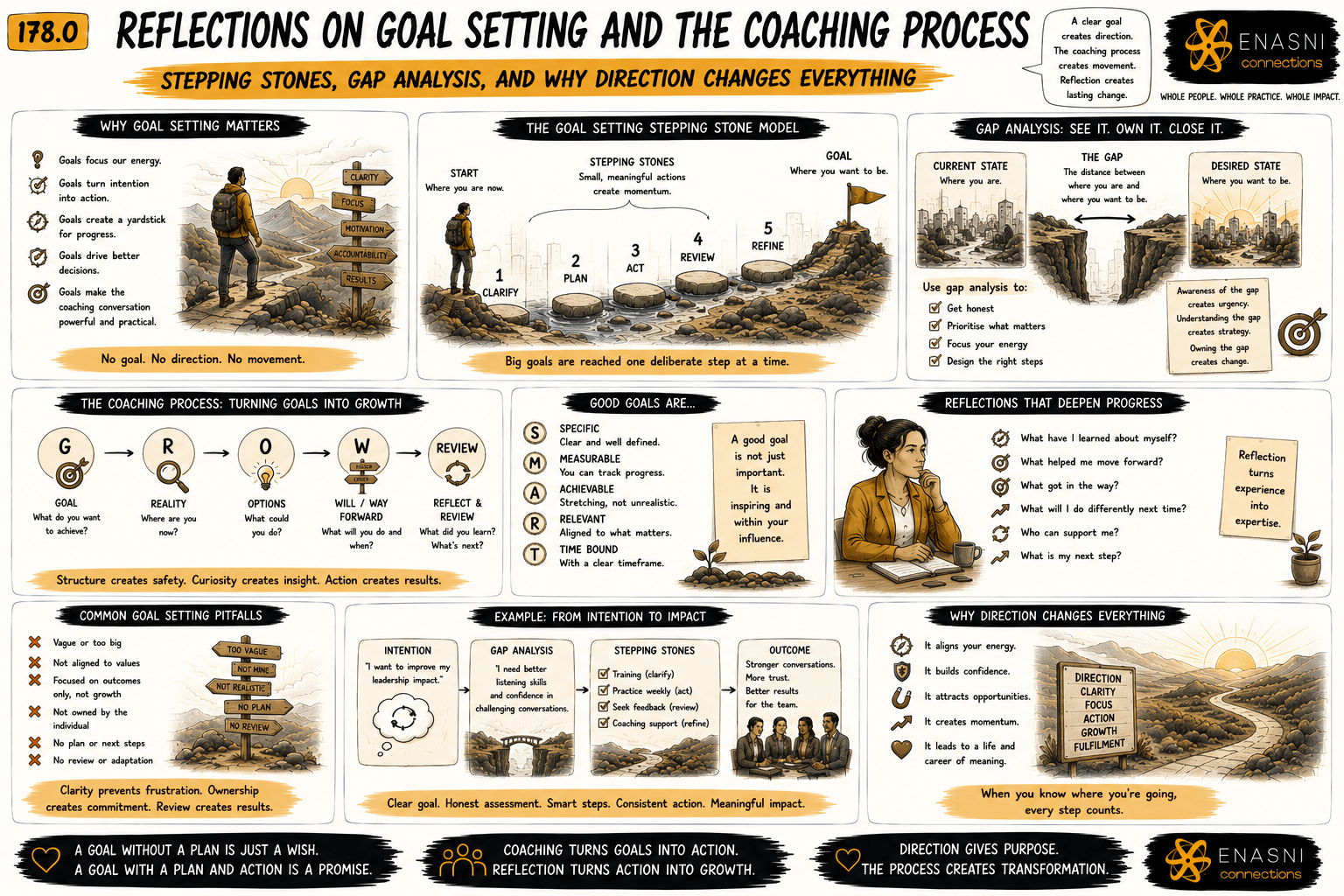
Stepping Stones, Gap Analysis, and Why Direction Changes Everything Goal setting matters because intention is far removed from movement on its own, and especially because coaching only becomes effective when direction is defined before effort is applied. This post reflects on goal setting as a central coaching discipline, drawing from practical coaching experience to examine how…
-
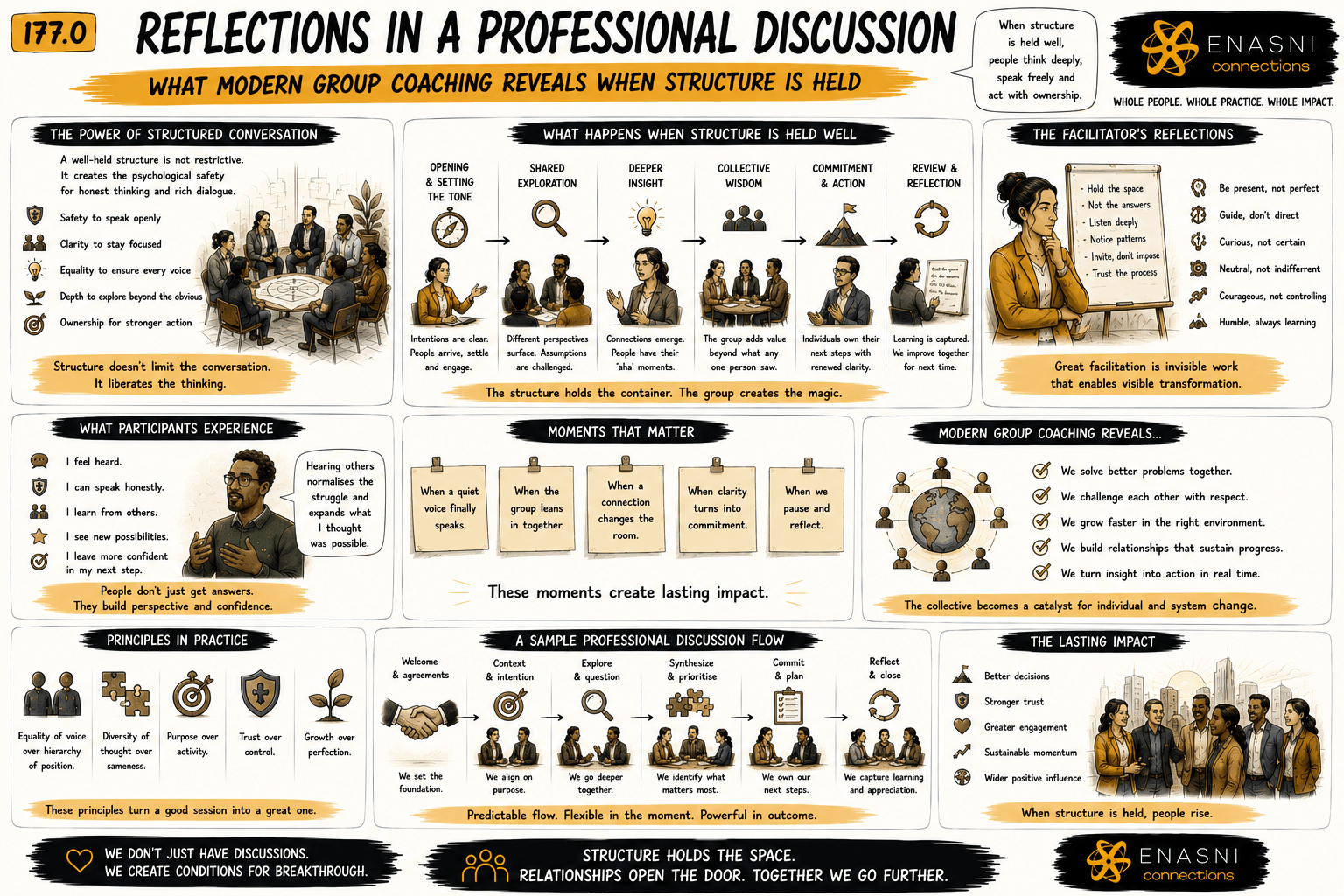
What Modern Group Coaching Reveals When Structure Is Held Reflection matters because experience is far removed from learning on its own, and especially because professional growth depends on the ability to extract principle from practice rather than opinion from outcome. This post reflects on a live group coaching session facilitated with the South London Coaches, examining…
-
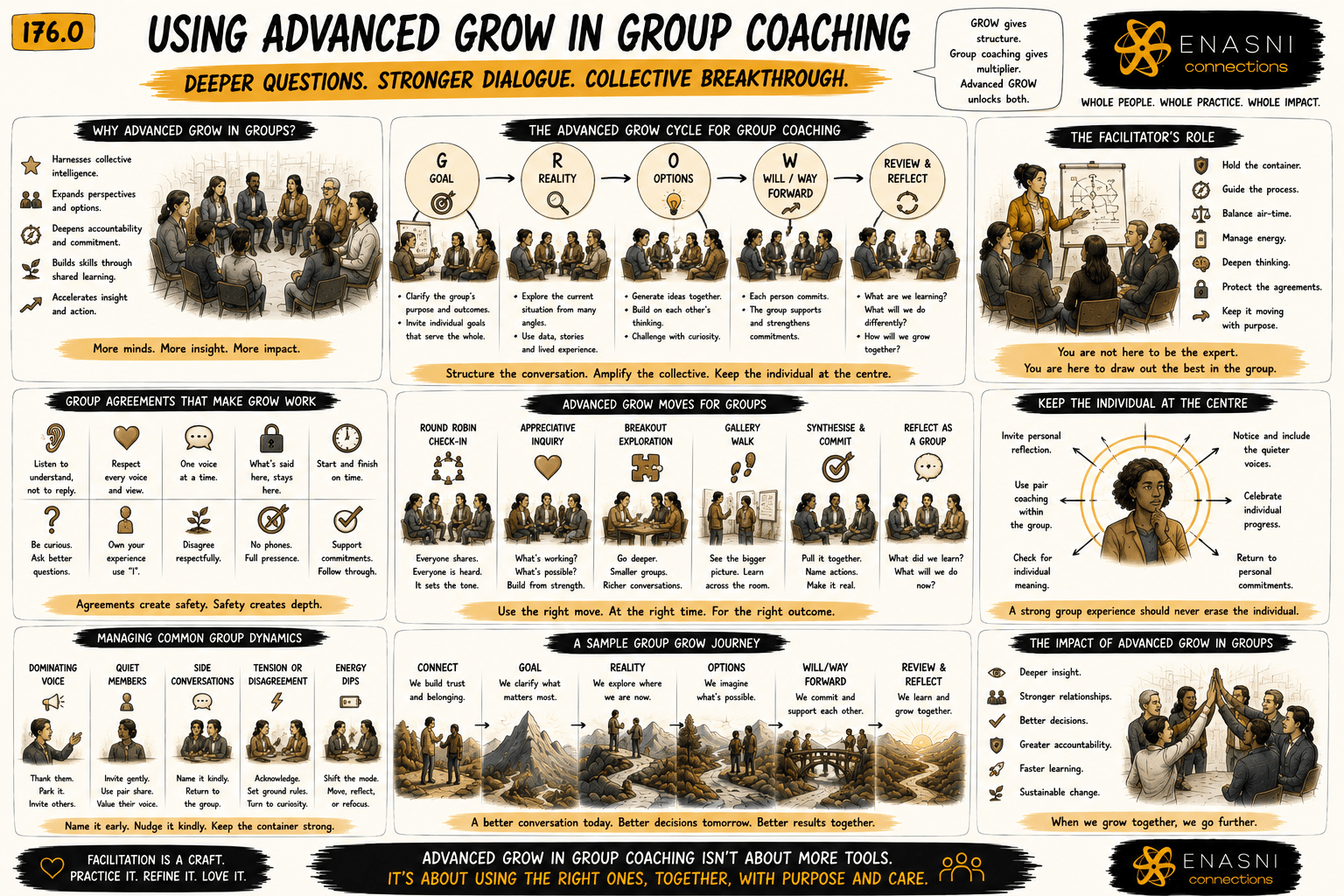
What Adapts, What Holds, and Why G + R Matter Most Advanced GROW matters in group coaching because scale is far removed from simplicity on its own, and especially because working with multiple people simultaneously magnifies both the strengths and the risks of structured models. This post explores how the Goal and Reality stages of GROW adapt in group coaching,…
-
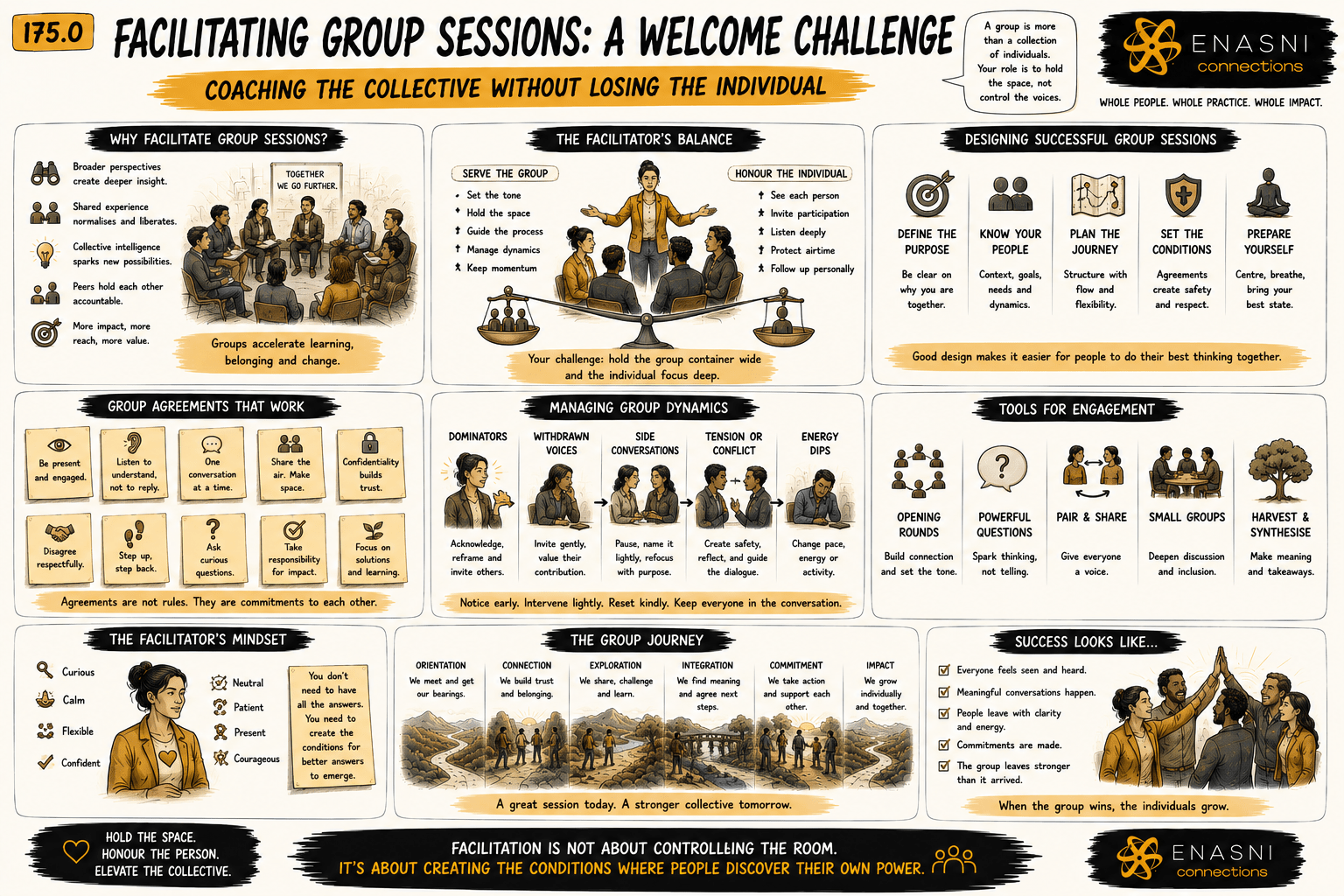
Coaching the Collective Without Losing the Individual Group coaching matters because multiplying voices is far removed from multiplying insight on its own, and especially because facilitating a collective requires the coach to hold structure, pace, safety, and responsibility across many nervous systems at once. This post explores what makes group coaching uniquely challenging and uniquely powerful,…
-
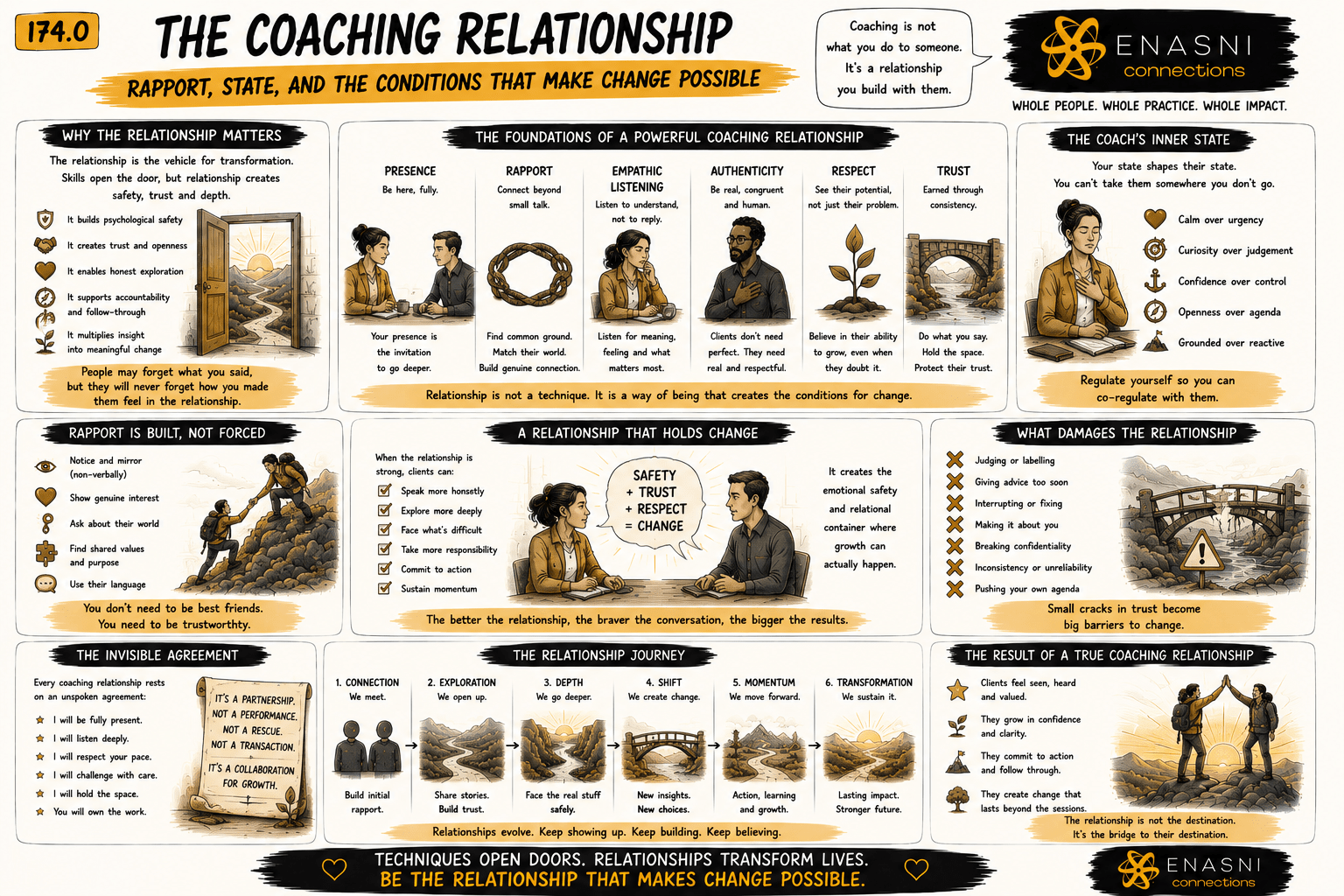
Rapport, State, and the Conditions That Make Change Possible The coaching relationship matters because technique is far removed from effectiveness on its own, and especially because no goal, model, or question can function properly without a relationship capable of holding attention, emotion, and responsibility. This post clarifies what actually empowers the coaching relationship, how it is…
-
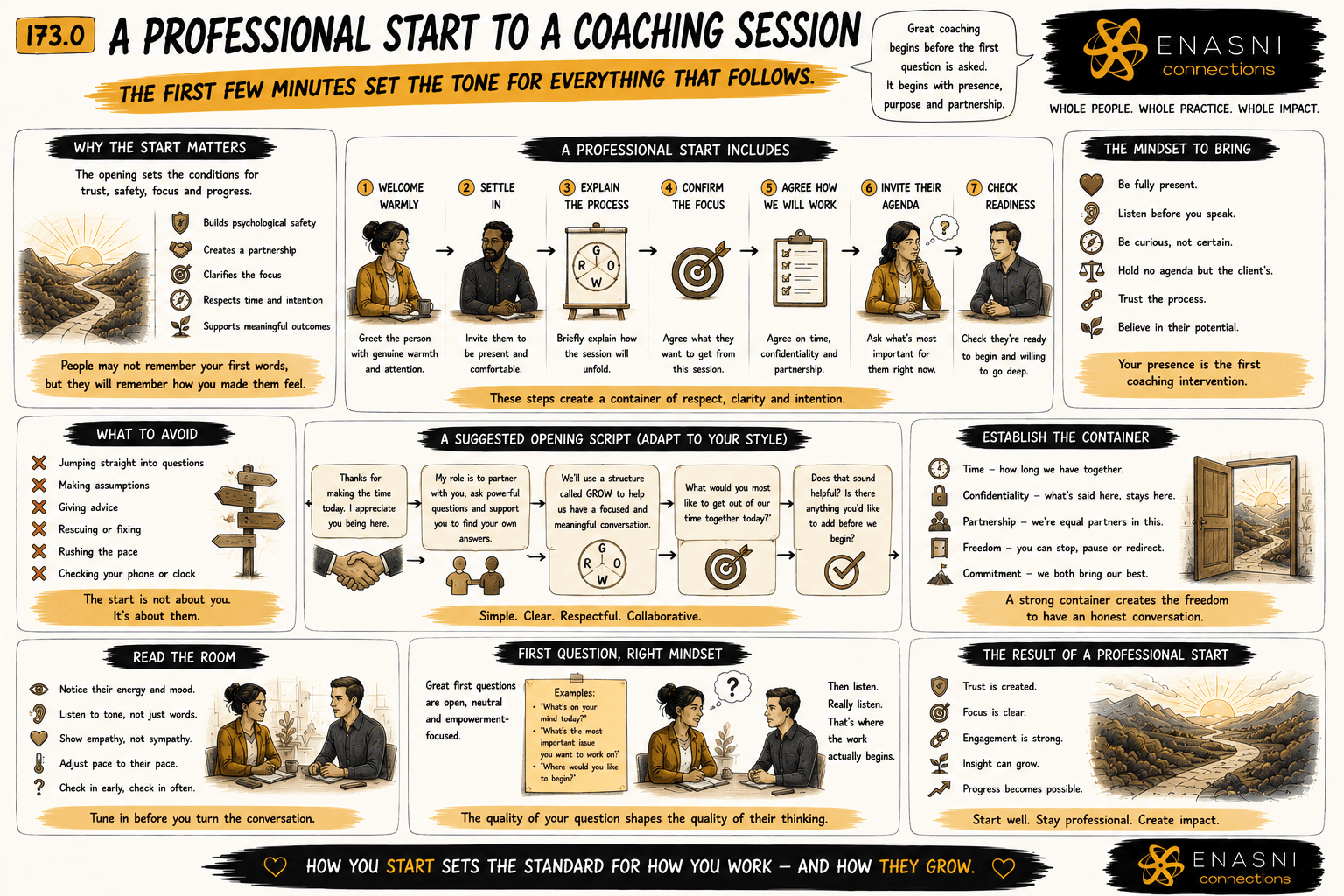
Setting the Conditions for Direction The start of a coaching session matters because intention is far removed from effectiveness on its own, and especially because how a session begins determines whether goals and reality can be worked with honestly, calmly, and productively. This post clarifies what a professional start to a coaching session actually involves, why…