

Category: Coaching
-
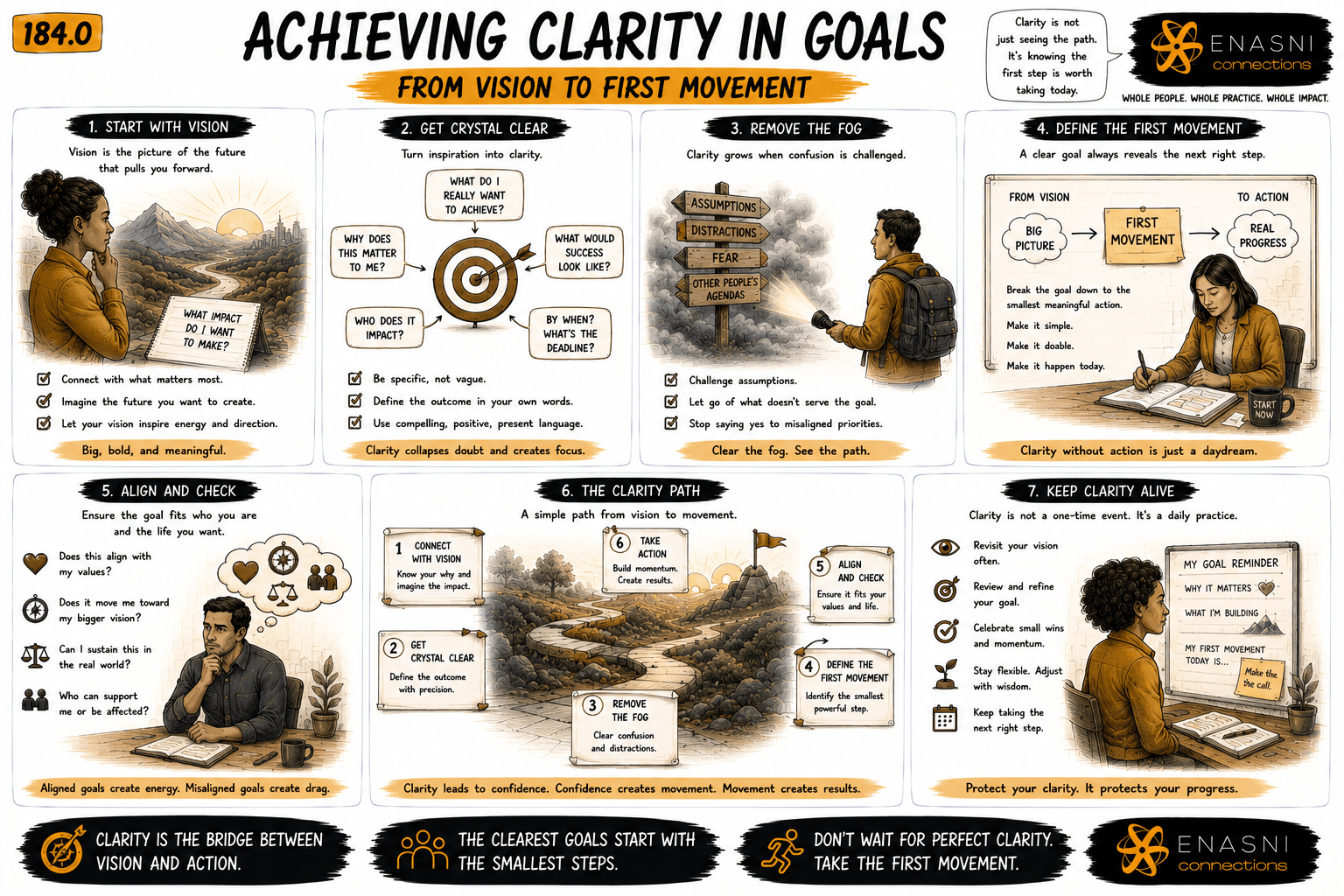
From Vision to First Movement Clarity matters because motivation is far removed from progress on its own, and especially because without clarity, effort disperses, confidence erodes, and even meaningful goals begin to feel heavy rather than energising. This post explores how coaches support clients to achieve clarity in goals by visualising outcomes, breaking complexity into manageable…
-
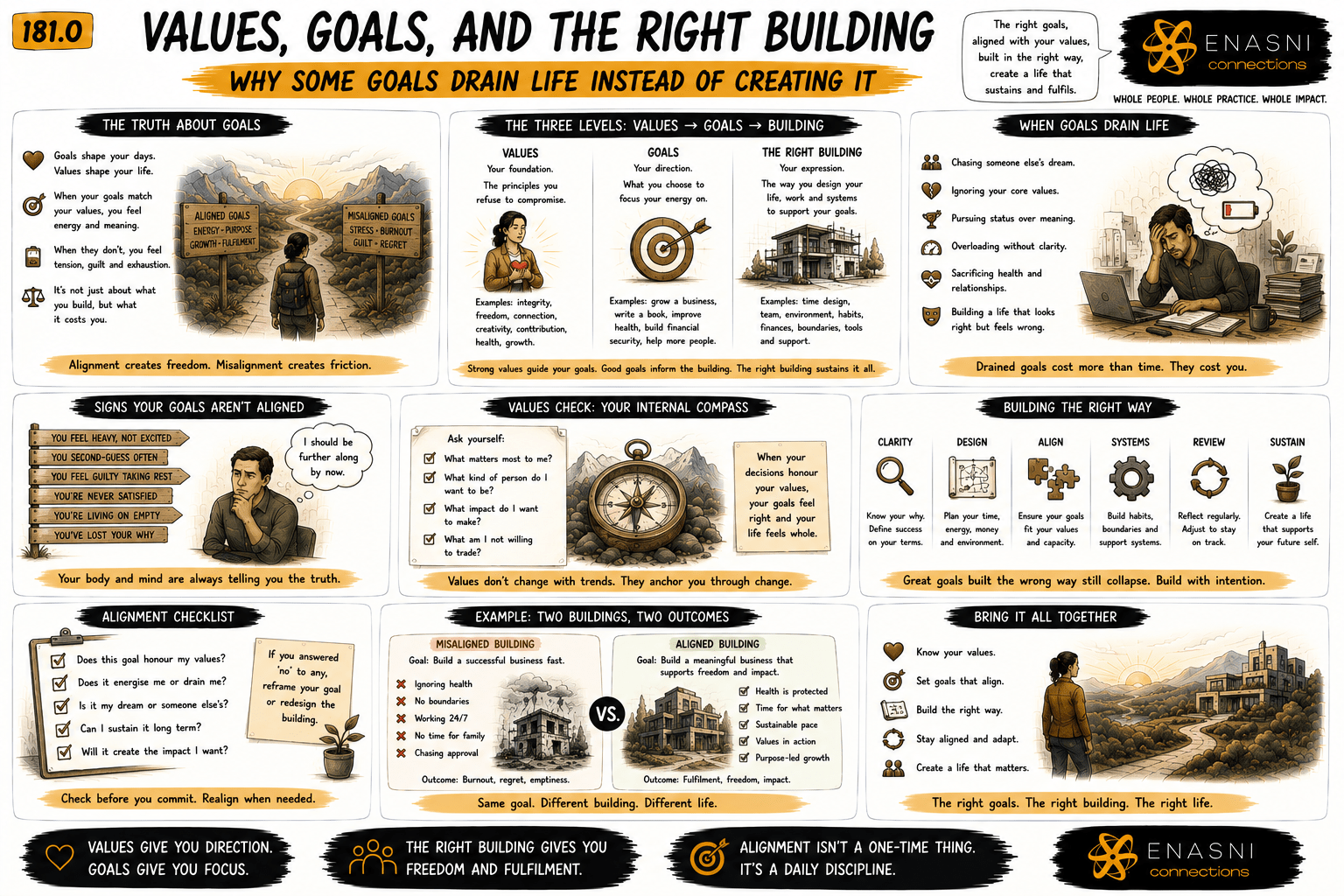
Why Some Goals Drain Life Instead of Creating It Goals matter because effort is far removed from fulfilment on its own, and especially because goals that are misaligned with values quietly create exhaustion, conflict, and inner fracture rather than progress. This post explores why values must precede goal-setting, how coaching exposes hidden misalignment, and why many…
-
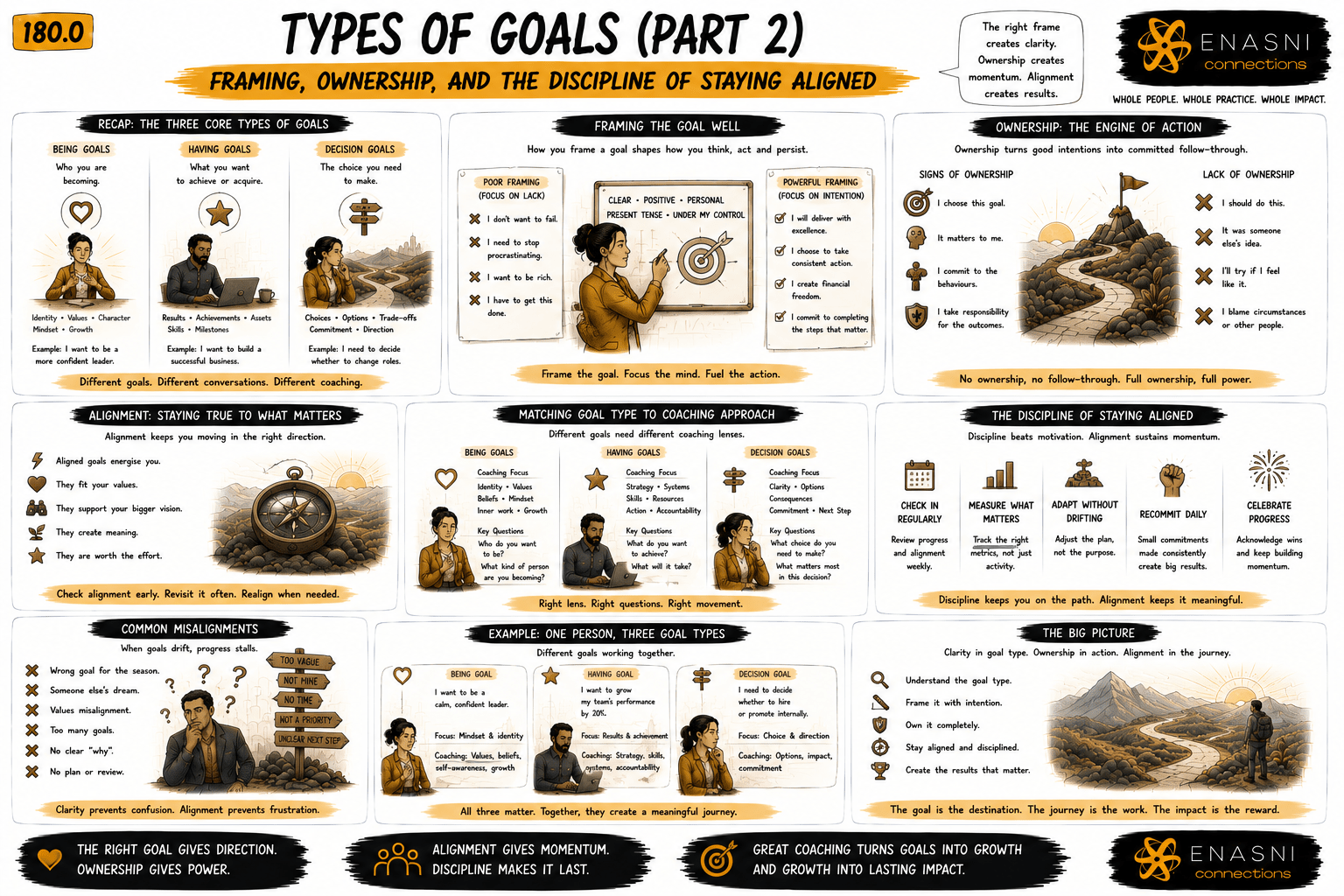
Framing, Ownership, and the Discipline of Staying Aligned Goal mastery deepens because clarity is far removed from fulfilment on its own, and especially because goals only work when they are framed in ways the human system can sustain over time. This post builds on the classification of goal types by exploring how goals are framed, internalised,…
-
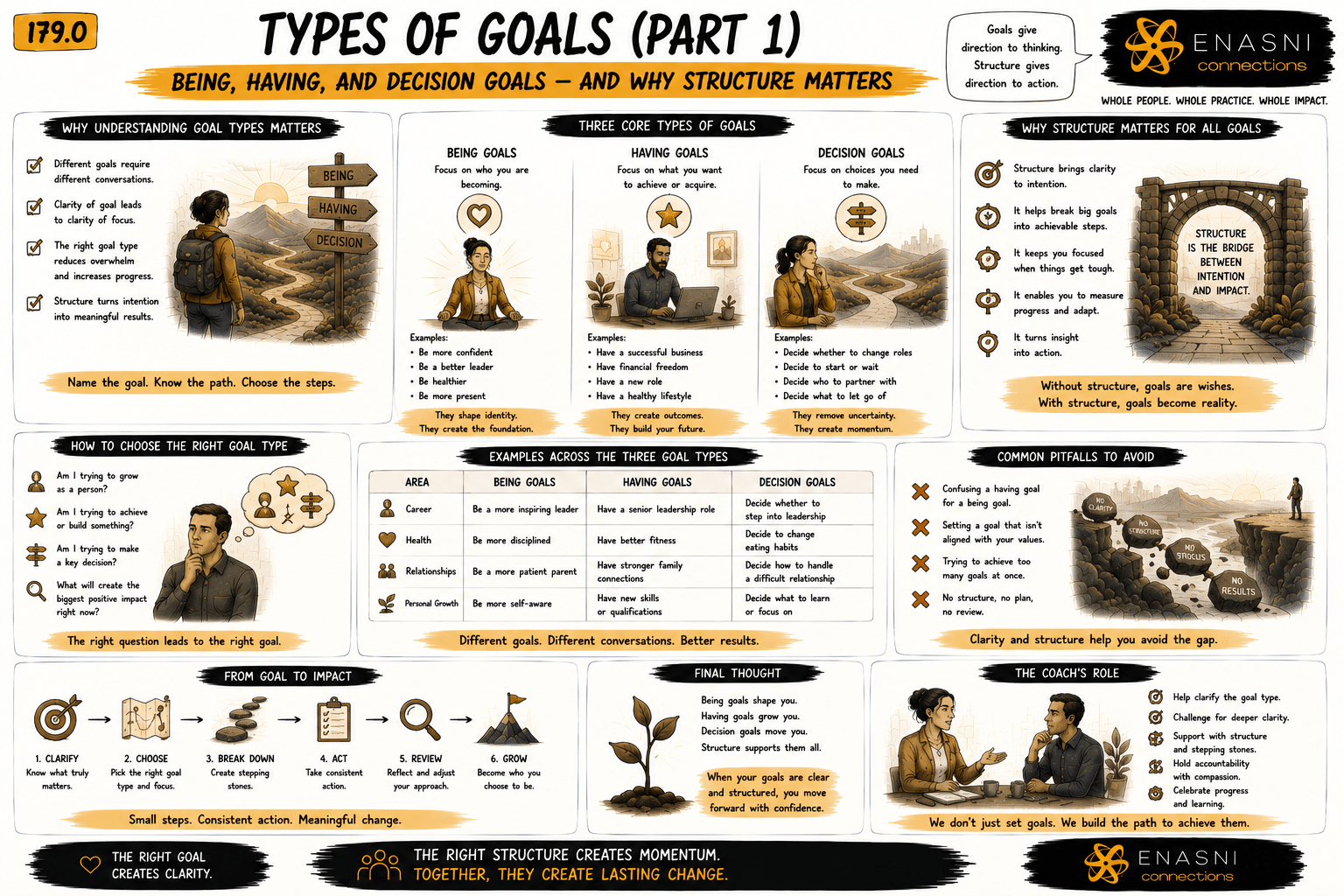
Being, Having, and Decision Goals — and Why Structure Matters Understanding goal types matters because effort is far removed from progress on its own, and especially because confusing different kinds of goals leads to misplaced action, frustration, and stalled momentum. This post introduces three core goal types commonly brought into coaching — Being Goals, Having Goals, and Decision Goals —…
-
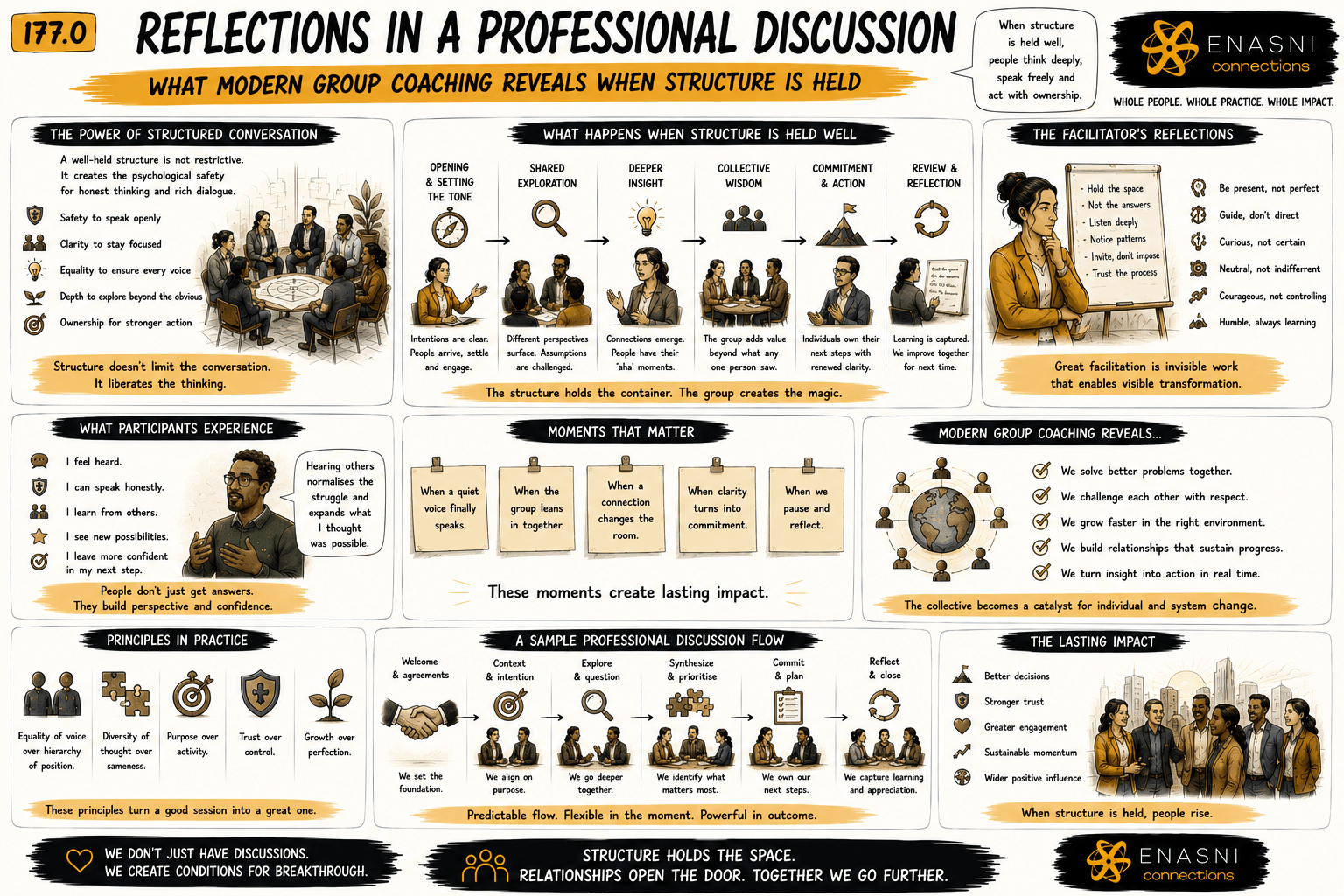
What Modern Group Coaching Reveals When Structure Is Held Reflection matters because experience is far removed from learning on its own, and especially because professional growth depends on the ability to extract principle from practice rather than opinion from outcome. This post reflects on a live group coaching session facilitated with the South London Coaches, examining…
-
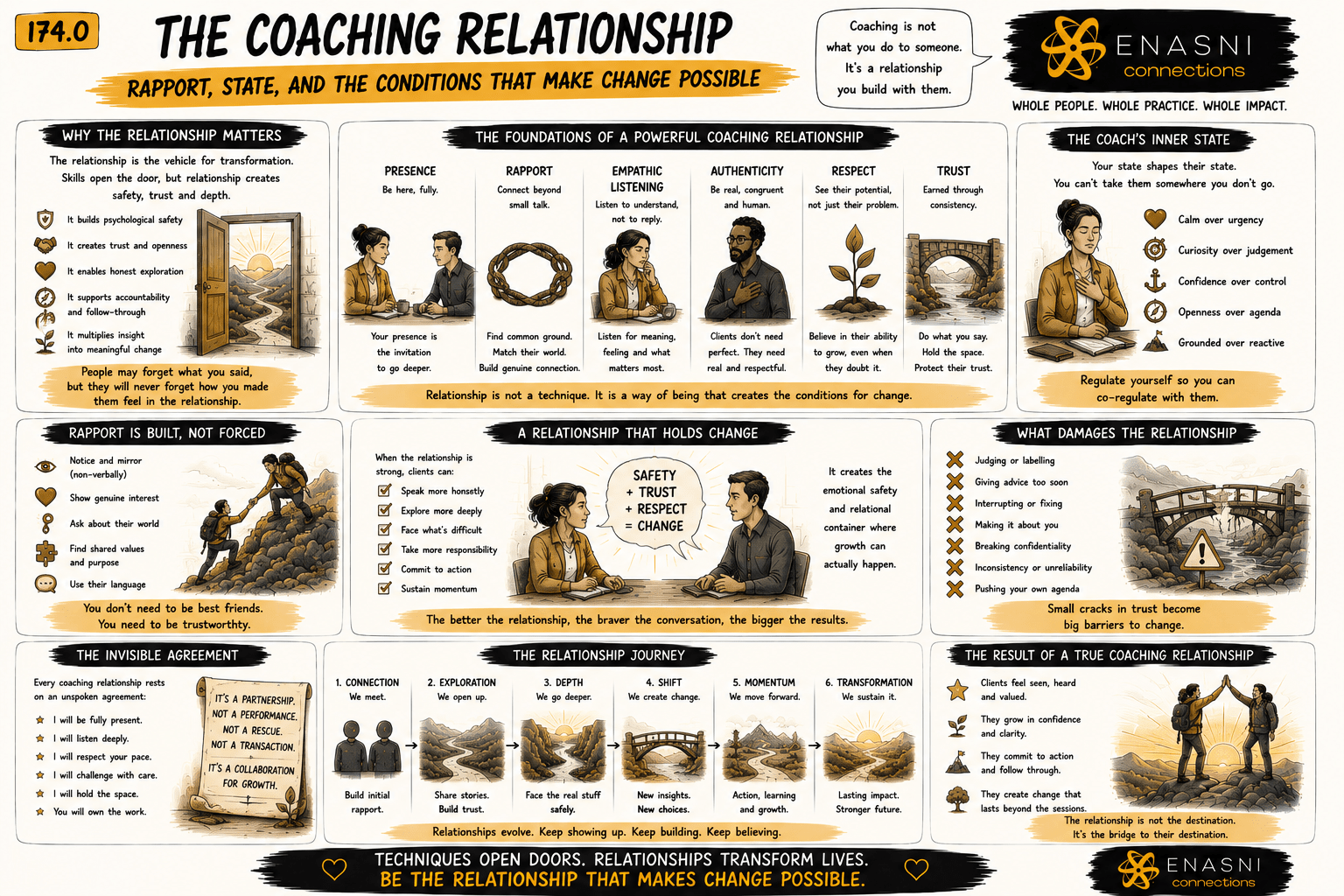
Rapport, State, and the Conditions That Make Change Possible The coaching relationship matters because technique is far removed from effectiveness on its own, and especially because no goal, model, or question can function properly without a relationship capable of holding attention, emotion, and responsibility. This post clarifies what actually empowers the coaching relationship, how it is…
-
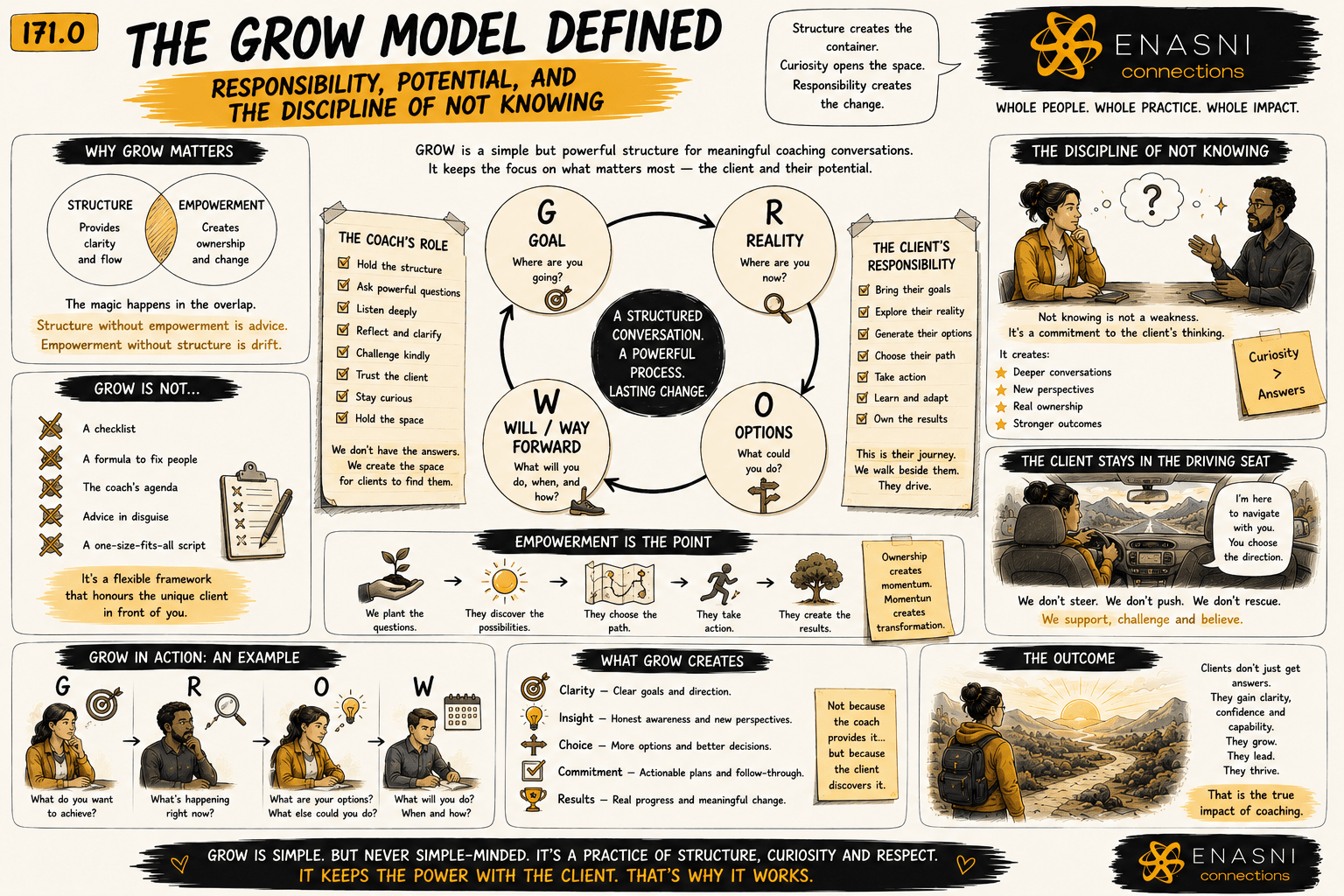
Responsibility, Potential, and the Discipline of Not Knowing The GROW model matters because structure is far removed from empowerment on its own, and especially because coaching only works when responsibility remains with the client rather than transferring subtly to the coach. This post defines the GROW model not as a technique to follow, but as a…