

Tag: GoalSetting
-
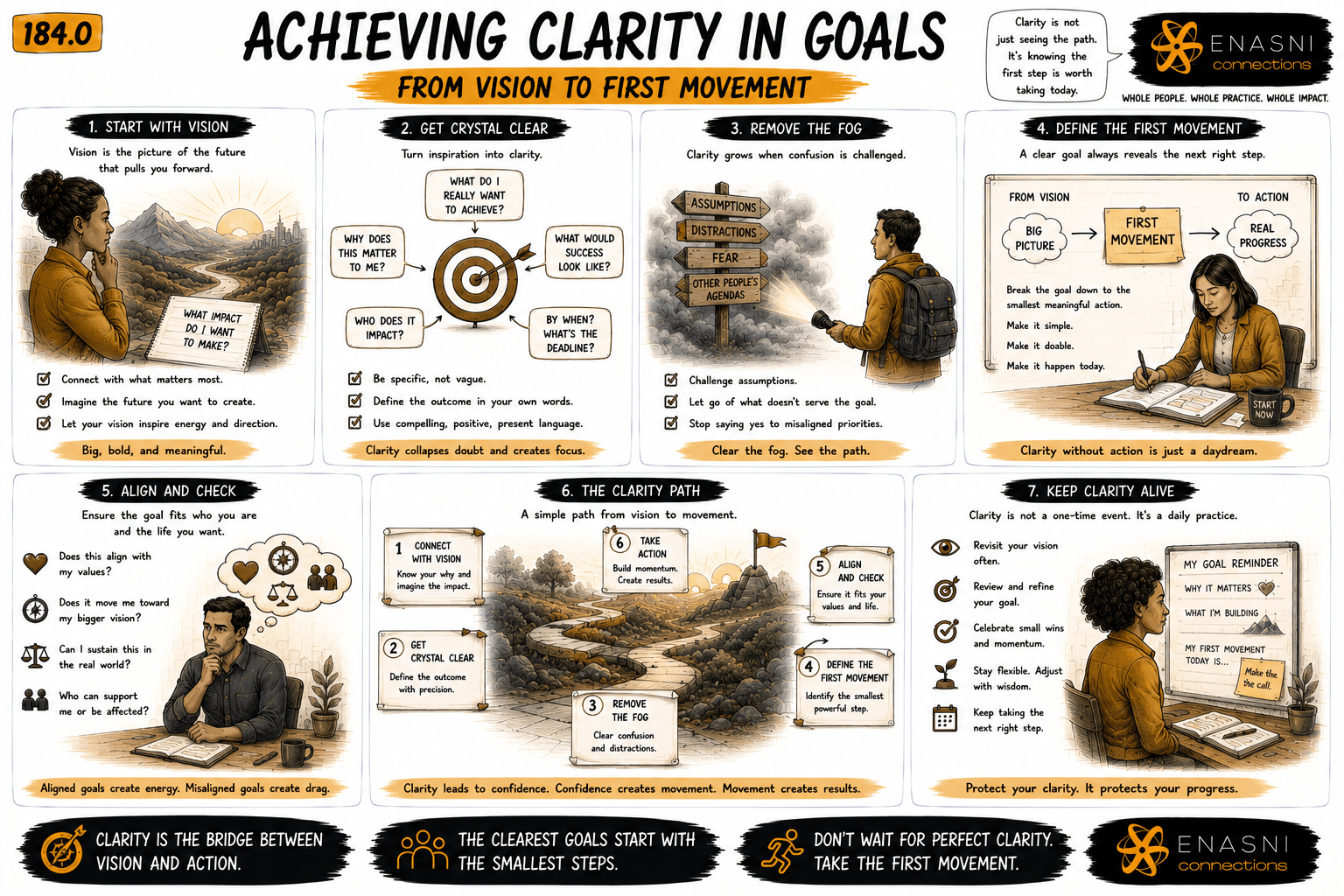
From Vision to First Movement Clarity matters because motivation is far removed from progress on its own, and especially because without clarity, effort disperses, confidence erodes, and even meaningful goals begin to feel heavy rather than energising. This post explores how coaches support clients to achieve clarity in goals by visualising outcomes, breaking complexity into manageable…
-

Why a Goal Is a Dream With a Date — and a Structure to Hold It Goal setting matters because ambition is far removed from achievement on its own, and especially because without structure, goals remain fantasies rather than forces that organise behaviour, attention, and energy. This post sets out the 12 Disciples of Goal Setting — not…
-

Framing, Ownership, and the Discipline of Staying Aligned Goal mastery deepens because clarity is far removed from fulfilment on its own, and especially because goals only work when they are framed in ways the human system can sustain over time. This post builds on the classification of goal types by exploring how goals are framed, internalised,…
-

Being, Having, and Decision Goals — and Why Structure Matters Understanding goal types matters because effort is far removed from progress on its own, and especially because confusing different kinds of goals leads to misplaced action, frustration, and stalled momentum. This post introduces three core goal types commonly brought into coaching — Being Goals, Having Goals, and Decision Goals —…
-
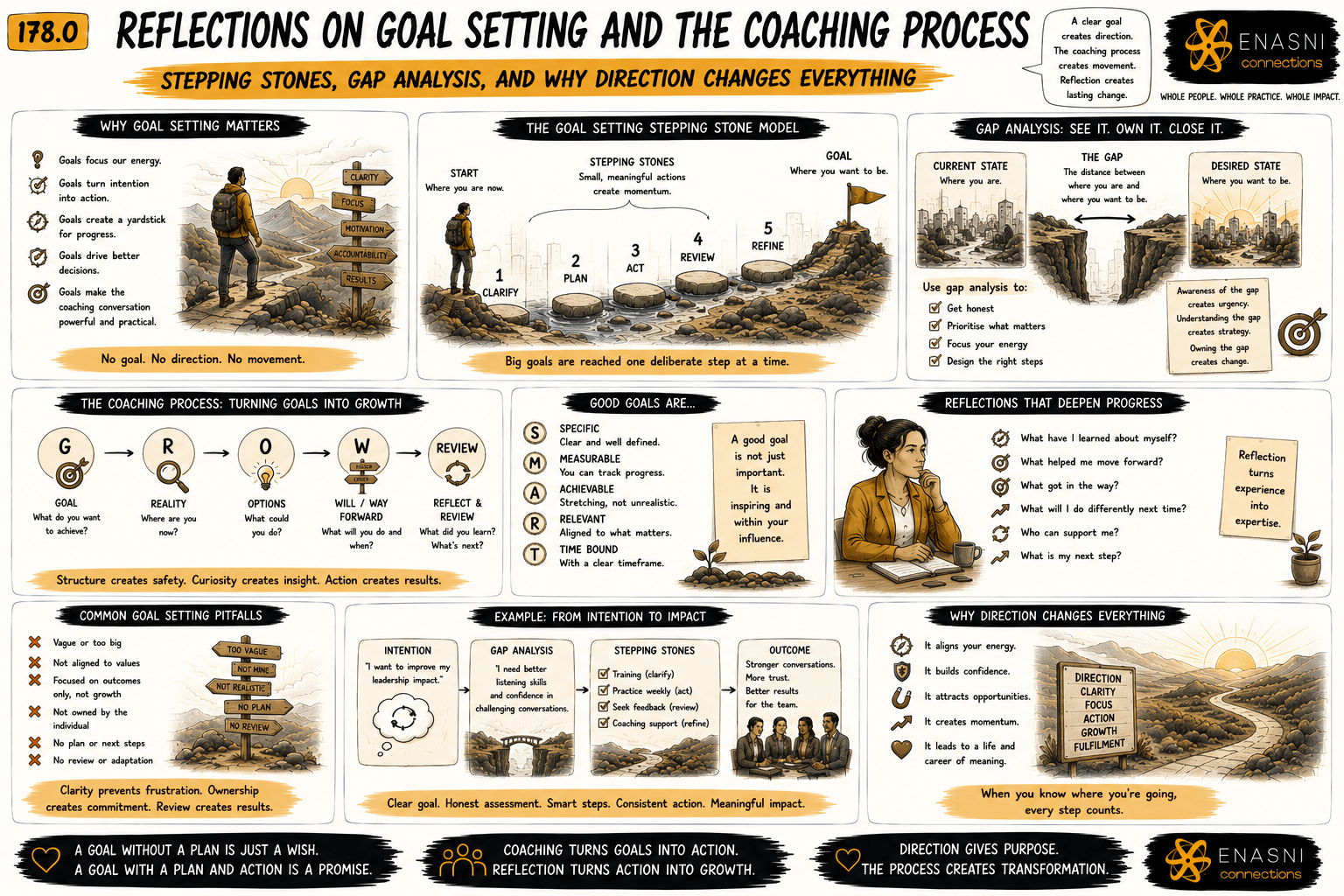
Stepping Stones, Gap Analysis, and Why Direction Changes Everything Goal setting matters because intention is far removed from movement on its own, and especially because coaching only becomes effective when direction is defined before effort is applied. This post reflects on goal setting as a central coaching discipline, drawing from practical coaching experience to examine how…
-

Goal setting matters because desire is far removed from direction on its own, and especially because goals shape behaviour, attention, identity, and stress long before results appear. This post explores how goals actually work, why motivation must accompany them, and how poorly formed goals quietly create pressure, frustration, and self-violence rather than progress from a wholeness perspective.
-

When What Is Aimed for Is Already Constrained. Limiting beliefs in goals matter because outcomes are far removed from effort alone, and especially because many goals are unconsciously designed to avoid threat rather than express potential. In coaching conversations, goals are often treated as neutral targets from a coach’s perspective. In reality, goals frequently reveal belief…