

Tag: AppliedWholeness
-
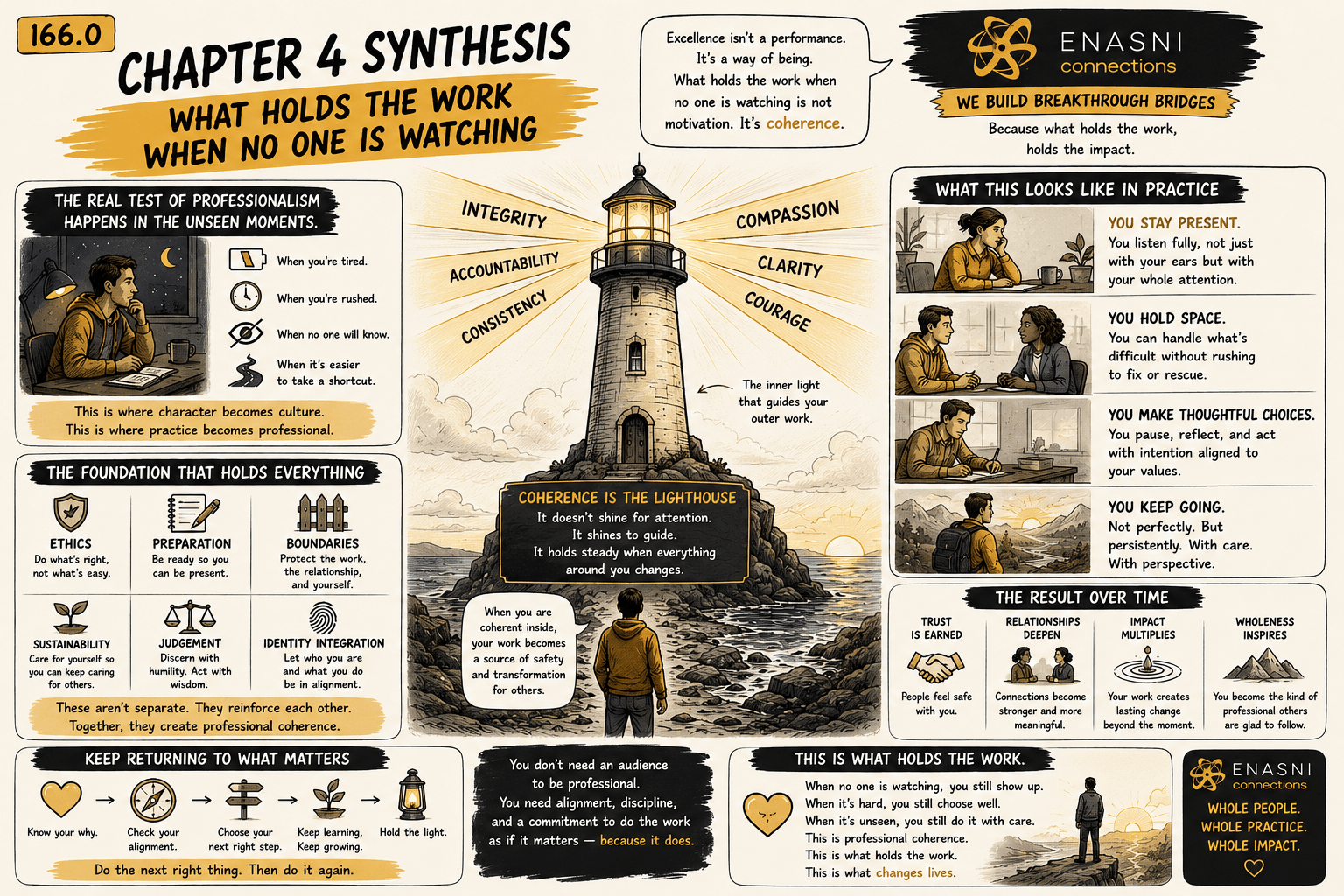
What Holds the Work When No One Is Watching Chapter 4 matters because competence is far removed from trustworthiness on its own, and especially because what defines a profession is not what it teaches, but what it reliably holds under pressure. This synthesis integrates the full arc of Chapter 4 into one organising stance — showing…
-
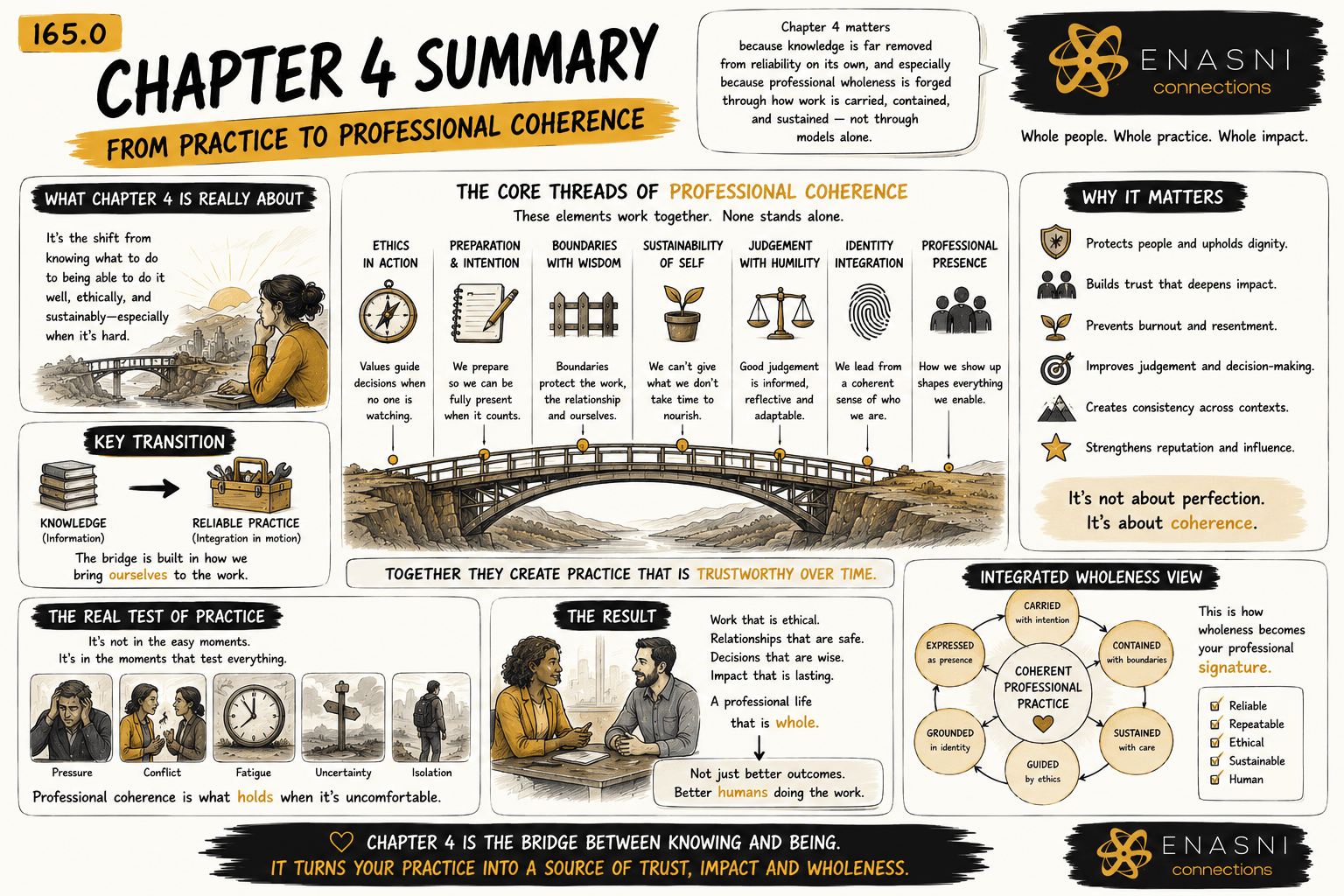
From Practice to Professional Coherence Chapter 4 matters because knowledge is far removed from reliability on its own, and especially because professional wholeness is forged through how work is carried, contained, and sustained — not through models alone. This summary gathers the core threads of Chapter 4 into a single integrated view, showing how ethics, preparation,…
-

What Breakthrough Actually Requires Taglines matter because aspiration is far removed from delivery on its own, and especially because language sets expectations about pace, responsibility, and what kind of change is being offered. This post explains why the tagline Building Breakthrough Bridges was chosen — not as motivation, but as a precise description of how change is designed,…
-

Naming the Work, Not the Image Names matter because language is far removed from meaning on its own, and especially because a name carries intent, constraint, and responsibility long after explanation fades. This post explains why the work is called Enasni Connections — not as a story of inspiration, but as a description of what…
-
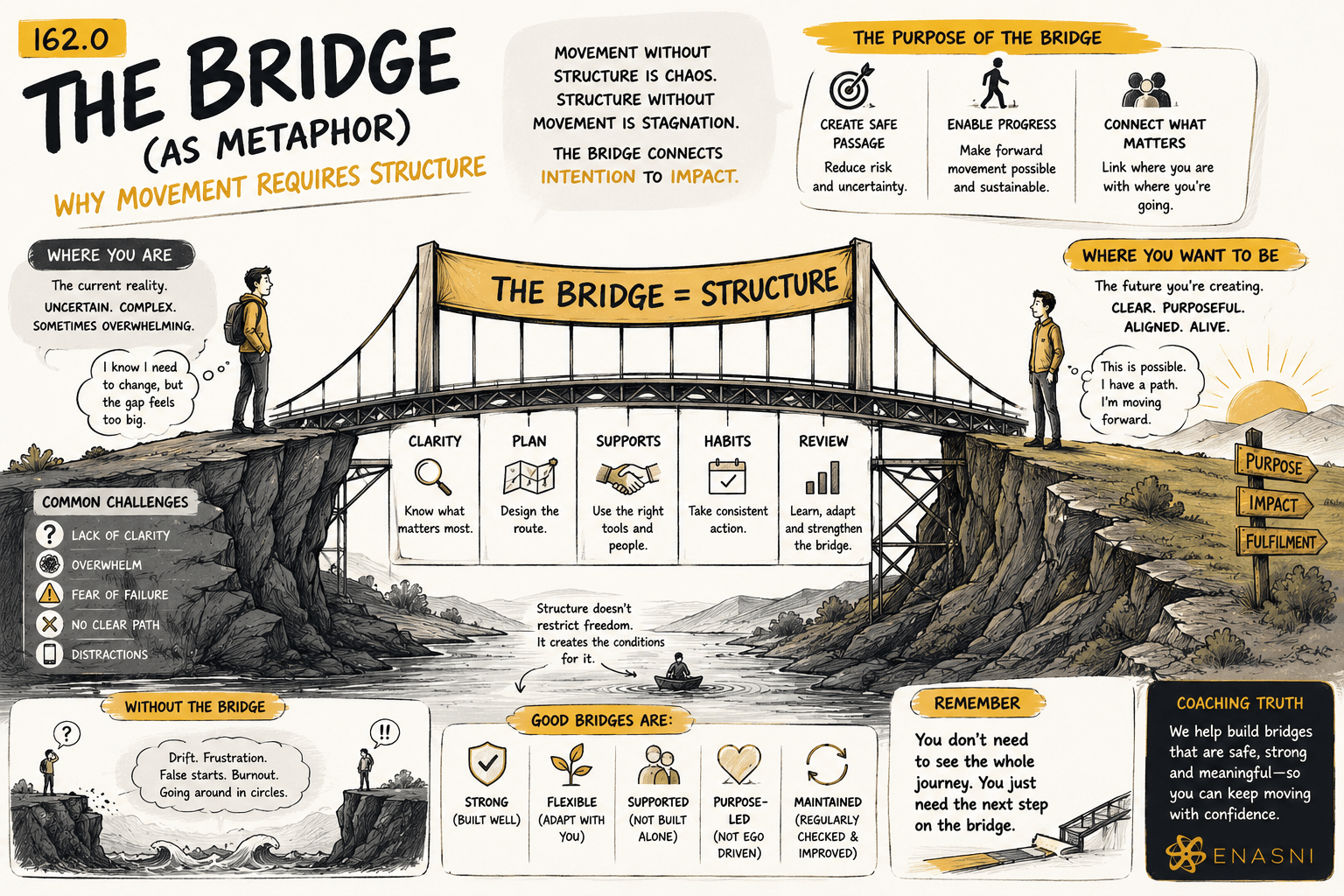
Why Movement Requires Structure The bridge matters because intention is far removed from transition on its own, and especially because movement between states, identities, or realities requires structure that can carry weight, uncertainty, and return journeys. This post explores the bridge as a working metaphor — not a symbol of escape, but a disciplined structure that…
-

Maintenance, Habits, and the Body’s Agreement Wellness matters because intention is far removed from capacity on its own, and especially because wellness provides the behavioural and physiological foundations that allow wellbeing to stabilise and wholeness to emerge. This post clarifies what wellness actually refers to, how it differs from wellbeing, why it is often over-simplified, and…
-
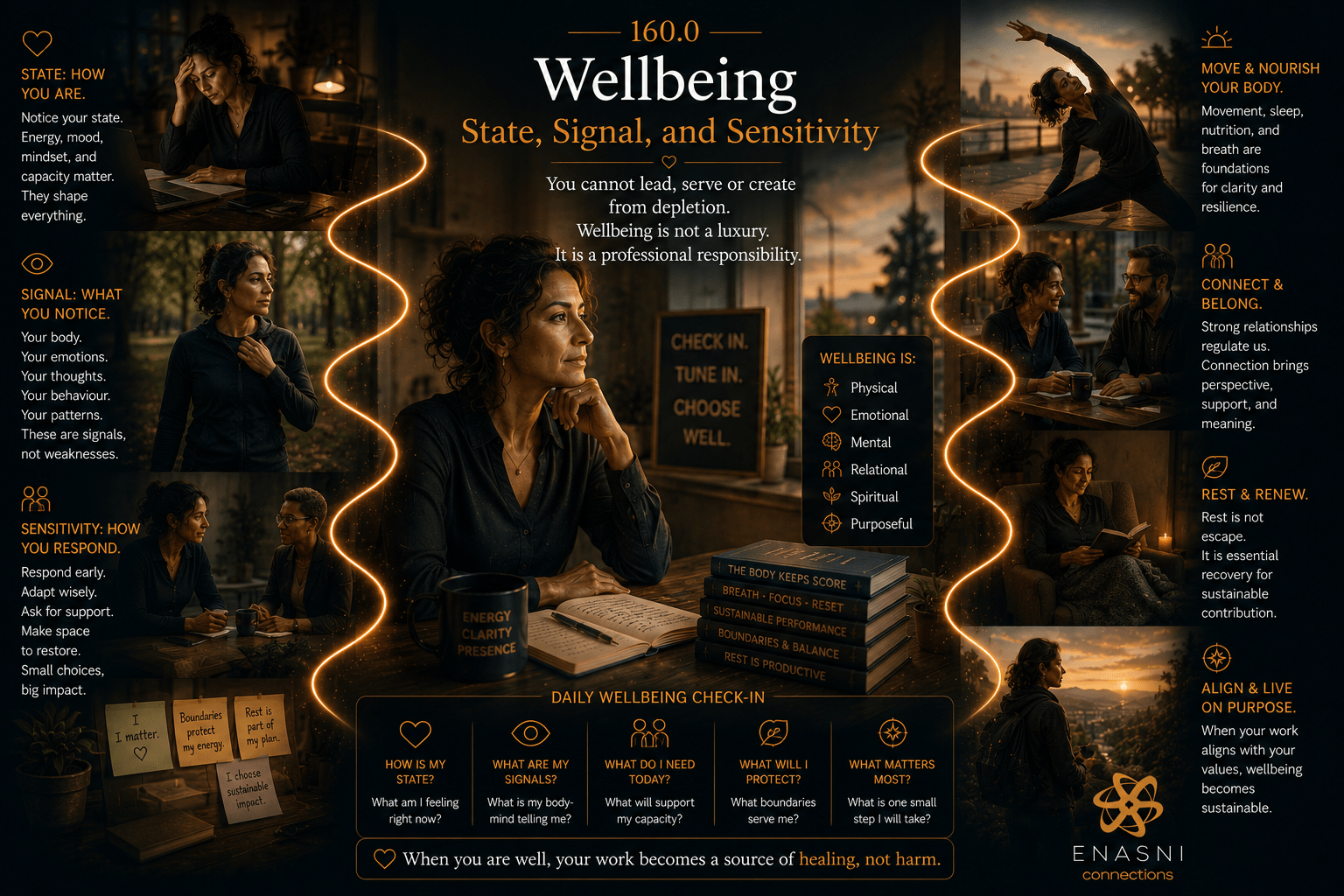
State, Signal, and Sensitivity Wellbeing matters because functioning is far removed from flourishing on its own, and especially because wellbeing operates as a live signal of how a person is responding to life, work, pressure, and relationship in real time. This post clarifies what wellbeing actually is, what it is not, how it functions as information…