
Tag: ProfessionalIntegrity
-
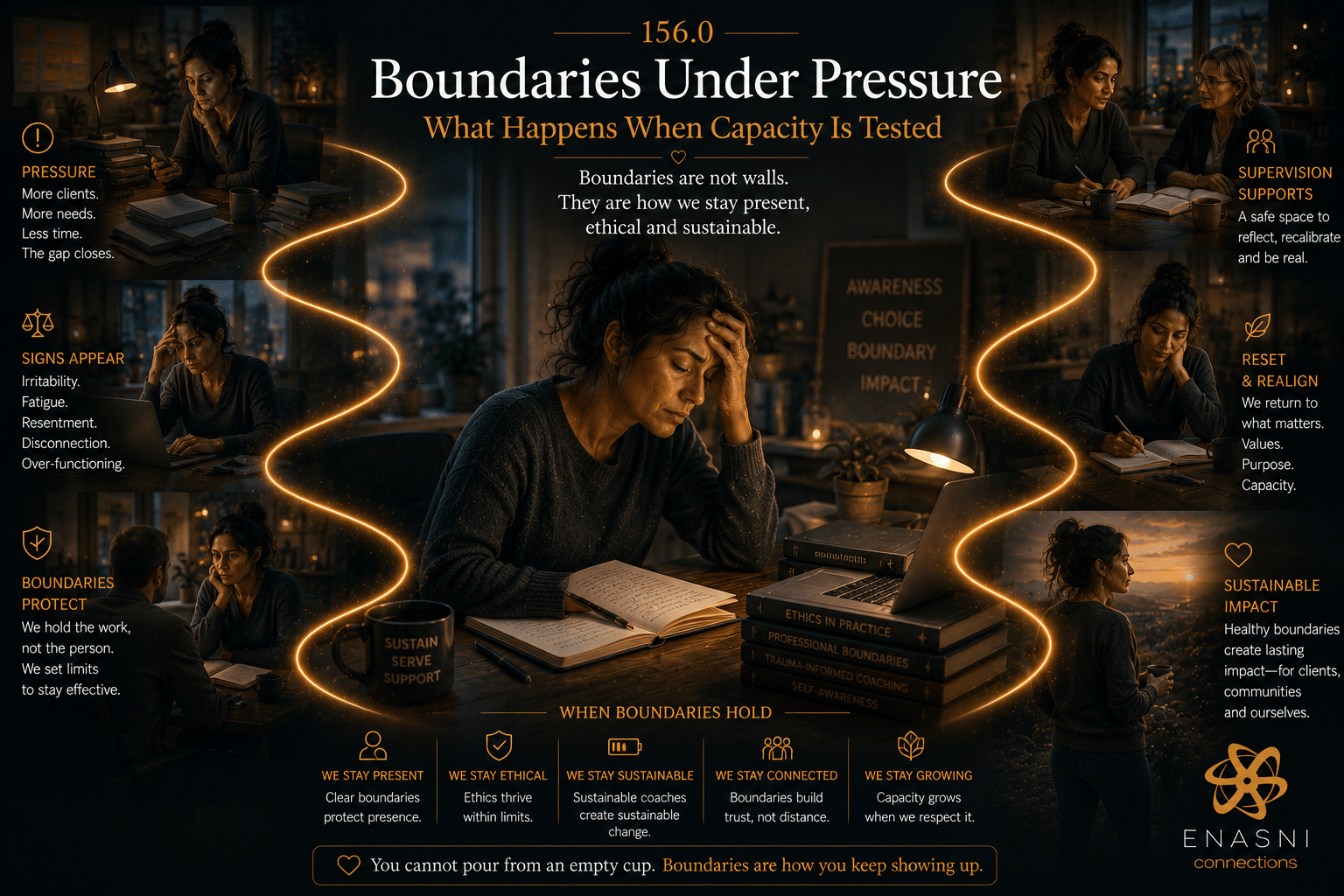
What Happens When Capacity Is Tested Boundaries matter because clarity is far removed from containment on its own, and especially because pressure reveals boundary strength more accurately than intention ever can. This post explores how boundaries are most likely to blur when coaches are tired, stretched, uncertain, emotionally activated, or financially pressured — and why maintaining…
-

Why Ethics Is Not the Same as Morality Ethics matter because personal goodness is far removed from professional responsibility on its own, and especially because coaching ethics exist to regulate power, protect clients, and stabilise trust — not to judge character. This post distils a professional discussion on ethics in coaching, clarifying what ethics is, what it is…
-

What Ethical Coaching Feels Like From the Other Side The client perspective matters because professional intention is far removed from lived experience on its own, and especially because clients feel ethics before they understand frameworks, contracts, or models. This post explores what ethical coaching looks like, sounds like, and feels like from the client’s point of…
-

Completion as a Mark of Professional Integrity Ending a coaching relationship matters because continuation is far removed from care on its own, and especially because how coaching ends often determines whether the work integrates or unravels. This post clarifies how to end coaching relationships cleanly, ethically, and humanely — whether through planned completion or early termination…
-
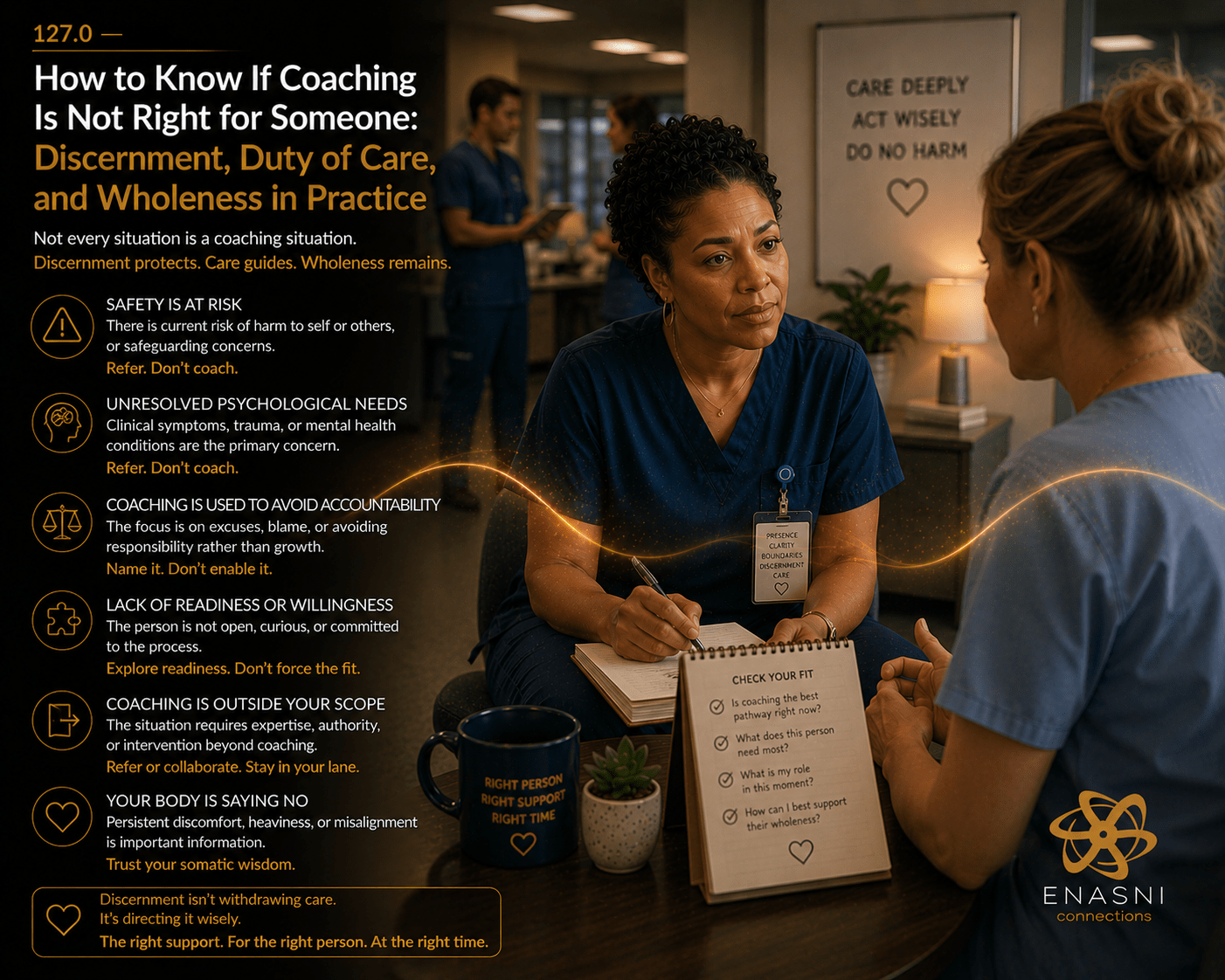
Discernment, Duty of Care, and Wholeness in Practice Knowing whether coaching is right for someone matters because good intention is far removed from good care, and especially because coaching must never override safety, dignity, or appropriate clinical support — from a wholeness perspective. This post clarifies how to discern readiness for coaching, how to recognise when…
-
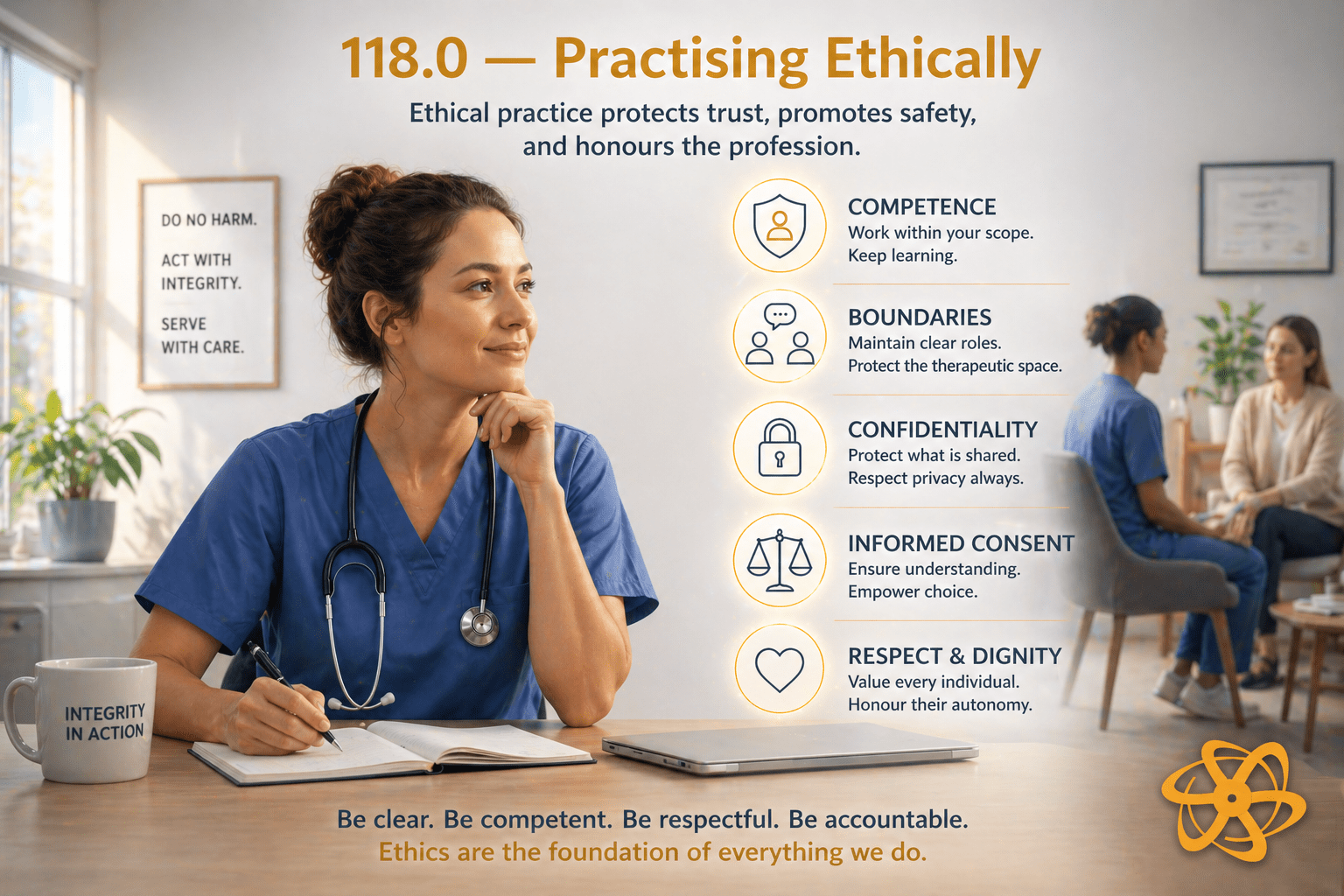
Integrity Is the Intervention Practising ethically matters because technique is far removed from trust on its own, and especially because ethics shape the impact of coaching long after sessions end. Ethics in coaching are often treated as compliance requirements — codes to follow, boxes to tick. In wholeness-informed practice, ethics are lived decisions made moment by…
-
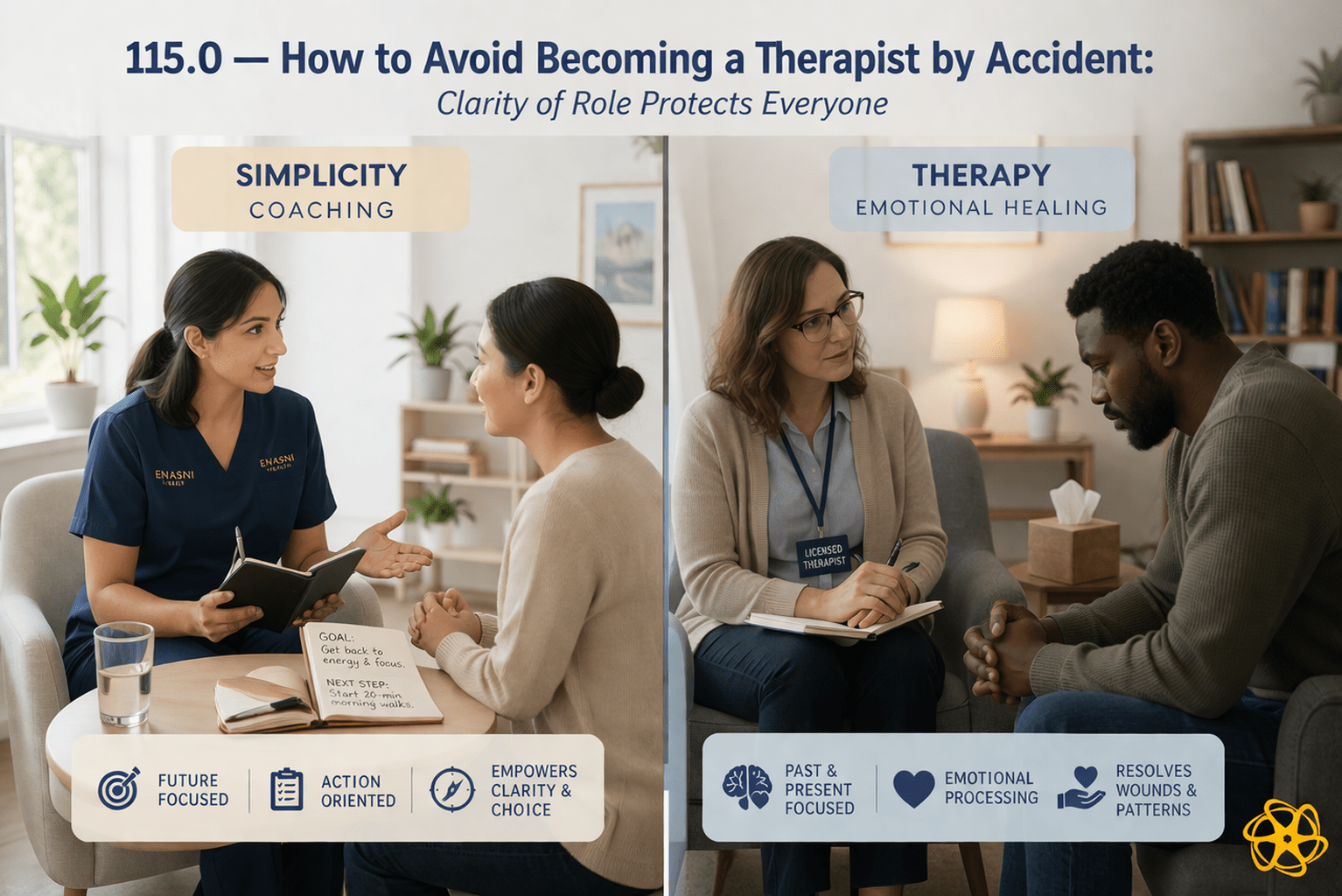
Clarity of Role Protects Everyone Avoiding accidental therapy matters because good intention is far removed from professional appropriateness, and especially because coaching and therapy serve different functions — even when both involve depth, emotion, and insight. Many coaches cross boundaries unintentionally. Not through recklessness, but through care, empathy, and a desire to help. Without role clarity,…