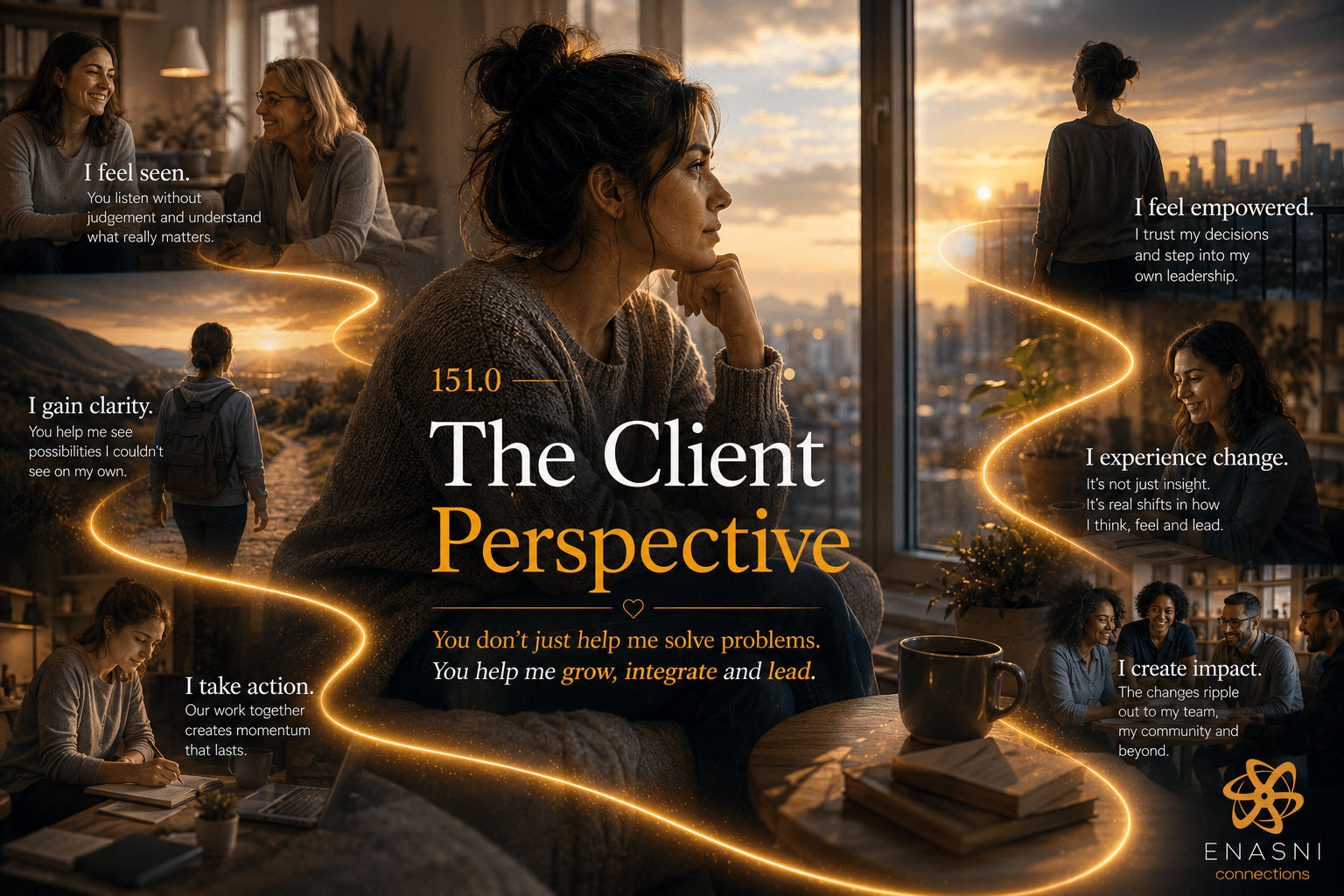
What Ethical Coaching Feels Like From the Other Side
The client perspective matters because professional intention is far removed from lived experience on its own, and especially because clients feel ethics before they understand frameworks, contracts, or models.
This post explores what ethical coaching looks like, sounds like, and feels like from the client’s point of view — from first contact through to completion — and why ethics are not an add-on, but the invisible structure holding the entire relationship together from a wholeness perspective.
Clients Enter Coaching With Asymmetry
From the client’s side, coaching does not begin on equal footing.
Clients often arrive:
- uncertain
- vulnerable
- hopeful
- unsure what is “normal”
- unclear what to expect
They do not know:
- how sessions should feel
- what is appropriate to ask
- where boundaries should sit
This creates inherent power asymmetry.
Ethics exist to protect the client inside this imbalance.
Ethics Are Felt Before They Are Explained
Before a client understands:
- confidentiality clauses
- contracts
- codes of ethics
They feel:
- safety or unease
- clarity or confusion
- pressure or choice
Ethical coaching feels like:
- being respected without being handled
- being guided without being led
- being supported without being rescued
Clients may not name ethics — but they experience them immediately.
From First Contact, Not First Session
From the client’s perspective, coaching begins at first contact.
This includes:
- tone of emails
- clarity of information
- absence of pressure
- transparency around process
Ethics are already active here.
Over-selling, urgency, or ambiguity feels unsafe — even if unintentional.
Confidentiality as Lived Trust
Clients do not experience confidentiality as a policy.
They experience it as:
- freedom to speak
- confidence to disclose
- belief they will not be exposed
Knowing there is a clear ethical code behind confidentiality reassures the client — even if they never read it.
This trust allows honesty.
Without it, coaching stays shallow.
Boundaries Create Relief
From the client side, boundaries are not restrictive.
They are relieving.
Clear boundaries around:
- session length
- availability
- communication
- payment
- roles
mean the client does not have to guess.
Guessing creates anxiety.
Boundaries allow clients to focus on themselves — not on managing the relationship.
Why Ethical Codes Matter to Clients
Clients may never read a formal code of ethics.
But ethical codes ensure that:
- confidentiality is protected
- exploitation is prevented
- competence is respected
- power is not abused
The existence of a governing ethical framework means the client is not relying solely on the coach’s character.
They are supported by structure.
This matters deeply when vulnerability increases .
When Ethics Are Missing, Clients Feel It
Clients often describe unethical coaching as:
- feeling subtly pressured
- feeling responsible for the coach’s emotions
- being over-advised
- being discouraged from external support
- feeling confused about boundaries
Even without naming ethics, the client’s body recognises misalignment.
Discomfort is data.
Ethical Coaching Restores Agency
From the client’s perspective, ethical coaching:
- reinforces choice
- supports autonomy
- encourages independent thinking
- normalises pauses and endings
- welcomes questions
The client does not feel “held onto”.
They feel supported while standing on their own feet.
Why This Matters More Because Coaching Is Still Emerging
Because coaching is still a relatively young profession:
- standards vary
- public understanding is inconsistent
- clients may not know what to expect
This increases the coach’s ethical responsibility.
From the client’s side, ethical behaviour is not optional.
It is the difference between growth and harm.
In Essence
From the client’s perspective, ethical coaching feels:
- safe without being smothering
- structured without being controlling
- supportive without being invasive
Clients may forget techniques.
They never forget how the relationship made them feel.
That feeling determines whether coaching becomes transformative or damaging.
Key Learning Points (KLPs)
- Clients experience ethics before understanding them
- Power asymmetry exists from the outset
- Boundaries reduce anxiety, not connection
- Ethical frameworks protect clients, not coaches
- Discomfort often signals ethical drift
- Ethical coaching restores agency
- Trust enables depth
Action Points (APs)
- Review first-contact communication from a client’s perspective
- Audit boundaries for clarity and consistency
- Ensure ethical frameworks are lived, not just referenced
Keywords
client perspective coaching, ethical coaching practice, applied wholeness coaching, client safety in coaching, coaching boundaries, coaching ethics framework, trust in coaching relationships, Enasni Connections