

Tag: CoachingJudgement
-

Discernment, Duty of Care, and Wholeness in Practice Knowing whether coaching is right for someone matters because good intention is far removed from good care, and especially because coaching must never override safety, dignity, or appropriate clinical support — from a wholeness perspective. This post clarifies how to discern readiness for coaching, how to recognise when…
-

Clarity, Confidence, and Clean Exchange Asking for payment matters because value is far removed from discomfort alone, and especially because clear financial exchange stabilises trust, responsibility, and commitment — from a wholeness perspective. This post clarifies how asking for payment is not a transactional interruption, but a continuation of the coaching container itself, shaping confidence, clarity, and…
-

What a Client Is Actually Entering Into Coaching experience matters because expectations are far removed from outcomes on their own, and especially because the quality of experience determines safety, clarity, and traction from the very beginning — from a wholeness perspective. This post clarifies what the coaching experience is like in practice, how it unfolds, what…
-
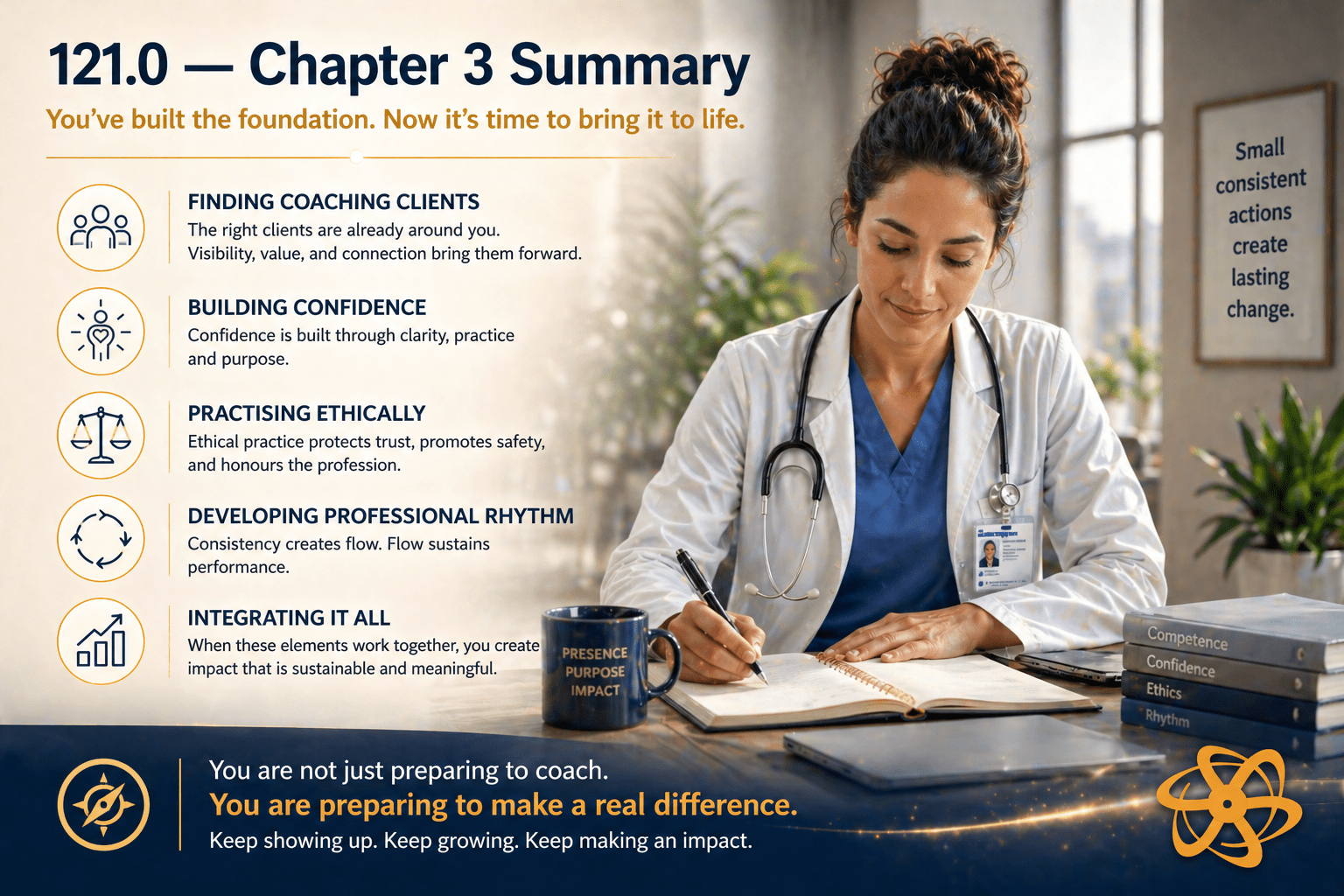
From Skill Acquisition to Professional Coherence Chapter 3 matters because technique is far removed from mastery, and especially because coaching competence only stabilises when skills integrate into judgement, presence, and rhythm. This chapter moved deliberately from tools into discernment — from knowing what to do into understanding when, why, and how to do it responsibly. Across these posts, coaching was reframed as…
-

Consistency Without Rigidity Developing professional rhythm matters because effort is far removed from sustainability, and especially because coaching thrives on cadence, not intensity. Many coaches oscillate between over-efforting and withdrawal. Sessions feel heavy, preparation feels draining, and growth becomes inconsistent. Professional rhythm stabilises practice by aligning energy, structure, and pacing. This post reframes rhythm as a…
-
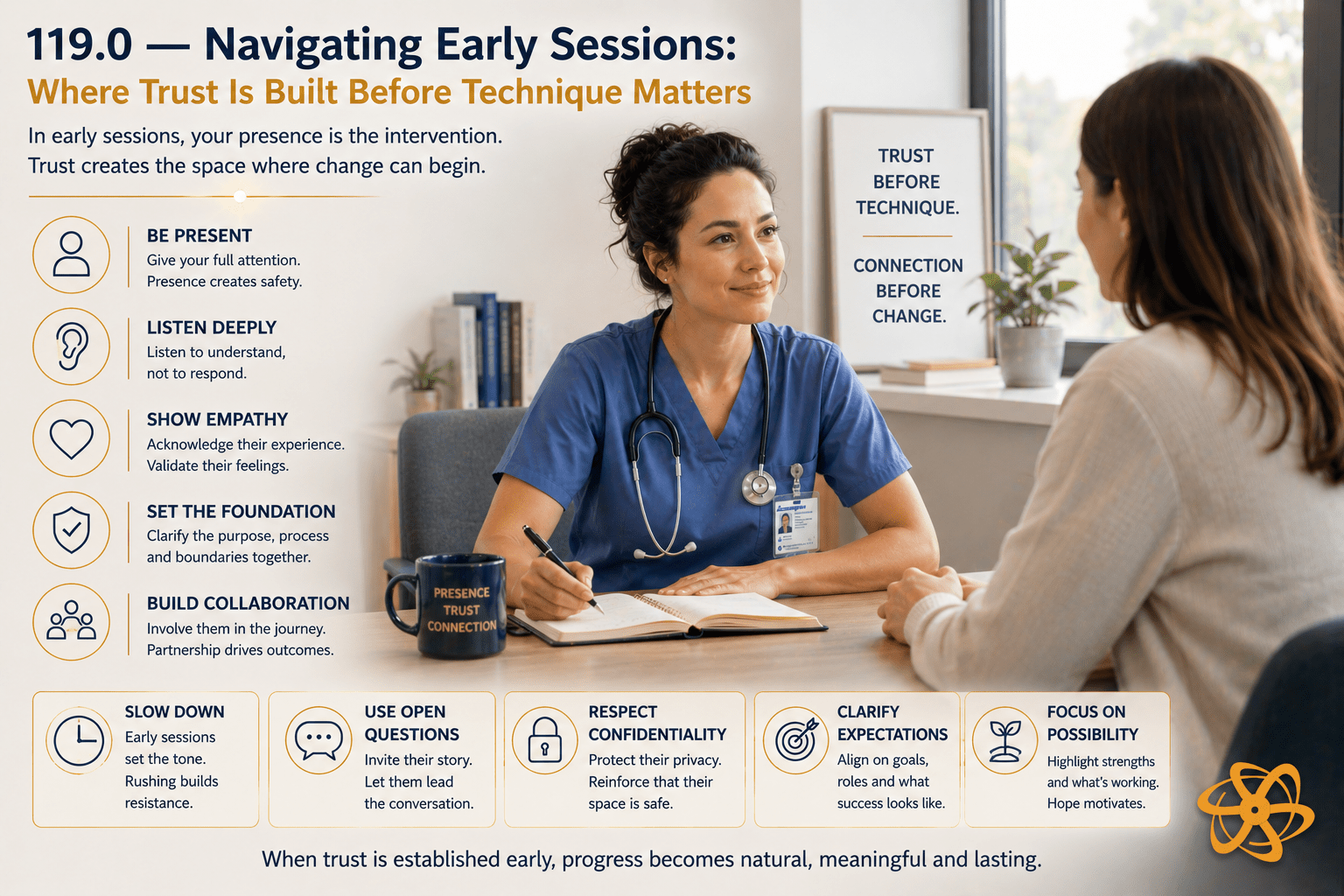
Where Trust Is Built Before Technique Matters Navigating early sessions matters because outcomes are far removed from frameworks alone, and especially because the first few sessions set the relational, ethical, and psychological tone for everything that follows. Early sessions are not about demonstrating competence. They are about establishing safety, clarity, and rhythm. When these foundations are…
-

Integrity Is the Intervention Practising ethically matters because technique is far removed from trust on its own, and especially because ethics shape the impact of coaching long after sessions end. Ethics in coaching are often treated as compliance requirements — codes to follow, boxes to tick. In wholeness-informed practice, ethics are lived decisions made moment by…