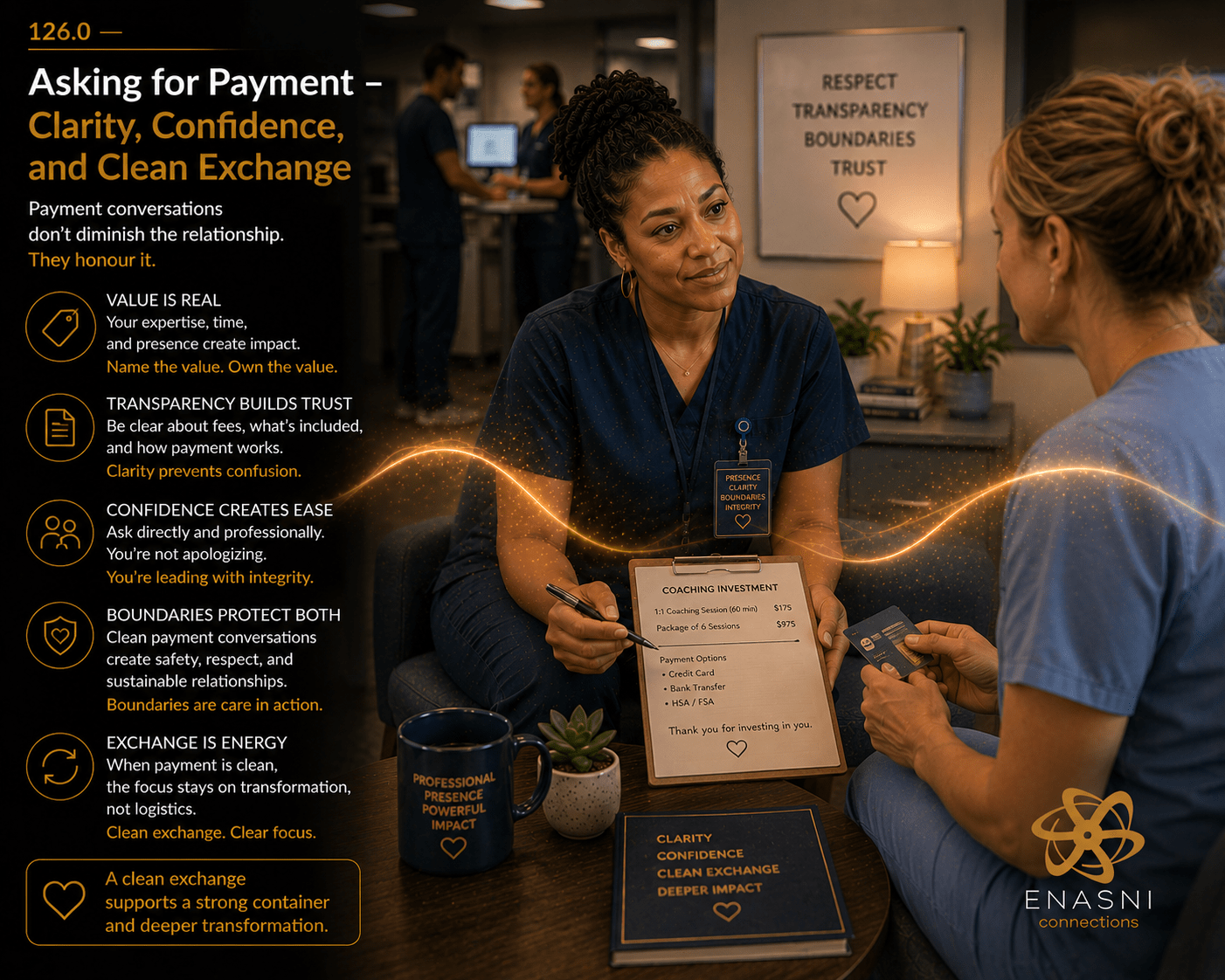
Clarity, Confidence, and Clean Exchange
Asking for payment matters because value is far removed from discomfort alone, and especially because clear financial exchange stabilises trust, responsibility, and commitment — from a wholeness perspective.
This post clarifies how asking for payment is not a transactional interruption, but a continuation of the coaching container itself, shaping confidence, clarity, and mutual respect — from a wholeness perspective.
Payment Begins With Clarity, Not Price
Asking for payment does not begin with money.
It begins with:
- clearly presenting what is being offered
- matching the offering to the client’s needs and wants
- communicating in simple, grounded language
Whether working with individuals or groups, clarity ensures the conversation remains human, not commercial .
Starting the Conversation Well
A useful early question is:
“What do you already know about coaching?”
This does more than gather information.
It:
- activates the client’s existing understanding
- engages their neurology
- reveals assumptions and expectations
From here, the coach can meet the client where they are, not where the coach assumes them to be.
Knowing Who the Work Is For
Payment conversations are easier when positioning is clear.
This includes:
- knowing who the client or target group is
- understanding what they are looking for
- recognising where they are likely to be found
- being clear why they would want to work with this coach
This may require research.
Clarity here prevents misalignment later.
Communicating the Value of Coaching
Value is communicated by:
- summarising how coaching helps solve real challenges
- naming benefits using language already developed
- sharing testimonials where appropriate
Testimonials support confidence — not persuasion.
With permission, offering conversations with past clients can further ground trust.
Practicalities Matter
Clean financial exchange requires practical readiness.
This includes knowing:
- how payment will be accepted
- which options are available
Common methods include:
- credit or debit card
- PayPal
- cheque
- bank transfer
Payment instalments may be considered when appropriate.
Structure supports ease — not rigidity.
Confidence Is Part of the Offering
Every payment conversation is also a confidence conversation.
The aim is for the client to leave feeling:
- understood
- oriented
- clearer about a way forward
Whether or not they proceed, the interaction itself should feel respectful and complete.
Confidence grows when the coach trusts the value of the work being offered.
Payment as Part of the Coaching Container
Asking for payment is not separate from coaching.
It reinforces:
- mutual responsibility
- professional boundaries
- commitment to the process
A clean exchange supports deeper work.
Avoidance creates friction later.
In Essence
Asking for payment is not about money.
It is about clarity, confidence, and clean agreement.
When handled with integrity, payment conversations strengthen trust and support sustainable coaching relationships — from a wholeness perspective.
Key Learning Points (KLPs)
- Payment conversations begin with clarity of offering
- Understanding what the client knows supports alignment
- Positioning reduces friction around value
- Testimonials support trust, not persuasion
- Practical payment readiness matters
- Confidence communicates value
- Clean exchange strengthens the coaching container
Action Points (APs)
- Clarify and practise describing the offering simply
- Prepare payment methods in advance
- Reflect on personal comfort with value and exchange
Keywords
asking for payment, coaching fees conversation, applied wholeness coaching, ethical financial exchange, coaching value communication, professional coaching practice, client commitment, Enasni Connections