
Tag: EnasniConnections
-
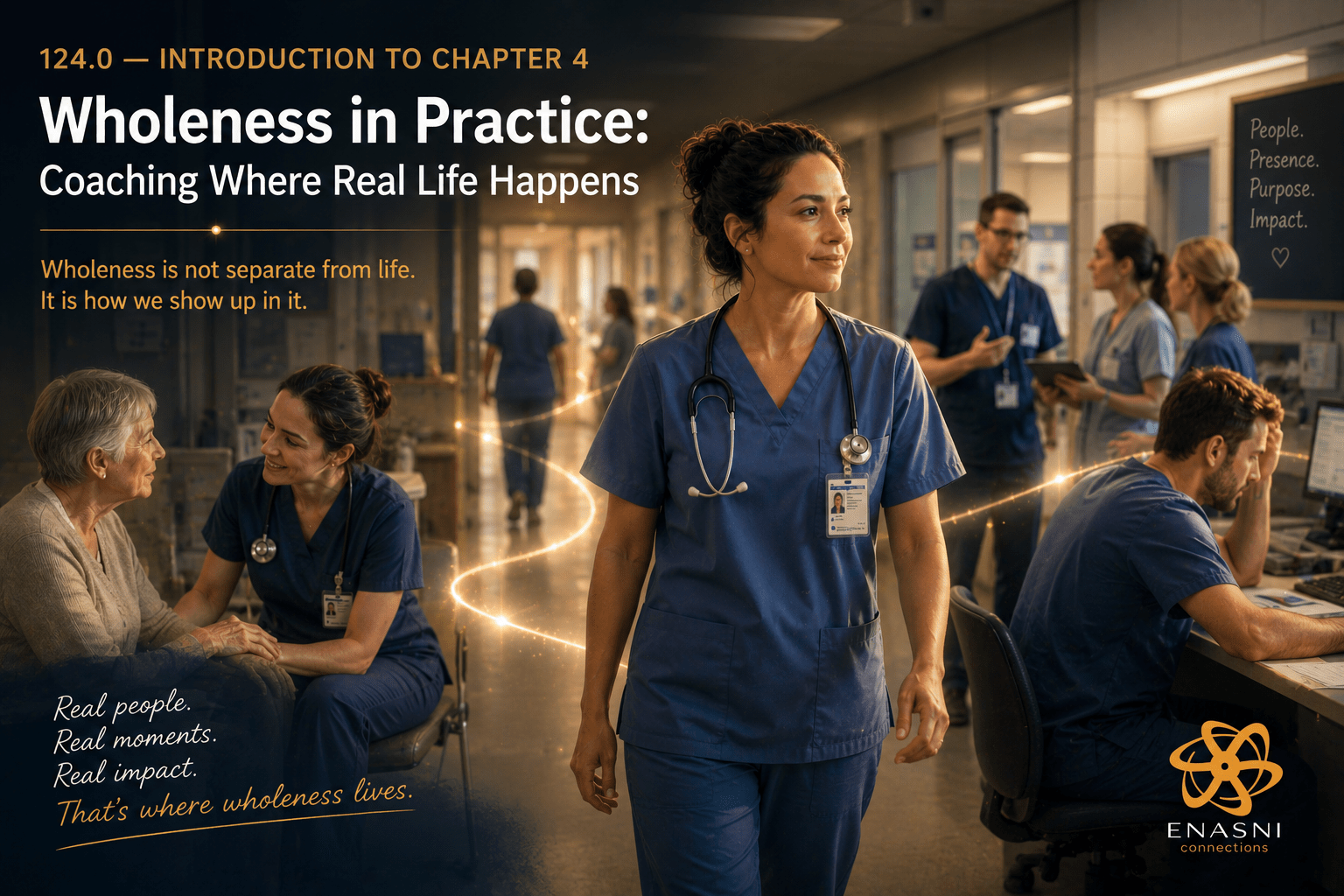
Wholeness in Practice: Coaching Where Real Life Happens Chapter 4 matters because coherence is far removed from abstraction, and especially because coaching only proves its value when it meets humans in real, complex, lived conditions.
-
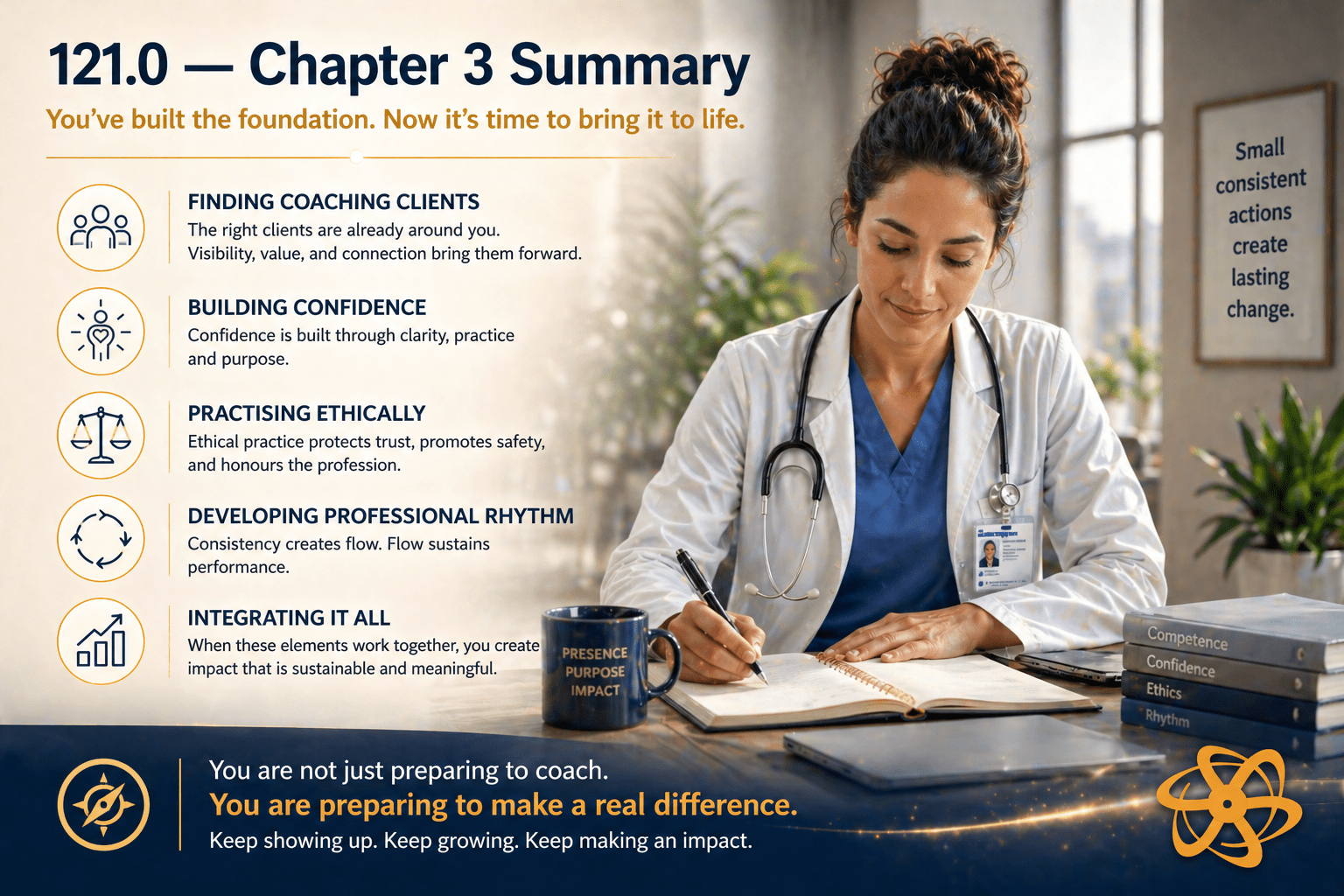
From Skill Acquisition to Professional Coherence Chapter 3 matters because technique is far removed from mastery, and especially because coaching competence only stabilises when skills integrate into judgement, presence, and rhythm. This chapter moved deliberately from tools into discernment — from knowing what to do into understanding when, why, and how to do it responsibly. Across these posts, coaching was reframed as…
-

Consistency Without Rigidity Developing professional rhythm matters because effort is far removed from sustainability, and especially because coaching thrives on cadence, not intensity. Many coaches oscillate between over-efforting and withdrawal. Sessions feel heavy, preparation feels draining, and growth becomes inconsistent. Professional rhythm stabilises practice by aligning energy, structure, and pacing. This post reframes rhythm as a…
-

Integrity Is the Intervention Practising ethically matters because technique is far removed from trust on its own, and especially because ethics shape the impact of coaching long after sessions end. Ethics in coaching are often treated as compliance requirements — codes to follow, boxes to tick. In wholeness-informed practice, ethics are lived decisions made moment by…
-

Confidence Emerges From Evidence, Not Assurance Building confidence matters because belief is far removed from stability on its own, and especially because confidence is not something to summon — it is something that forms through lived proof. In coaching development, confidence is often framed as a mindset problem. In reality, confidence is a by-product of repeated, regulated…
-

Visibility Without Compromise Finding coaching clients matters because skill is far removed from sustainability on its own, and especially because ethical visibility is a professional responsibility, not a personality trait. Many capable coaches stall at this stage. Not due to lack of ability, but due to discomfort with visibility, confusion about positioning, or fear of being…
-
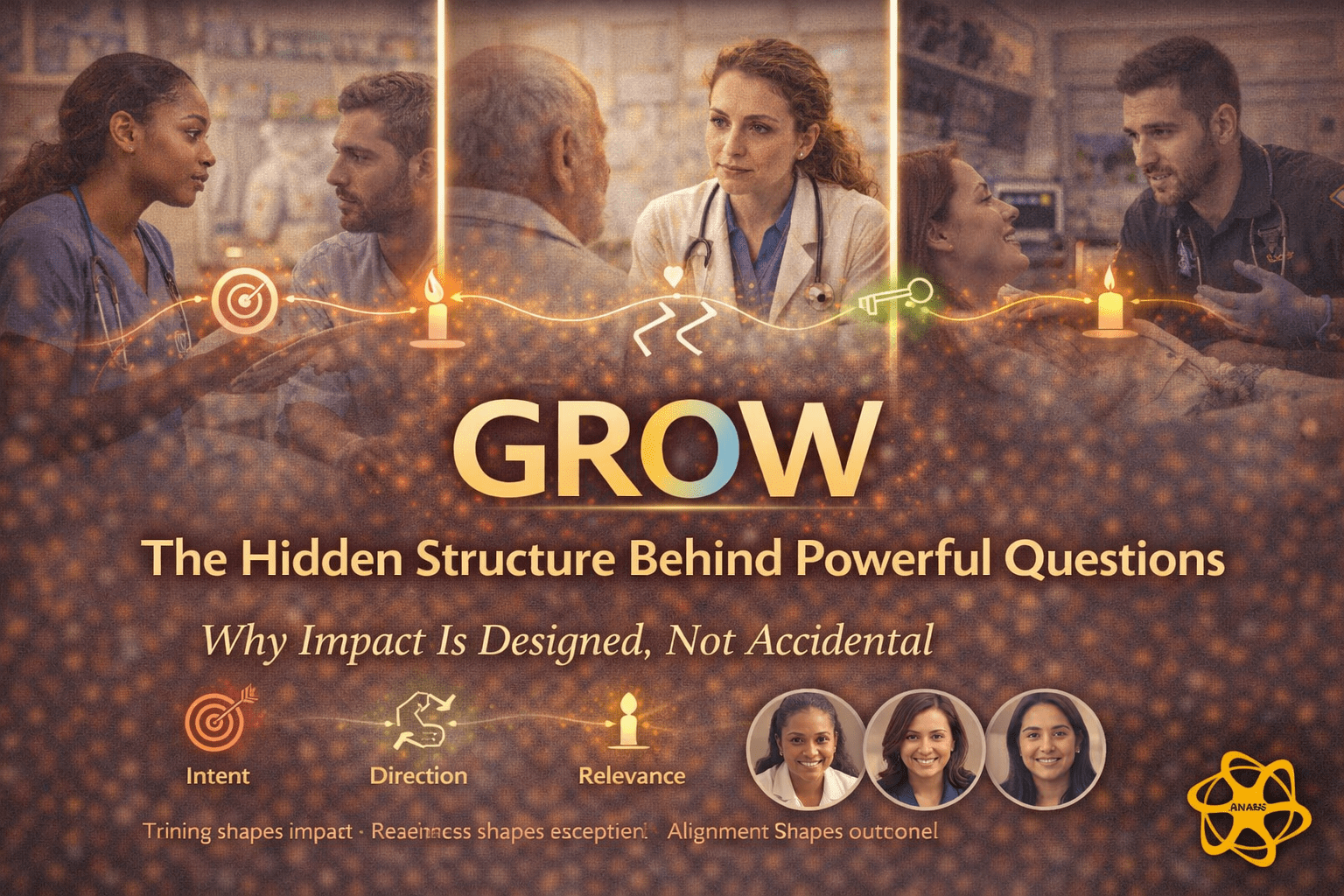
Why Impact Is Designed, Not Accidental Powerful questions matter because influence is far removed from clever wording, and especially because the effectiveness of a question is determined by its internal structure, not its surface form. In coaching, questions are often evaluated by how they sound. In practice, what matters is what the question does — where it directs…