

Tag: AppliedWholeness
-

Structure That Serves the Client, Not the Package Building a series of coaching sessions matters because continuity is far removed from momentum on its own, and especially because session structure must serve the client’s reality rather than the coach’s preference or the product’s design. This post clarifies how to build, extend, and adapt a series of…
-

Completion as a Mark of Professional Integrity Ending a coaching relationship matters because continuation is far removed from care on its own, and especially because how coaching ends often determines whether the work integrates or unravels. This post clarifies how to end coaching relationships cleanly, ethically, and humanely — whether through planned completion or early termination…
-

Progress Is Maintained Through Attention, Not Pressure Reviewing client progress matters because movement is far removed from momentum on its own, and especially because without structured reflection, coaching becomes episodic rather than developmental. This post clarifies how progress review and session preparation function as the connective tissue of coaching, ensuring continuity, accountability, and relevance while remaining…
-

Where Information, Responsibility, and Respect Are Clarified A professional exchange matters because good intention is far removed from professional clarity on its own, and especially because coaching begins to work only once roles, responsibility, and direction are explicitly named. This post clarifies how the intake conversation functions as a professional exchange of information, expectations, and responsibility…
-

What You Do Before Coaching Determines Everything That Follows Running an intake session matters because momentum is far removed from alignment on its own, and especially because what happens before coaching formally begins determines clarity, safety, and effectiveness later. This post distils key insights from a professional discussion on running intake sessions, clarifying purpose, structure, and…
-

Exploring how others structure their intake process matters because exposure is far removed from alignment on its own, and especially because what works for one coach may quietly undermine another if copied without judgement. This post explores alternative intake approaches used by other coaches, not to prescribe a method, but to sharpen discernment around why intake…
-
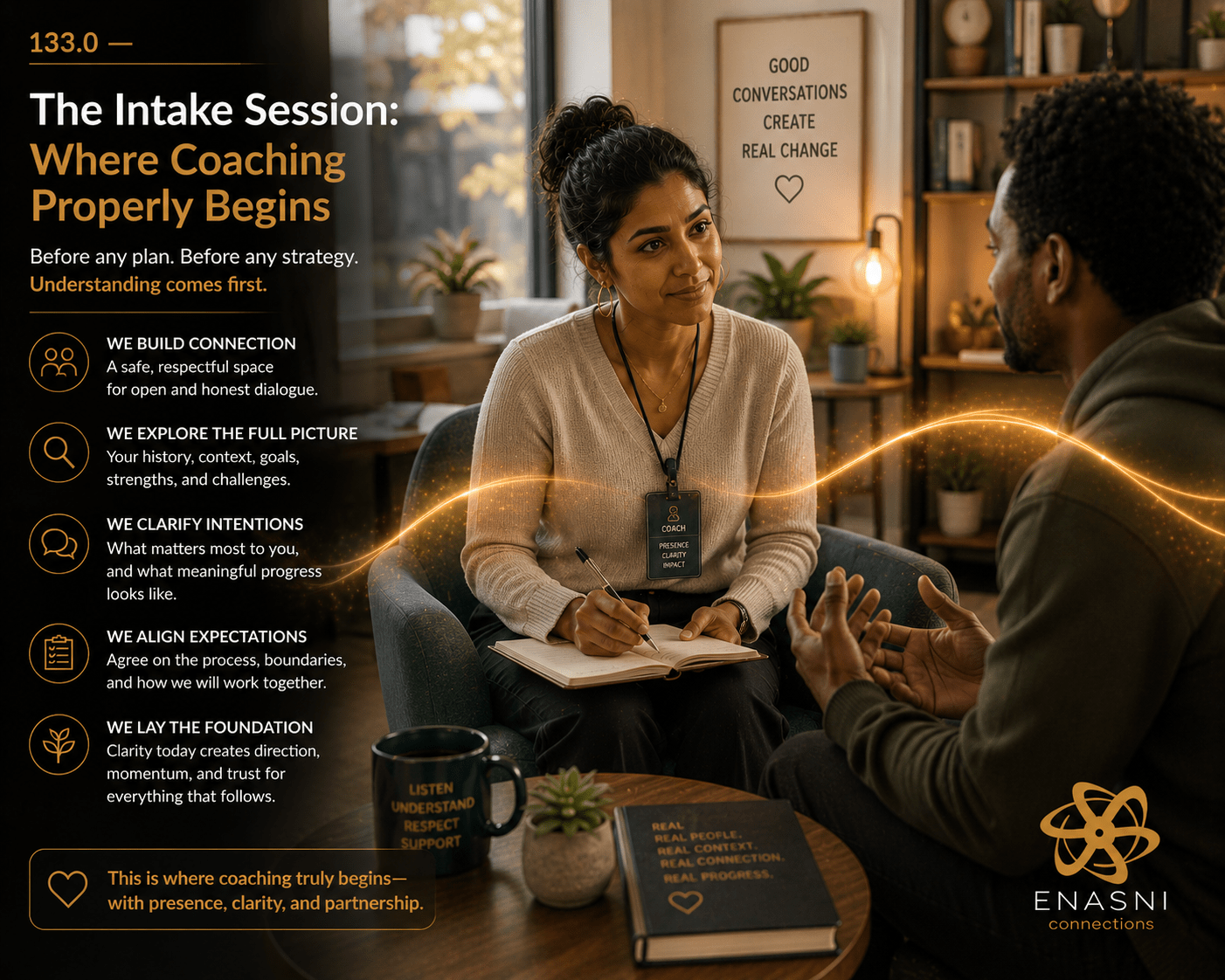
Where Coaching Properly Begins The intake session matters because momentum is far removed from clarity on its own, and especially because the first formal session establishes safety, authority, orientation, and responsibility for the entire coaching relationship. This post clarifies what the intake session is for, how it is structured, and why it is deliberately longer, slower,…