

Category: Insights
-

Why Competence Precedes Certainty. Confidence matters because paralysis is far removed from lack of ability, and especially because confidence is often misunderstood as something that must exist before action, rather than something that emerges because of action. In coaching development, confidence is frequently treated as a gatekeeper. Coaches believe confidence must arrive before clients, before visibility, before…
-
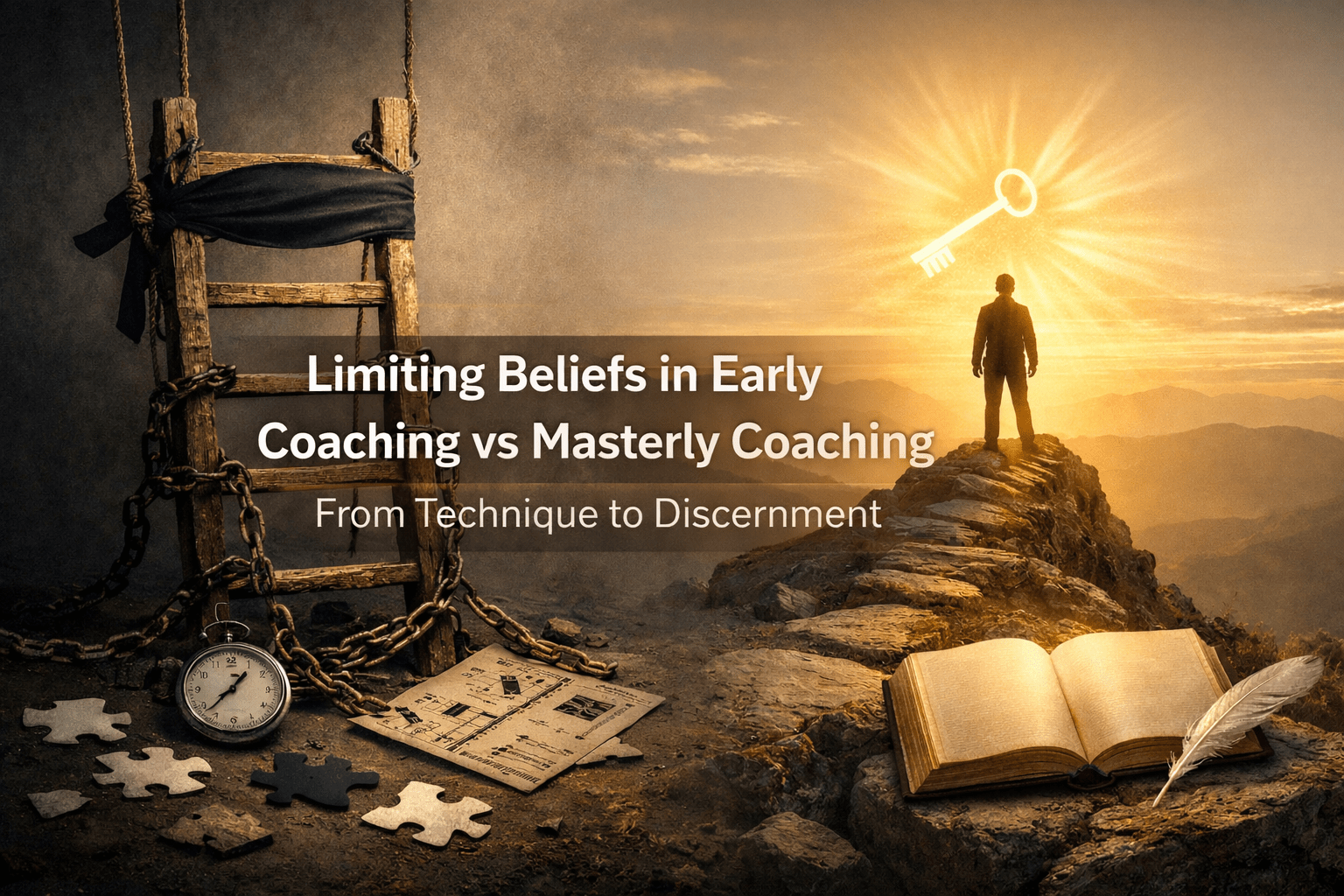
Limiting beliefs appear at every stage of coaching practice. What changes is not their presence, but how they are recognised, held, and engaged. Early coaching and masterly coaching do not differ in intention. They differ in judgement, pacing, and depth of perception. This post clarifies that progression from a wholeness perspective.
-

Finding Where a Belief Actually Lives. Locating belief matters because belief change is far removed from thinking alone, and especially because beliefs do not live only in thoughts — they are distributed across language, emotion, behaviour, and the body. In coaching conversations, belief work often stalls when beliefs are treated as abstract ideas to be…
-

The Internal Commentary That Shapes Behaviour. Self-talk matters because behaviour is far removed from intention alone, and especially because the ongoing internal commentary quietly directs action, effort, and restraint throughout daily life. In coaching conversations, self-talk often operates unnoticed by coaches. Clients describe outcomes and behaviours without recognising the constant narrative shaping how situations are interpreted and…
-

Why Inspiration Alone Rarely Changes Behaviour Ideas matter because momentum is far removed from imagination alone, and especially because an idea without integration often creates excitement without movement. In coaching conversations, ideas arrive easily. A new perspective appears. A solution feels obvious. Energy rises. Yet weeks later, nothing has changed. This is not a failure of…
-

Why Relief Is Not the Same as Change. Feeling better matters because emotional relief is far removed from transformation, and especially because many coaching processes stall when comfort is mistaken for completion. In coaching conversations, feeling better is often treated as success. Mood improves. Tension reduces. Hope returns. These shifts matter — yet they fail necessarily…
-

When Expression Replaces Agency. Whining matters because stagnation is far removed from lack of awareness, and especially because repetitive expression without movement often signals that agency has been temporarily surrendered. In coaching conversations, whining is frequently judged or dismissed from the coach. This response misses its function. Whining is not simply complaining. It is a state…