

Category: Technique
-

Capacity Without Carrying Emotional holding matters because support is far removed from absorption, and especially because holding emotion is not the same as carrying it. In coaching, clients bring intensity, vulnerability, confusion, and hope. The coach’s role is to hold emotional space without taking responsibility for emotional outcomes. Boundary clarity makes this possible. This post brings…
-

Why the Question Asked Matters Less Than the Depth It Comes From Questioning depth matters because impact is far removed from clever phrasing, and especially because the depth of a question reflects the depth of listening behind it. In coaching, questions are often treated as techniques to deploy. Lists are memorised. Frameworks are followed. Yet clients…
-

Authority, Agency, and the Final Return to Choice This principle matters because growth is far removed from permission granted by others, and especially because the most enduring limitations are often borrowed, rather than inherent. In coaching conversations — and in professional development more broadly — external authority frequently becomes internal law. Opinions, assessments, projections, and comparisons…
-
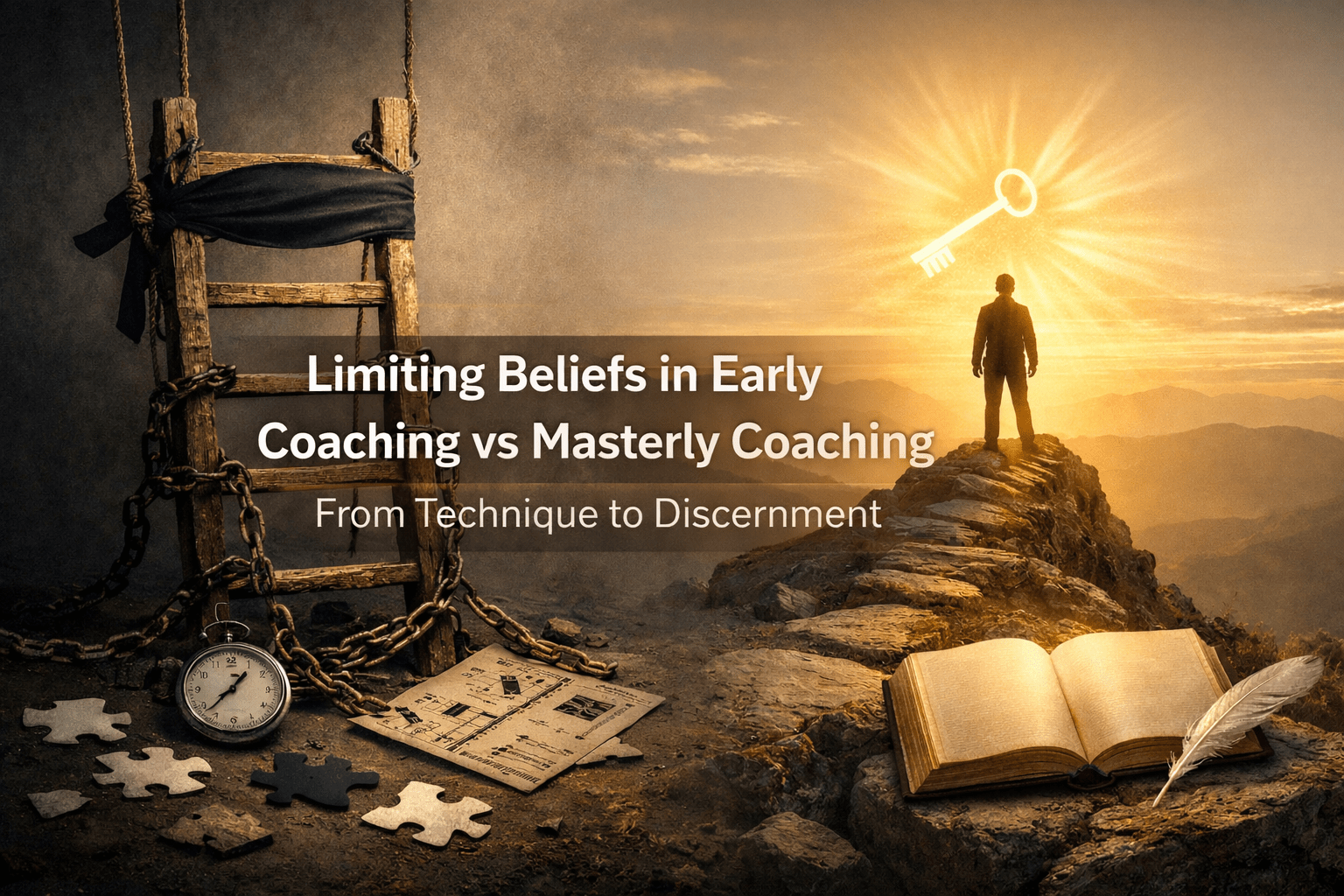
Limiting beliefs appear at every stage of coaching practice. What changes is not their presence, but how they are recognised, held, and engaged. Early coaching and masterly coaching do not differ in intention. They differ in judgement, pacing, and depth of perception. This post clarifies that progression from a wholeness perspective.
-

Limiting beliefs matter across all support disciplines, yet how belief is approached determines whether change stabilises or stalls. Generic coaching, other support disciplines, and wholeness-based coaching each engage belief differently. None are inherently wrong. Each operates from a distinct frame of purpose, boundary, and depth. This post clarifies those differences — not as hierarchy, but rather…
-

Why Force Breaks Belief and Precision Softens It. Challenging beliefs matters because change is far removed from confrontation, and especially because beliefs do not release under pressure — they tighten. In coaching conversations, belief challenge is often misunderstood as correction, contradiction, or persuasion by the coach. This approach may win an argument, but it rarely produces…
-

When Possibilities Collapse Before They Are Considered. Limiting beliefs in options matter because choice is far removed from creativity alone, and especially because many people unknowingly eliminate options before conscious evaluation begins. In coaching conversations, clients often report having “no options.” This is rarely accurate. More often, beliefs have filtered what feels thinkable, safe, or permissible…