

Tag: CoachingQuestions
-

Why Questions Belong in Groups, Not Lists Question families matter because inquiry is far removed from isolated prompts, and especially because effective questioning works through clusters of related attention, not one-off brilliance. In coaching, questions are often collected as lists. In practice, questions function in families — groups of inquiries that share purpose, depth, and direction. Each GROW…
-
The Hidden Mechanics Behind Effective Inquiry Questions work not by clever wording alone, but by how they move attention, regulate state, and reorganise meaning. Understanding how questions work matters because misuse creates confusion, pressure, or shutdown — while precision creates clarity, agency, and movement. This post breaks down the internal mechanics that make a question effective.
-
Attention Is the Real Intervention Questions work because change is far removed from advice alone, and especially because questions direct attention — and attention shapes experience. In coaching, questions are often treated as conversational tools. In reality, questions function as mechanisms of perception. They reorganise focus, interrupt automatic patterns, and create space for choice to emerge. This…
-
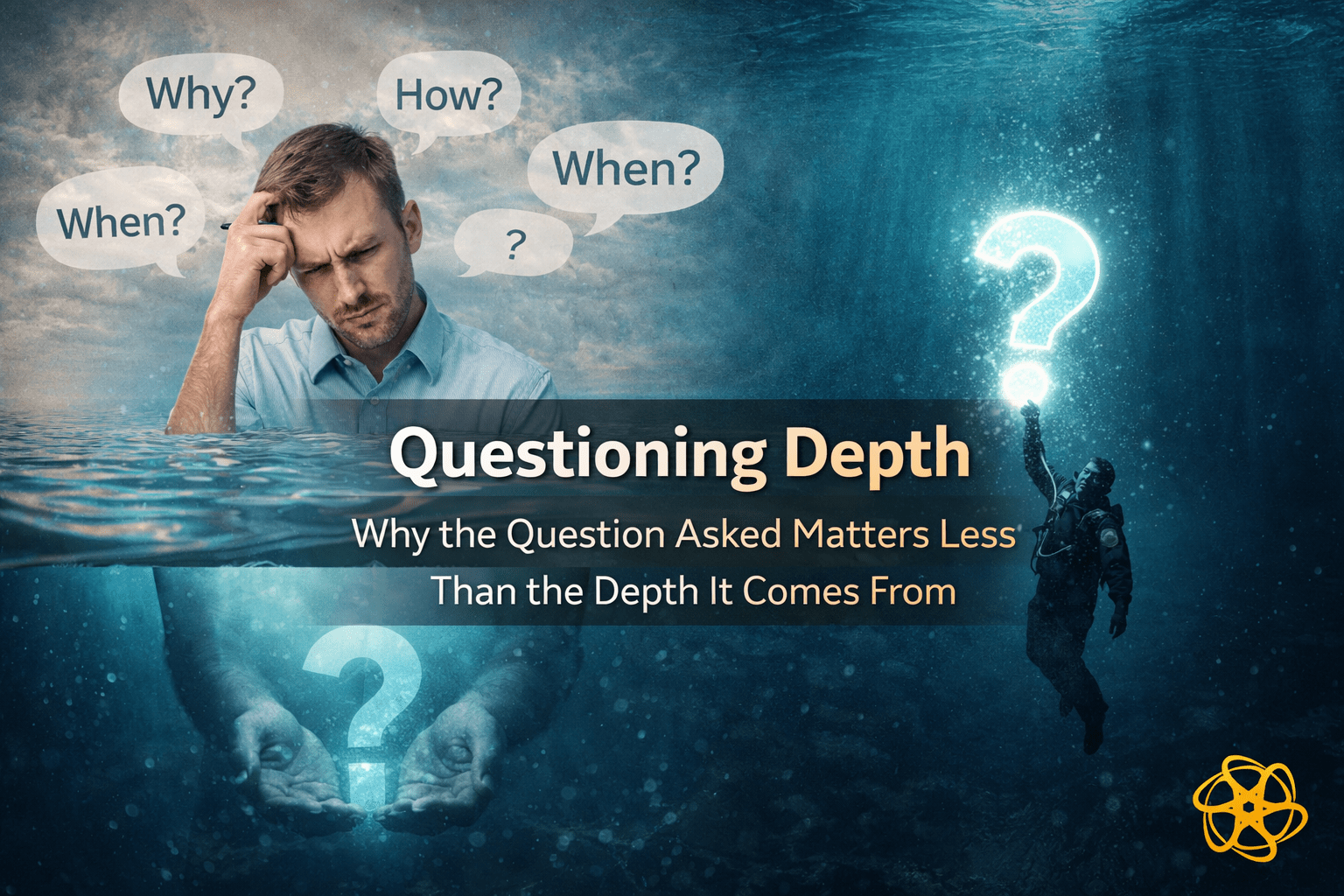
Why the Question Asked Matters Less Than the Depth It Comes From Questioning depth matters because impact is far removed from clever phrasing, and especially because the depth of a question reflects the depth of listening behind it. In coaching, questions are often treated as techniques to deploy. Lists are memorised. Frameworks are followed. Yet clients…
-

Using Visualisation, Feeling, and Meaning to Lock Motivation Into Place. The 10/10 questioning approach is one of the most powerful tools in coaching when used with precision. It transforms abstract goals into lived experiences, shifting motivation from intellectual intention to embodied certainty. The insights from our training transcripts demonstrate that clients do not move into action because…
-

Reality is the most grounding stage of the GROW model. It is where fantasy dissolves, assumptions soften, and momentum becomes possible. Our training transcripts emphasise that Reality is not about dwelling on the past. Reality is about seeing clearly enough to move forward effectively. When Reality is handled with precision, clients often realise they are closer to…
-

Goal-setting questions are not a checklist. They are precision instruments. Our training transcripts emphasise a critical principle: questions must be tailored to the client’s language, context, and lived reality. Generic questions reduce impact. Personalised questions activate ownership, motivation, and clarity . In wholeness-informed coaching, goal-setting questions do more than define an outcome. They activate mechanisms — awareness, responsibility, possibility,…