

Tag: CoachingMastery
-

Long-Term Preparation: Becoming the Coach You Practise Being. Long-term preparation matters because technique is far removed from mastery on its own, and especially because coaching excellence emerges from sustained habits of learning, reflection, and professional accountability over time. This post clarifies long-term preparation — how coaches maintain sharpness, relevance, and ethical steadiness across years of practice…
-
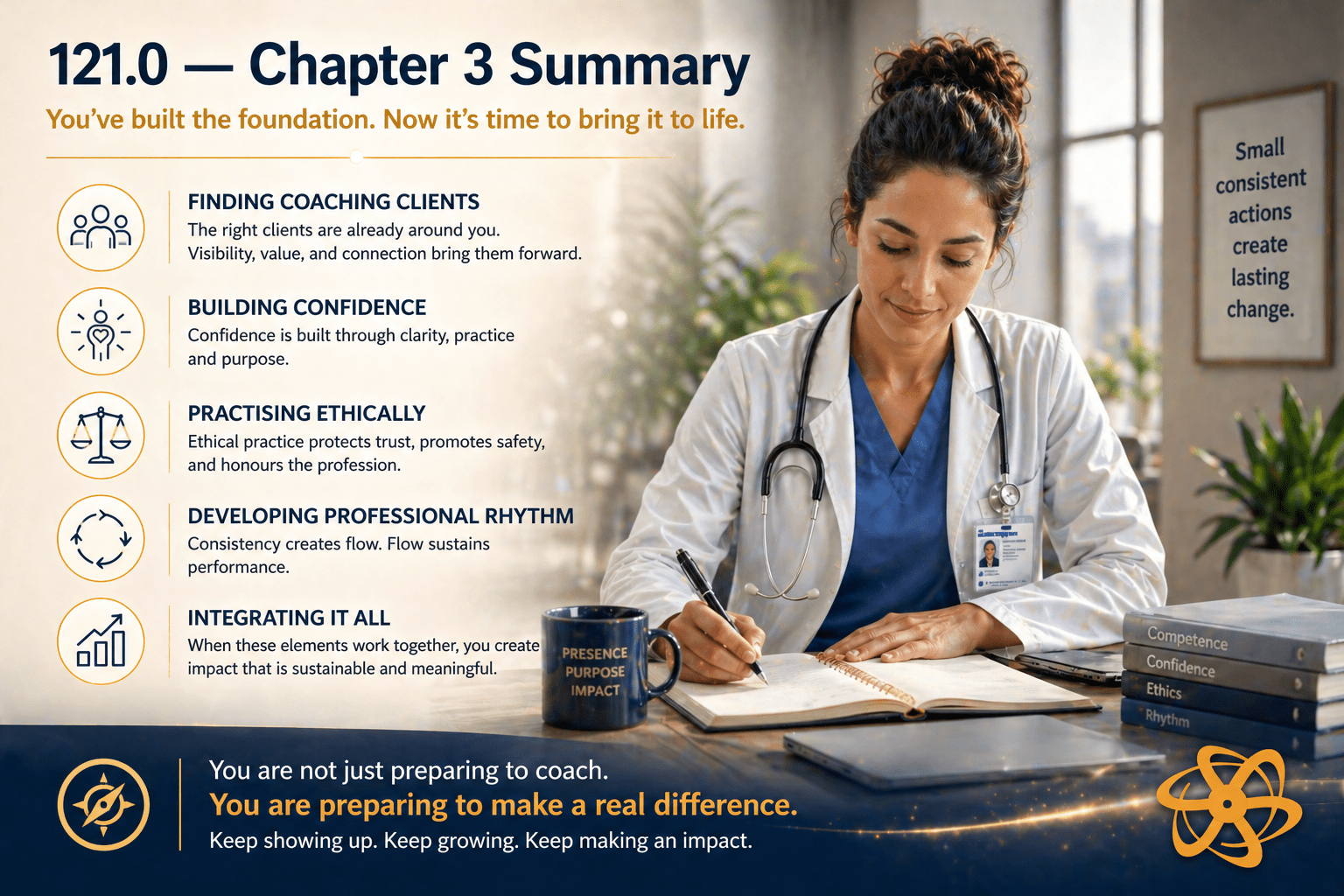
From Skill Acquisition to Professional Coherence Chapter 3 matters because technique is far removed from mastery, and especially because coaching competence only stabilises when skills integrate into judgement, presence, and rhythm. This chapter moved deliberately from tools into discernment — from knowing what to do into understanding when, why, and how to do it responsibly. Across these posts, coaching was reframed as…
-
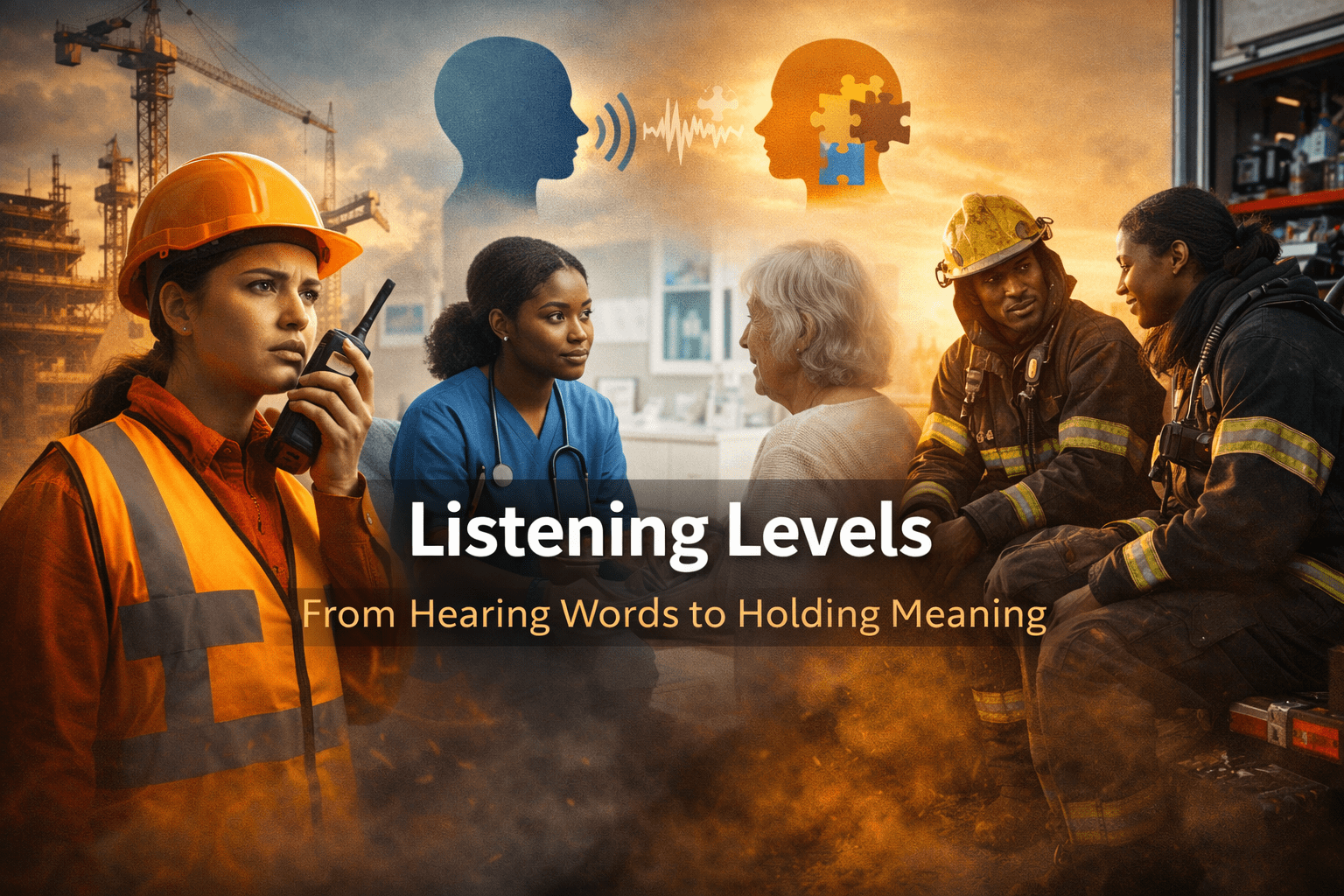
From Hearing Words to Holding Meaning Listening levels matter because coaching effectiveness is far removed from asking good questions alone, and especially because the depth of listening determines the depth of change. In coaching, listening is often described as a basic yet vital skill. In practice, listening operates across distinct levels of attention, presence, and perception.…
-
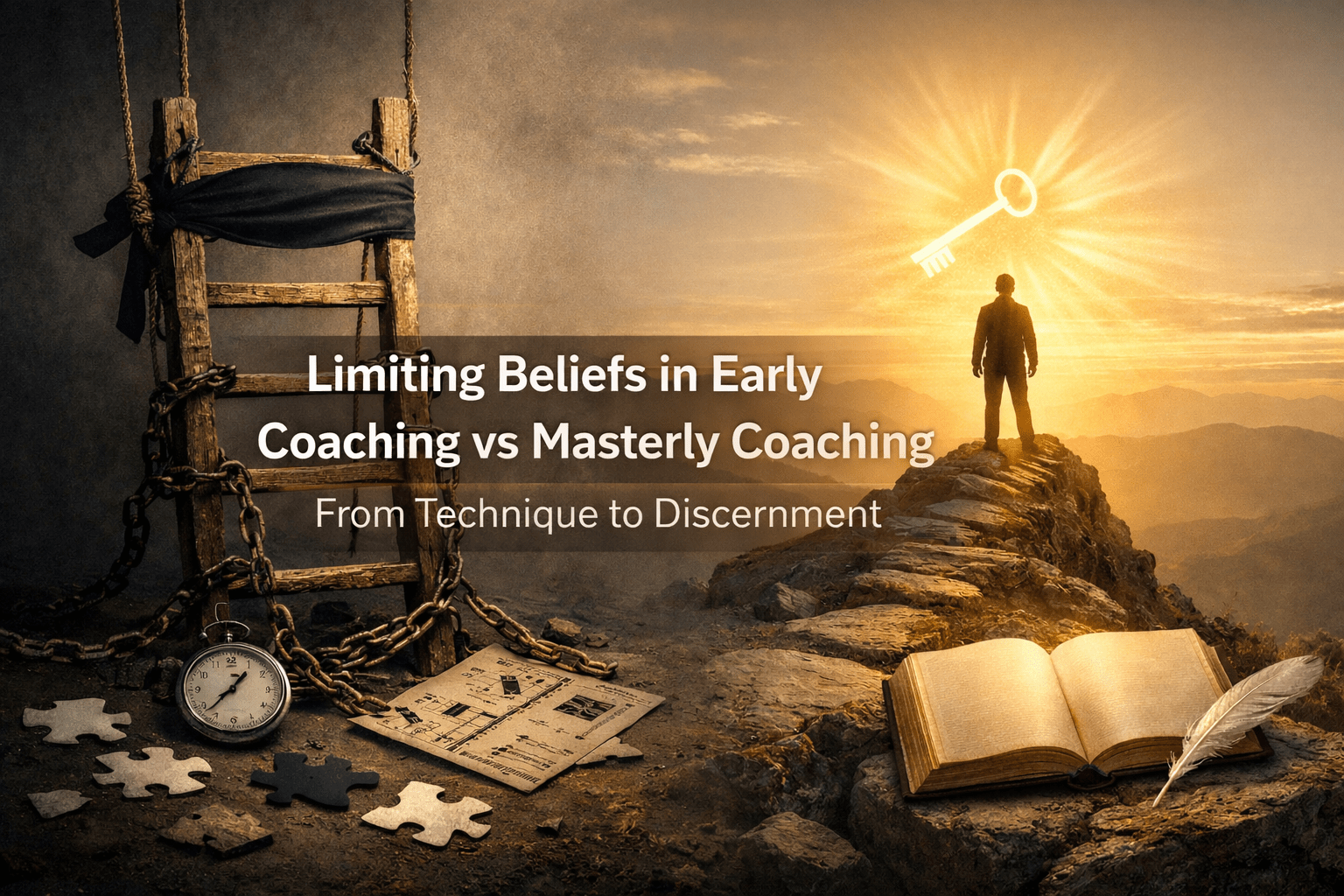
Limiting beliefs appear at every stage of coaching practice. What changes is not their presence, but how they are recognised, held, and engaged. Early coaching and masterly coaching do not differ in intention. They differ in judgement, pacing, and depth of perception. This post clarifies that progression from a wholeness perspective.
-

From Performance to Presence. Coaching stops being a technique because effective practice is far removed from doing the right thing, and especially because it depends on how the coach is being, rather than what the coach is applying. There comes a moment in every coach’s development when technique no longer feels sufficient. Questions land, however something…
-

Restraint as a Professional Skill. Knowing when to use tools matters because effective coaching is far removed from constant intervention, and especially because discernment protects the client’s process more reliably than technique ever could. At this stage of Chapter 3, tools are no longer the centre of gravity. Judgement and discernment are. This post clarifies…
-

Why Good Coaching Cannot Be Automated. Judgement and discernment matter because effective coaching is far removed from rule-following, and especially because no two human moments are ever the same. If integration is knowing what belongs where, discernment is knowing why it belongs there now. This post sharpens a critical distinction in Chapter 3: tools can be…