
Category: GROW Model
-

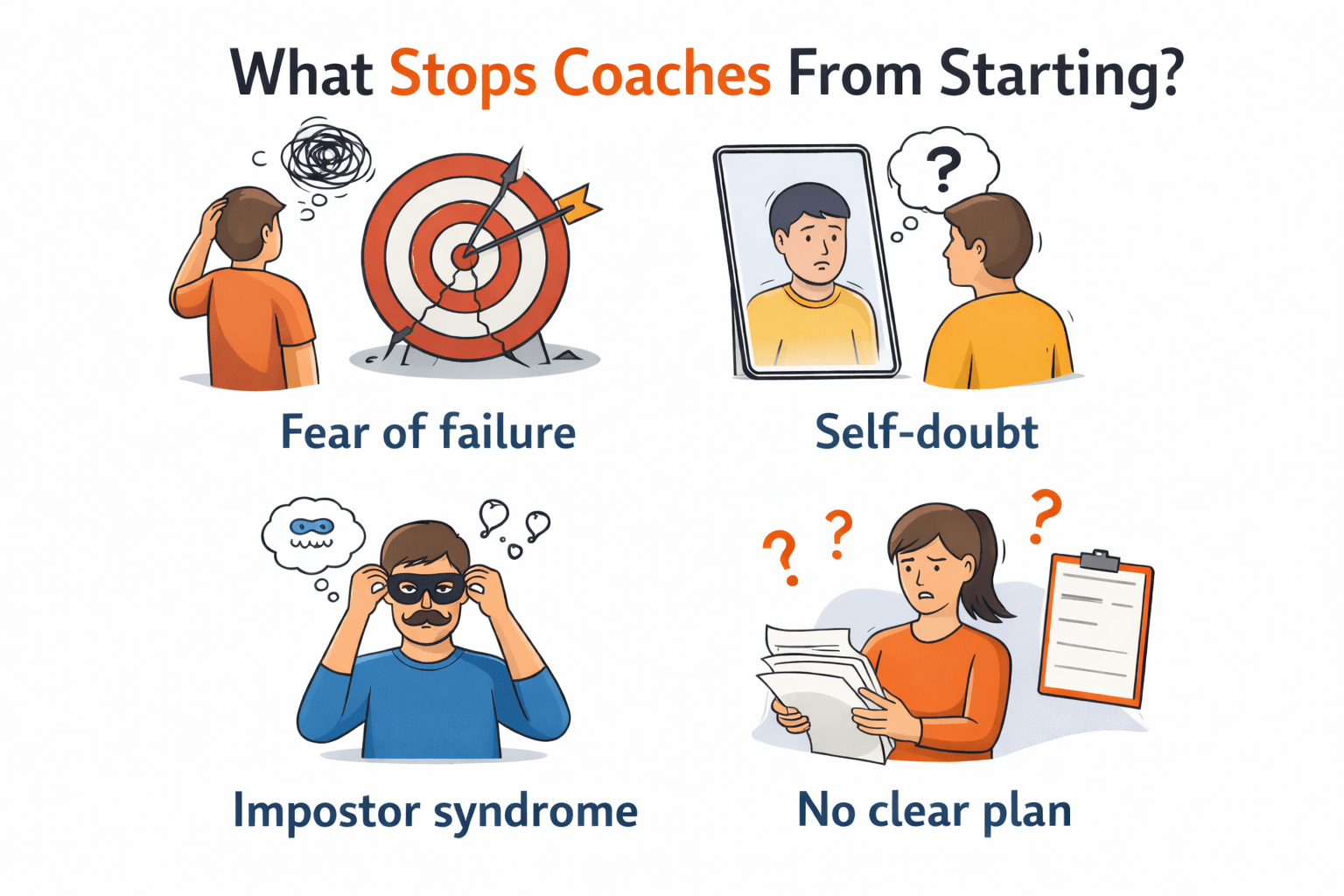
The Invisible Barriers Before the First Client What stops coaches from starting matters because hesitation is far removed from lack of capability, and especially because many coaches delay beginning not due to incompetence, but due to unexamined belief, identity tension, and misplaced standards. In coaching development, starting is often framed as a logistical step. In reality,…
-

Limiting beliefs matter across all support disciplines, yet how belief is approached determines whether change stabilises or stalls. Generic coaching, other support disciplines, and wholeness-based coaching each engage belief differently. None are inherently wrong. Each operates from a distinct frame of purpose, boundary, and depth. This post clarifies those differences — not as hierarchy, but rather…
-

Why Force Breaks Belief and Precision Softens It. Challenging beliefs matters because change is far removed from confrontation, and especially because beliefs do not release under pressure — they tighten. In coaching conversations, belief challenge is often misunderstood as correction, contradiction, or persuasion by the coach. This approach may win an argument, but it rarely produces…
-

Finding Where a Belief Actually Lives. Locating belief matters because belief change is far removed from thinking alone, and especially because beliefs do not live only in thoughts — they are distributed across language, emotion, behaviour, and the body. In coaching conversations, belief work often stalls when beliefs are treated as abstract ideas to be…
-

The Quiet Conclusions That Run the Show. Assumptions matter because behaviour is far removed from evidence alone, and especially because assumptions operate as silent conclusions, shaping decisions before conscious thought engages. Earlier in Chapter 3, assumptions were introduced as invisible drivers. This post revisits them at a deeper level — now that patterns, beliefs, state responses,…
-
The Internal Commentary That Shapes Behaviour. Self-talk matters because behaviour is far removed from intention alone, and especially because the ongoing internal commentary quietly directs action, effort, and restraint throughout daily life. In coaching conversations, self-talk often operates unnoticed by coaches. Clients describe outcomes and behaviours without recognising the constant narrative shaping how situations are interpreted and…
-
Why Inspiration Alone Rarely Changes Behaviour Ideas matter because momentum is far removed from imagination alone, and especially because an idea without integration often creates excitement without movement. In coaching conversations, ideas arrive easily. A new perspective appears. A solution feels obvious. Energy rises. Yet weeks later, nothing has changed. This is not a failure of…