

Understanding stress before attempting regulation
What stress signal mapping actually means
Stress Signal Mapping is the process of identifying how stress shows up1, where it originates2, and what it is attempting to communicate3 across human systems.
Rather than reducing stress to a feeling or label, mapping treats stress as data.
Stress is held separately from randomness.
Stress follows patterns.
Stress communicates load, mismatch, or capacity strain long before collapse occurs.
Mapping makes those signals visible and usable.
Why stress is often mismanaged
Most stress interventions begin after overwhelm, burnout, or impairment.
At that stage, signals have already escalated.
Common errors include:
- Treating symptoms as causes
- Applying generic coping strategies without context
- Ignoring cumulative and decision-based stress
- Overlooking early regulatory warnings
Without mapping, intervention becomes guesswork. We want to avoid guessing with life’s decision making.
Stress as a signal, rather than a failure
Stress signals indicate one or more of the following:
- Demand exceeding recovery capacity
- Prolonged activation without resolution
- Cognitive load exceeding decision bandwidth
- Misalignment between values, roles, and reality
The signal itself is neutral.
Interpretation and response determine outcome.
The four stress signal categories we use in The Package
Our Stress Signal Mapping works across four key signal types:
Distress (Bad) Stress Signals
Indicators of overload, depletion, or threat dominance.
Examples include chronic fatigue, irritability, cognitive fog, emotional reactivity, and sleep disruption. Learn more
Eustress (Good) Stress Signals
Indicators of adaptive demand and growth potential.
Examples include heightened focus, challenge engagement, short-term activation, and learning tension. Learn more
Decision Stress Signals
Indicators of excessive cognitive load and choice saturation.
Examples include indecision, mental looping, avoidance, snap decisions, or analysis paralysis. Learn more
Wholeness Stress Signals
Indicators of fragmentation across identity, values, or life domains.
Examples include loss of meaning, role conflict, internal misalignment, or persistent dissatisfaction without clear cause. Learn more
Each category requires a different regulatory response.
Uniform solutions fail because signals differ. Awareness of typology is key to lasting mastery.
Learn more about additional categories we use.
Where stress signals appear
Signals emerge across multiple domains simultaneously:
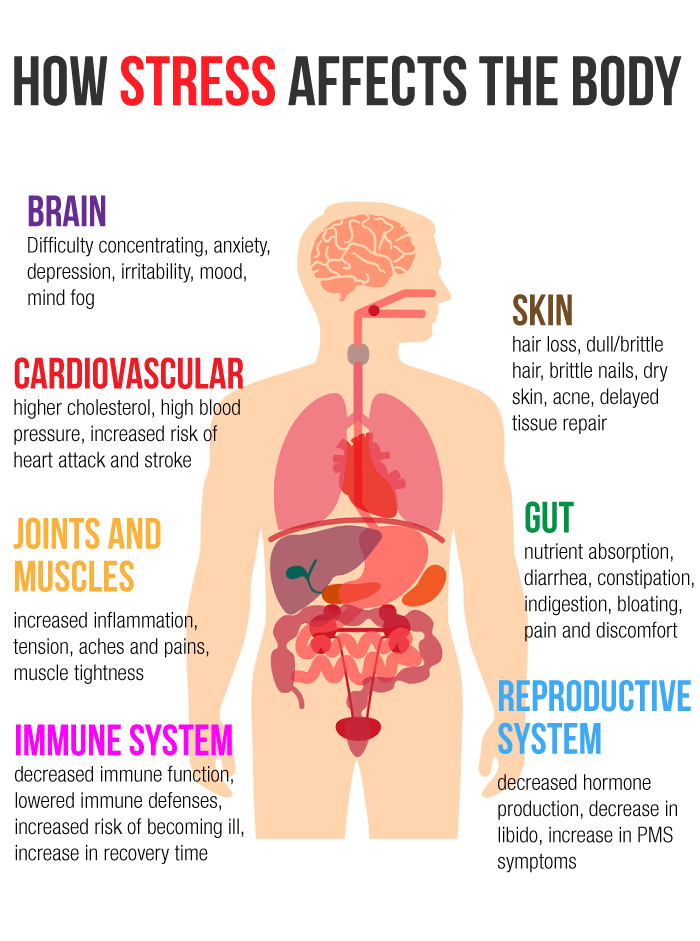
- Physical: energy shifts, tension patterns, immune changes
- Emotional: irritability, numbness, volatility, withdrawal
- Cognitive: reduced clarity, narrowed thinking, rumination
- Behavioural: avoidance, overworking, withdrawal, control-seeking
- Relational: conflict, detachment, boundary erosion
- Environmental: sensitivity to noise, pace, or sensory load
Mapping identifies clusters, instead of isolated symptoms.
Learn More about our own SSEEMMIPTM Domain Mapping Framework.
Timing matters more than intensity
Early signals tend to be subtle:
- Shortened recovery time
- Reduced tolerance
- Narrowed flexibility
- Increased effort for the same output
Late signals become disruptive:
- Exhaustion
- Burnout
- Emotional shutdown
- Functional impairment
Stress Signal Mapping prioritises early detection, where regulation remains efficient and non-invasive.
What mapping enables
Effective mapping allows:
- Accurate selection of regulation strategies
- Differentiation between recovery needs and growth demands
- Reduction of unnecessary intervention
- Prevention of escalation cycles
- Clear distinction between mini-programme work and full programme depth
Mapping determines what not to do as much as what to do.
Stress Signal Mapping inside a mini-programme
Within a mini-programme, Stress Signal Mapping:
- Establishes a clear stress profile
- Identifies dominant signal types
- Sets boundaries on scope and depth
- Guides session pacing and focus
- Prevents premature deep work
The aim is stabilisation and clarity, detached from total system redesign.
From mapping to regulation
Once signals are mapped:
- Regulation becomes targeted
- Capacity rebuilding becomes proportional
- Decision load becomes manageable
- Recovery becomes predictable
Stress stops being an adversary and becomes a guide.
Stress does not require elimination.
Stress requires interpretation.
Mapping restores choice, control, and coherence—before force, motivation, or endurance are required.
What stress physiology explains
Stress physiology shows that stress is detached from single reactions and very much part of a whole-body regulatory process.
The nervous system continuously evaluates demand, safety, and recovery capacity. When activation outweighs recovery for too long, regulation degrades.
Key principles:
- Stress responses are adaptive first, harmful only when sustained
- Chronic activation shifts baselines, not just moods
- Recovery capacity determines outcome more than stress exposure
- Regulation precedes resilience
This means stress management cannot rely on willpower or mindset alone.
Physiology must stabilise before performance or insight can return.
What cognitive appraisal reveals
Cognitive appraisal research shows stress is shaped by interpretation, not events alone.
How situations are appraised—threat, challenge, or overload—directly alters physiological response.
Key principles:
- Perceived control modulates stress intensity
- Meaning coherence reduces load even under pressure
- Decision saturation is a primary stress amplifier
- Misaligned roles increase cognitive strain
Without addressing appraisal patterns, regulation attempts remain incomplete.
Thoughts, meaning, and decisions must be included in mapping.
What system design contributes
System design explains why stress often persists despite personal effort.
Humans operate within structures, roles, environments, and expectations that shape load continuously.
Key principles:
- Poorly designed systems externalise stress onto individuals
- Repeated friction creates cumulative load
- Role ambiguity increases decision stress
- Lack of buffers erodes recovery
Stress is frequently a system problem, not a personal failing.
Mapping must include context, going beyond just internal states.
What human regulation integrates
Human regulation unites physiology, cognition, behaviour, and environment into one process.
Regulation is the capacity to move flexibly between activation1 and recovery2.
Key principles:
- Regulation is dynamic, not static
- Flexibility matters more than calm
- Stability enables growth, not the reverse
- Maintenance prevents relapse
This lens explains why fragmented interventions fail.
Regulation must be coordinated across domains.
How Enasni Connections brings this together
Enasni Connections’ Wholeness Stress Mastery approach integrates:
- Stress physiology → how the body signals load
- Cognitive appraisal → how meaning and decisions shape stress
- System design → how environments sustain or reduce strain
- Human regulation → how coherence is restored and maintained
Rather than treating these as separate theories, the approach amalgamates them into one practical framework.
Stress is mapped across:
- Bad stress
- Good stress
- Decision stress
- Wholeness stress
Each signal type receives a proportionate, appropriate response.
How this shows up in The Package
Within The Package, this integration means:
- No generic coping lists
- No premature deep work
- No over-intervention
Instead:
- Stress signals are identified and categorised
- Regulation strategies are selected deliberately
- Cognitive load is reduced before optimisation
- Scope remains contained and intentional
The Package stabilises, clarifies and anchors.
The Program transforms systems and capacity.
Why clients revisit this post after-booking
This page becomes a reference point throughout the journey.
Clients revisit to:
- Understand why specific tools were chosen
- Make sense of stress responses without self-judgement
- Recognise early warning signals sooner
- Maintain gains after sessions conclude
Understanding turns regulation from something done to someone into something understood and sustained.
Closing perspective
Stress mastery is goes beyond eliminating pressure.
Stress mastery is about reading signals accurately and responding coherently.
Stress mastery is only a component of the wider development and improvement matrix of the human condition.
A vital one at that however.
Wholeness is restored when body, mind, meaning, and context are treated as one system—working together rather than in conflict.