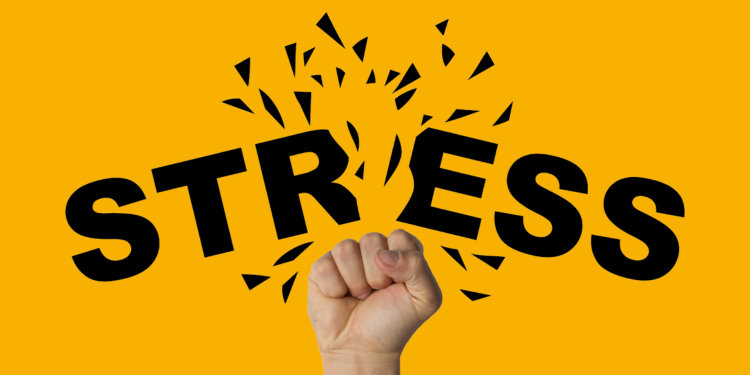
Stress as information changes the way pressure is understood.
Instead of treating stress only as a problem to eliminate, it becomes a signal pointing toward something that needs attention.
For many professionals — especially those working in demanding environments — stress often appears first as a subtle shift: tension in the body, racing thoughts, irritability, or difficulty switching off. When these signals are ignored, they accumulate. When they are listened to, they become guidance.
tress has been given a bad reputation. It’s called the enemy, the sickness, the thief.
But stress, in its truest form, is a message — not a verdict.
When listened to early, it teaches. When ignored, it roars.
1. Stress as Information: The Signal Before the Break
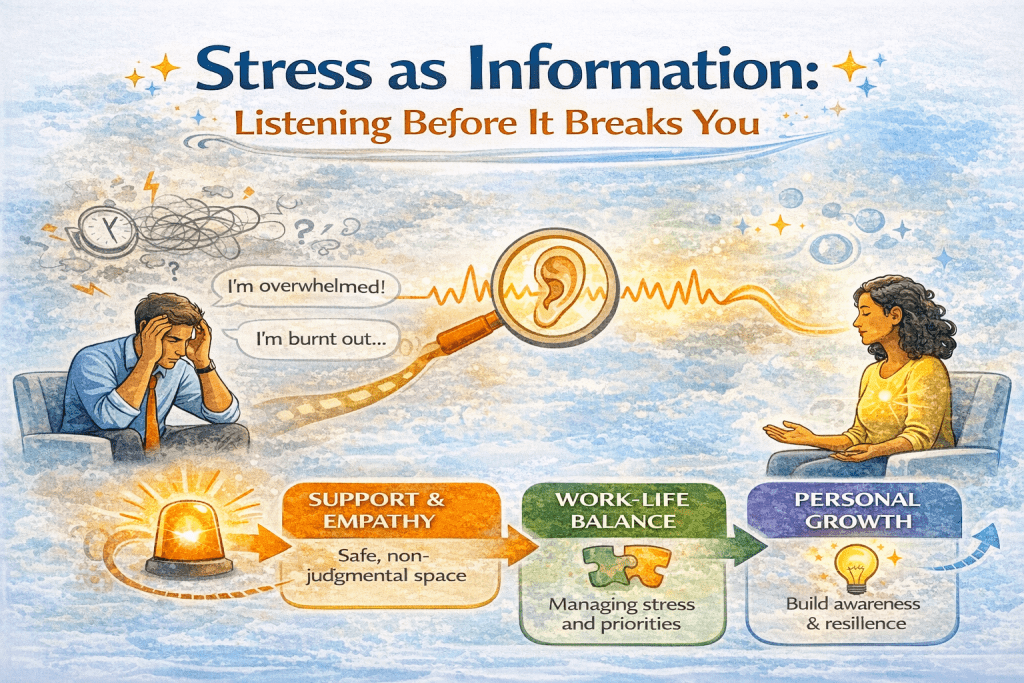
Stress is often treated as the enemy — something to eliminate, suppress, or escape. Yet stress rarely appears without purpose. Long before exhaustion or burnout arrives, the body and mind begin sending signals.
A tightening chest during a difficult conversation. A restless mind replaying the same decision. The inability to switch off after work. These are not random disturbances. They are early signals that the internal system is under strain.
They are early signals that the internal system is under strain.
Stress as information reframes these sensations as data rather than defects. Instead of asking, “How do I stop this feeling?” a more useful question becomes, “What is this signal pointing toward?”
Sometimes the message relates to workload — too many demands for the available energy. Sometimes it reflects misalignment between personal values and daily actions. In other cases, the signal simply indicates a rhythm imbalance: effort without adequate recovery.
The critical point is timing. When stress is recognised early, the signal can guide small adjustments — a pause, a boundary, a conversation, a change in pacing. When ignored repeatedly, the signal intensifies until the system forces attention through fatigue, illness, or breakdown.
Listening to stress early does not mean amplifying worry. It means treating the sensation as information from the body’s regulatory system — an early warning that something in the pattern of living needs recalibration.
In this sense, stress is not the break itself. It is the signal before the break.
2. The Nature Of Stress
Understanding stress as information changes how it is interpreted. Stress stops being viewed only as a threat and begins to reveal patterns inside the human system — patterns of demand, recovery, attention, and purpose. When these patterns are recognised early, stress becomes guidance rather than damage.
Not all stress is harmful. Some stress sharpens attention, heightens awareness, and prepares the body for meaningful action. The quickened heartbeat before a presentation or the surge of focus before a critical decision are examples of stress functioning as information — a signal that something important is happening.
Stress as information invites a different response. Instead of fighting the sensation or suppressing it, the goal becomes listening. What is the body signalling? What demand, pressure, or misalignment is asking to be noticed?
For many professionals, especially those working in high-responsibility environments, these signals accumulate quietly. Fatigue, irritability, disrupted sleep, and mental replay are rarely random. They are messages pointing toward imbalance in workload, rhythm, recovery, or meaning.
When stress is treated purely as a problem, the instinct is to silence it. When stress is understood as information, the instinct shifts toward curiosity.
At Enasni, stress is approached as communication from the system. The signal arrives before the break — offering an opportunity to adjust pace, restore regulation, and reconnect with internal balance before pressure turns into burnout.
3. Learning to Listen
The invitation is not to eliminate stress but to translate it.
To pause long enough to ask:
- What is this tension trying to say?
- Where am I carrying what doesn’t belong to me?
- What small shift could return me to rhythm?
Often, stress points to misalignment — between value and action, effort and rest, giving and receiving.
Once decoded, it becomes a guide rather than a burden.
4. The Wholeness Perspective
Wholeness fails to begin when stress disappears; it begins when awareness enters.
Through coaching, mindfulness, or quiet honesty, stress can evolve from threat to teacher.
Tiny interventions — conscious breathing, boundary-setting, walking without your phone — build coherence. Each one says, I am listening now.
When the body trusts that it is being heard, it begins to soften.
Listening to stress as information signals also connects to a deeper concept explored across the coaching series. In Wholeness: The Silent Core of Growth, stress as information signals are understood as indicators of imbalance between different dimensions of the human system — physical, emotional, intellectual, and spiritual.
5. Listening to Stress Signals Early
Recognising stress as information is only the first step.
Stress as information invites a different response. Research in stress physiology, such as work from the American Institute of Stress, shows that recognising stress signals early improves regulation and resilience. To use these signals well, it helps to understand what stress actually is and how it operates within the human system.
When stress is treated as information, the focus shifts from suppression to observation. Small signals begin to matter.
A shortened temper. Difficulty concentrating. Restless sleep. The quiet sense of carrying too much responsibility.
These signals often appear weeks or months before a visible problem emerges. Yet many professionals learn to override them in the name of performance, responsibility, or service to others.
Listening early changes the trajectory.
Instead of waiting for exhaustion, the signal invites small course corrections — restoring recovery time, adjusting expectations, or redistributing pressure before it accumulates.
In this way, stress as information becomes guidance rather than interruption. Seen through this lens, stress as information becomes a form of early intelligence. It reveals where attention, recovery, or recalibration is needed. When these signals are respected early, professionals regain the ability to respond deliberately rather than being forced into reaction. This reflective listening process closely mirrors the skills described in The Core Competencies of a Great Coaching Session.
Stress signals often become visible inside real coaching conversations. If you would like to see how these signals can surface in practice, the post A Live Coaching Demonstration: From Overwhelm to Clarity shows a short dialogue where a client begins noticing the pressure patterns beneath everyday stress.
Key Learning Points
- Stress is information — a signal, not an enemy.
- Good stress fuels growth; bad stress is energy trapped in overdrive.
- Awareness converts pressure into purpose.
- Listening to stress helps restore emotional and physical balance.
- Wholeness comes from responding, not reacting.
Action Points
- Take three mindful pauses each day to check in with your body’s cues.
- Write down one message your stress might be trying to communicate.
- Replace one act of avoidance with one act of gentle curiosity.
In Essence
Stress is not there to break you. It’s there to wake you.
It asks for your attention, instead of your resistance.
At Enasni, we do not fight stress — we translate it.
Because once it’s understood, it stops shouting.