

Living Ethics In Coaching Practice Is More Than A Policy You Sign
It is the quiet consistency of how you show up. Every email, every session, every promise kept (or broken) shapes the integrity of the coaching field. Before hiring a coach, or taking on a client, ensure this integrity is present.
Coaching is a living profession — one that grows only as its practitioners do. A certification is a starting line, rather than a finish.
Living ethics in coaching means we as coaches owe it to our clients, each other and to ourselves, to keep evolving and this post explores that from a wholeness perspective.
The Ground Rules of Trust
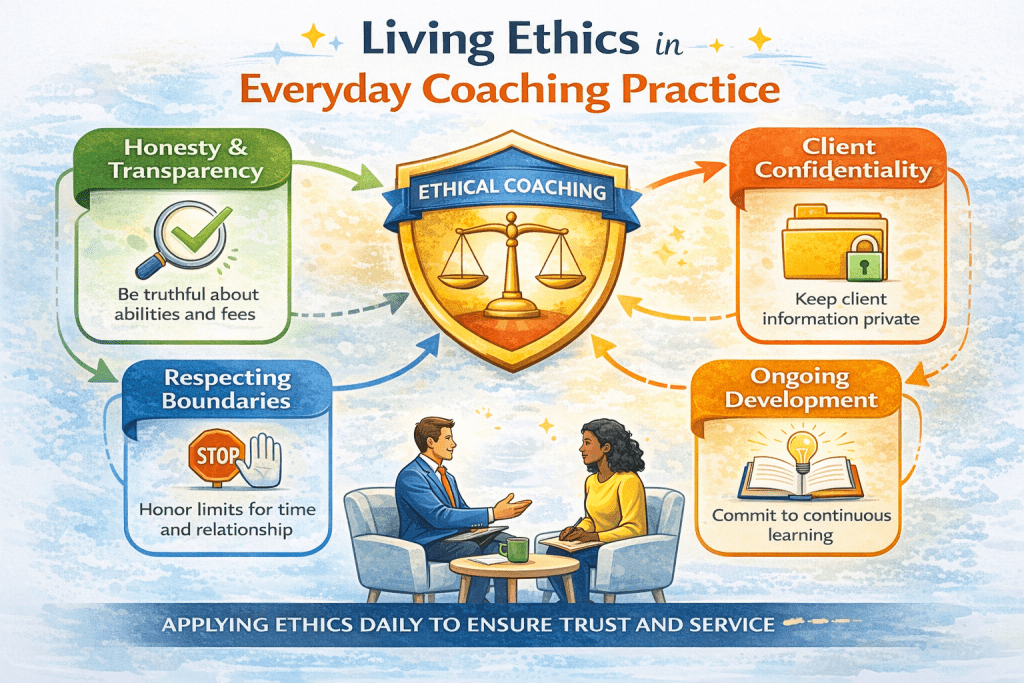
Living ethics in coaching practice becomes visible in small decisions — how agreements are honoured, how confidentiality is maintained, and how boundaries are respected. Over time, living ethics in coaching practice builds credibility that no marketing can replace.
Professional ethics create the invisible structure that holds coaching together. They define how we begin, how we relate, and how we close.
At Enasni Connections, we treat them not as paperwork, but as practice — living standards that shape how trust is built and maintained.
Coaches Also Hold Legal And Moral Duties
As explored in our post on the origins of coaching, ethical structure evolved alongside professional identity.
Before coaching begins, clear agreements and contracts set the tone. They define roles, expectations, confidentiality, and boundaries. Nothing undermines a relationship faster than ambiguity.
- Possess appropriate professional accreditation and indemnity insurance before charging fees.
- Maintain confidentiality at all times, except where law requires disclosure or explicit written consent is given.
- Avoid conflicts of interest and refer clients onward when outside your scope of competence.
- Keep personal and romantic boundaries sacred — the coaching space is for transformation, not entanglement.
- Protect all client data in compliance with GDPR.
- Ensure all promotional material meets UK Advertising Standards for clarity and honesty.
These standards keep the coaching profession safe — not just legally, but holistically too.
The International Coaching Federation (ICF) – The global benchmark for coaching ethics echoes these too.
The Ethic of Growth
Professionalism doesn’t end once the certificate is framed.
The best coaches remain students — engaging in ongoing development, supervision, and community learning.
Every time a coach reflects on a session, attends supervision, or updates their training, they renew their ethical promise. Because ethics without evolution becomes rigidity. Growth keeps integrity alive.
The Daily Discipline of Ethical Presence
Living ethics in coaching practice is sustained through reflection and regulation. It requires alignment between stated values and embodied behaviour. Coaches who commit to living ethics in coaching practice cultivate trust not through claims, but through consistency.
Ethical maturity is far removed from the situational; it is habitual. In every conversation, ethical presence communicates safety, professionalism, and care.
Ethical Alignment in Action
Living ethics in coaching practice expresses itself through observable behaviours. Clear contracting, transparent pricing, confidentiality safeguards, and scope boundaries are examples that demonstrate professional maturity.
Living ethics in coaching practice also shapes how feedback is delivered, how power dynamics are managed, and how referrals are made when needs exceed competence. Ethical discernment protects both client and coach.
When challenges arise, living ethics in coaching practice guides response rather than reaction. Reflection replaces defensiveness. Accountability replaces avoidance. Growth replaces ego.
Sustained alignment between intention and action is what transforms ethics from theory into lived credibility.
Key Learning Points
- Ethics, integrity, and accountability are the foundation of all client interactions.
- Every coaching relationship must begin with clear contracts and expectations.
- Accreditation, insurance, and data protection are non-negotiable professional standards.
- Confidentiality builds safety; boundaries preserve respect.
- Ongoing professional development sustains competence and ethical awareness.
- Transparency in advertising maintains public trust.
Action Points
- Draft or review all client agreements to ensure clarity of scope and confidentiality.
- Schedule regular professional development and supervision to maintain best practice.
- Audit your data handling and marketing materials for GDPR and advertising compliance.
5 Most Influential Codes in Modern Coaching
Professional integrity across the industry is shaped by established ethical frameworks. While language and structure vary, these bodies collectively strengthen trust, clarity, and accountability within coaching practice.
International Coaching Federation (ICF) – A globally recognised benchmark outlining standards of integrity, confidentiality, professionalism, and continuous development.
European Mentoring and Coaching Council (EMCC) – A comprehensive framework supporting ethical maturity, supervision, and reflective practice.
Association for Coaching (AC) – Emphasises competence, transparency, and safeguarding within professional coaching relationships.
Chartered Institute of Personnel and Development (CIPD) – Provides ethical guidance relevant to coaching within organisational and HR contexts.
NHS Professional Standards – Governs ethical and safeguarding standards within UK healthcare settings where coaching intersects with frontline practice. Coaches operating within healthcare settings align with these standards.
In Essence
Ethics lives in the ordinary — in the emails sent on time, the silence respected, the confidentiality protected from being breached. It’s the daily demonstration of honour in small things.
At Enasni, we believe that ethical excellence is less about being perfect, consistent and bright — and more about being conscious, consistent, and accountable.
That’s how trust grows. That’s how coaching becomes sacred work.