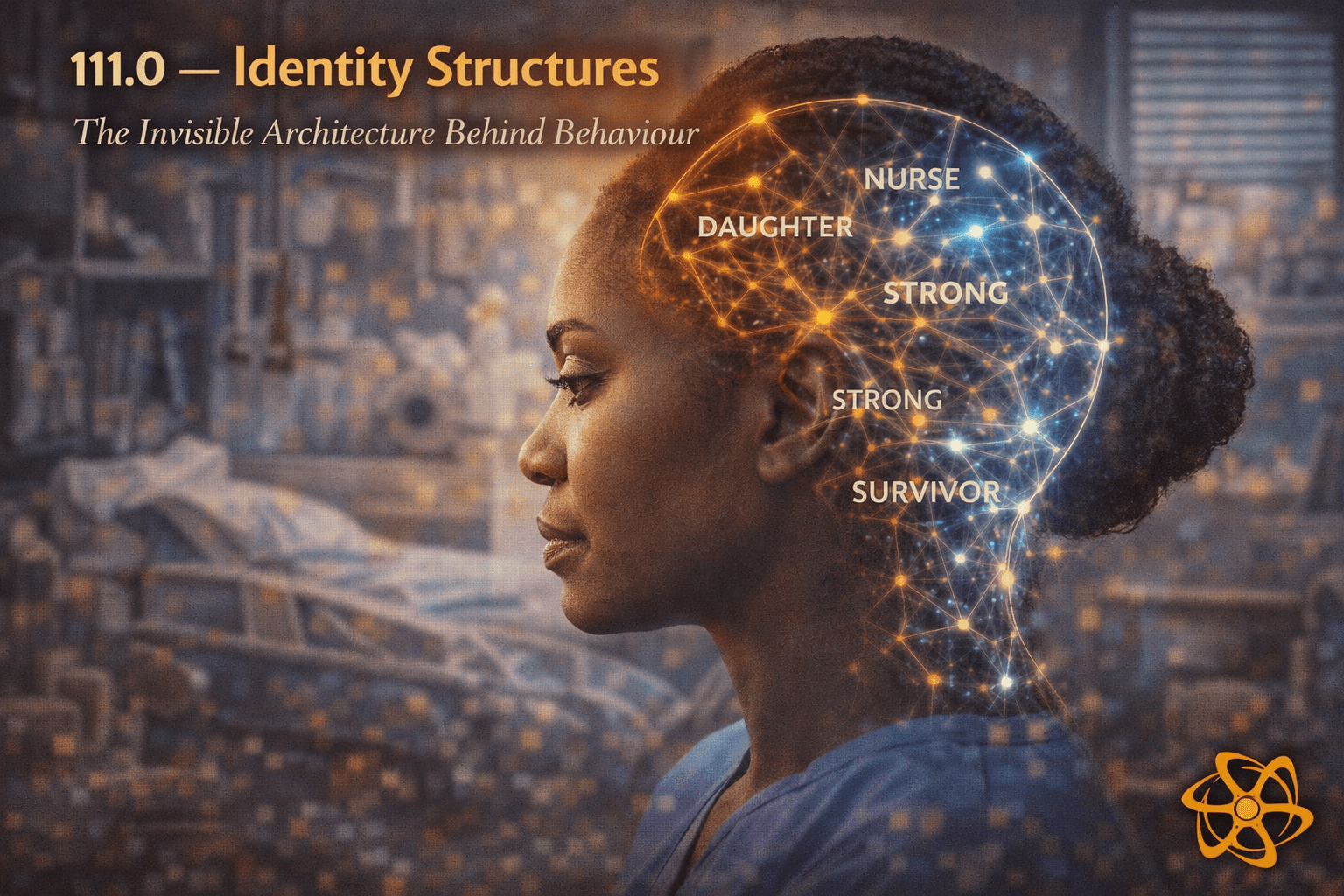
The Invisible Architecture Behind Behaviour
Identity structures matter because behaviour is far removed from willpower alone, and especially because what a person does is organised by who they believe themselves to be.
In coaching, change efforts often focus on actions, habits, or goals. These approaches stall when identity structures remain unexamined. Identity quietly sets the limits of what feels permissible, sustainable, and safe.
This post makes identity structures visible.
1. What Identity Structures Actually Are
Identity structures are the internal frameworks that answer:
- “Who am I?”
- “Who am I allowed to be?”
- “Who must I not become?”
They are shaped by:
- roles
- relationships
- culture
- past outcomes
Identity structures stabilise behaviour.
2. Why Identity Feels Fixed
Identity feels fixed because:
- it is reinforced socially
- it protects belonging
- it reduces uncertainty
Change that threatens identity triggers resistance — even when change is desired.
The system prioritises coherence over improvement.
3. How Identity Organises Behaviour
Identity determines:
- which goals feel legitimate
- which risks feel acceptable
- which options feel available
- which actions feel “like me”
Behaviour aligns with identity even when outcomes are unwanted.
4. Identity Conflict and Internal Friction
Coaching often reveals identity conflict:
- wanting change
- fearing self-betrayal
- oscillating between effort and retreat
This friction is not indecision.
It is identity protection at work.
5. Why Action Fails Without Identity Alignment
Actions fail when they:
- contradict identity
- threaten belonging
- imply a different self
Sustainable change requires identity compatibility.
Action must feel congruent, not imposed.
6. Coaching Identity Without Rewriting It
Effective coaching:
- honours existing identity
- avoids imposing new labels
- expands identity gradually
Identity is not replaced.
It is widened.
7. Identity Expansion as Developmental Process
Identity expands through:
- safe experimentation
- evidence from experience
- reflection and integration
Small actions accumulate new identity data.
Identity evolves through lived proof.
8. From Identity Constraint to Identity Choice
When identity structures are seen:
- rigidity softens
- choice reappears
- behaviour becomes intentional
Clients move from being defined to self-defining.
In Essence
Identity is the architecture behind behaviour.
Coaching creates change when identity structures are respected — and gently expanded.
Key Learning Points (KLPs)
- Identity structures organise behaviour
- Identity protects coherence and belonging
- Resistance often signals identity threat
- Behaviour aligns with identity, not intention
- Sustainable action requires identity compatibility
- Identity expands through safe experimentation
- Awareness restores choice
Action Points (APs)
- Explore identity statements shaping behaviour
- Notice where change feels “not like me”
- Design actions that widen identity safely
Keywords
identity structures, identity coaching, applied wholeness, coaching judgement, behaviour and identity, identity expansion, sustainable change, Enasni Connections