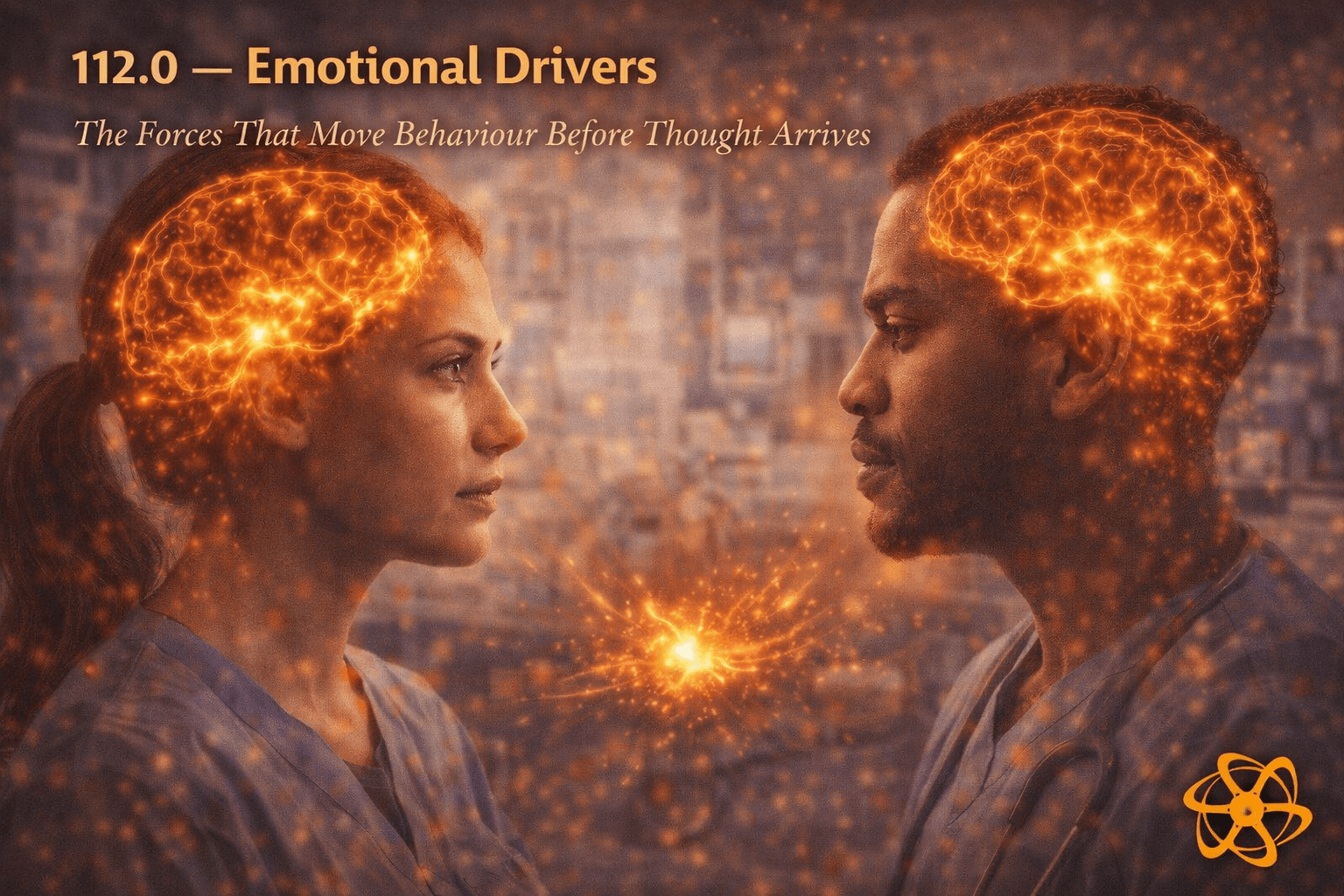
The Forces That Move Behaviour Before Thought Arrives
Emotional drivers matter because behaviour is far removed from logic alone, and especially because emotion moves first — cognition explains later.
In coaching, behaviour is often discussed as choice or habit. In reality, behaviour is frequently initiated, sustained, or avoided due to emotional drivers operating beneath awareness. When these drivers remain unexamined, effort increases and results diminish.
This post brings emotional drivers into clear view.
1. What Emotional Drivers Actually Are
Emotional drivers are the affective forces that:
- initiate action
- inhibit action
- maintain patterns
Common drivers include:
- fear
- shame
- desire
- loyalty
- anger
- hope
Drivers are not problems.
They are energy sources.
2. Why Emotion Moves Before Thought
Neuroscience shows:
- emotional appraisal precedes conscious reasoning
- the body signals before the mind explains
By the time a rationale appears, behaviour is often already underway.
Coaching that ignores emotion misreads motivation.
3. How Emotional Drivers Shape Patterns
Repeated behaviour often reflects:
- fear-driven avoidance
- shame-driven perfectionism
- desire-driven over-efforting
- loyalty-driven self-suppression
Patterns persist because the emotional driver remains active.
4. Positive Emotion Can Still Limit
Not all limiting drivers feel negative.
For example:
- loyalty may block boundary-setting
- hope may delay difficult action
- compassion may enable over-giving
The driver feels virtuous — the outcome still constrains.
Discernment is required.
5. Emotional Drivers vs Rational Explanation
Clients often explain behaviour rationally.
Yet rational explanation frequently follows emotional impulse.
Coaching listens for:
- emotional tone
- intensity shifts
- repeated justifications
These point toward the true driver.
6. Coaching Emotional Drivers Safely
Effective coaching:
- names emotion without amplifying it
- separates emotion from identity
- explores function rather than correctness
Emotion softens when understood.
7. When Emotional Drivers Shift
Drivers shift when:
- safety increases
- identity expands
- emotion is integrated
New emotional drivers emerge — such as curiosity, agency, or grounded confidence.
8. From Emotional Compulsion to Emotional Choice
When drivers are recognised:
- compulsion reduces
- choice returns
- energy becomes available
Emotion becomes information rather than command.
In Essence
Emotion is not the enemy of change.
Unexamined emotion is.
Coaching restores agency by revealing what is truly driving behaviour — and offering new ways to relate to that energy.
Key Learning Points (KLPs)
- Emotional drivers precede cognition
- Behaviour follows emotional energy
- Repeated patterns reveal active drivers
- Positive emotions can still constrain
- Rational explanations often follow emotion
- Naming emotion restores choice
- Integrated emotion supports change
Action Points (APs)
- Listen for emotional tone beneath explanations
- Identify which emotion initiates behaviour
- Explore what the emotion is protecting
Keywords
emotional drivers, behaviour motivation, applied wholeness, coaching judgement, emotion and behaviour, emotional regulation, identity coaching, Enasni Connections