


The coach’s commitment to continuous development defines professional maturity. Coaching is a living discipline, and growth is its ethical responsibility in action.
Coaching is a living profession — one that expands only as its practitioners deepen in awareness and skill. Certification marks the starting line, instead of the finish. The coach’s commitment to continuous development reflects an active responsibility to evolve in competence, discernment, and presence. In alignment with our post on professional code of ethics, this ongoing refinement safeguards clients, strengthens the field, and honours the trust placed in the coaching relationship from a wholeness perspective.
The Practice of Lifelong Learning
The coach’s commitment to continuous development defines professional maturity. Coaching is a living discipline, and growth is its ethical responsibility in action.
True professionalism lives in reflection. Each session holds lessons if we pause to look. Reviewing notes, seeking supervision, or engaging in peer discussion turns experience into wisdom.
Continuous professional development (CPD) keeps skills sharp and ethics current. It’s how we as coaches stays credible, responsive, and aware. Whether through workshops, research, supervision, or coaching oneself, development keeps the craft alive.
The greatest coaches never stop asking,
“What did I learn here?”
Why the Coach’s Commitment to Continuous Development Protects Clients
The coach’s commitment to continuous development safeguards discernment, emotional regulation, and ethical clarity.
Supervision, advanced study, and reflective practice ensure clients receive informed, responsible support. The ICF supports this.
The Benefits of Staying Curious
Growth brings more than technical skill — it refines presence, awareness, and empathy. Regular reflection strengthens emotional resilience and humility. We begin to see patterns, anticipate resistance, and hold space with steadier grace.
Professional development is less self-indulgence; and more maintenance. Without the coach’s commitment to continuous development, skill plateaus and insight narrows.
Just as a musician tunes their instrument, we as coaches must tune their mindset.
The Structure Behind Professional Growth
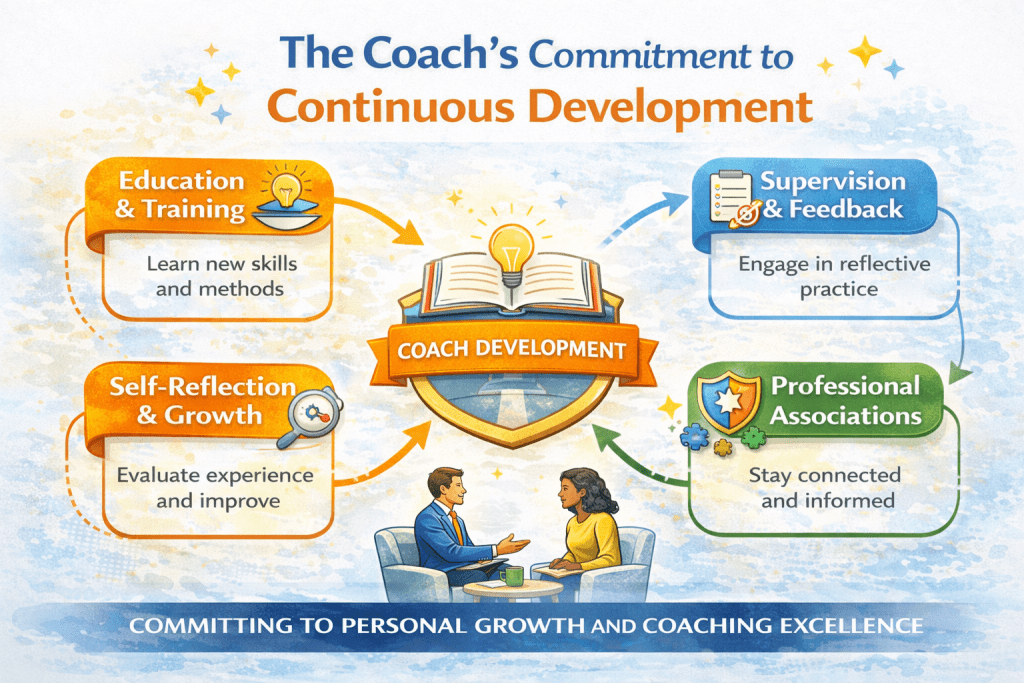
The coach’s commitment to continuous development is far removed from the notion of abstract motivation; but rather ought be seen as structured discipline. Ongoing supervision provides reflective challenge. Advanced training expands theoretical range. Peer dialogue sharpens perspective. Research engagement refines evidence-based practice.
The coach’s commitment to continuous development also strengthens regulation. Emotional maturity, bias awareness, and ethical discernment evolve through deliberate reflection rather than assumption.
Growth is cumulative. Each workshop, supervision session, and case reflection compounds professional capacity. Over time, the coach’s commitment to continuous development becomes visible in clarity of questioning, steadiness of presence, and depth of listening.
Sustained development fails to create perfection; and succeeds at cultivating precision. Clients end up benefitting from a practitioner whose thinking remains current and whose awareness continues expanding.
Key Learning Points
- Continuous development ensures long-term competence and confidence.
- Reflective practice transforms experience into wisdom.
- Supervision and training sustain ethical awareness.
- Professional growth enhances emotional intelligence and resilience.
- A curious coach becomes a better listener and partner in change.
Action Points
- Schedule structured time for CPD every quarter.
- Engage in regular supervision or peer coaching to gain perspective.
- Keep a reflective journal to capture insights and growth patterns.
In Essence
Ultimately, the coach’s commitment to continuous development sustains trust and keeps the profession alive and tethered to its origins.
The best coaches chase mastery — they cultivate it quietly, one reflection at a time.
At Enasni, development cannot be optional. It’s devotion — a lifelong act of respect for the humans we serve and the work they also bring to the table.
The coach’s commitment to continuous development ensures that skill does not stagnate and that insight continues sharpening over time. It reinforces ethical awareness, strengthens emotional regulation, and keeps practice aligned with current standards. Growth sustains credibility, and credibility sustains trust.