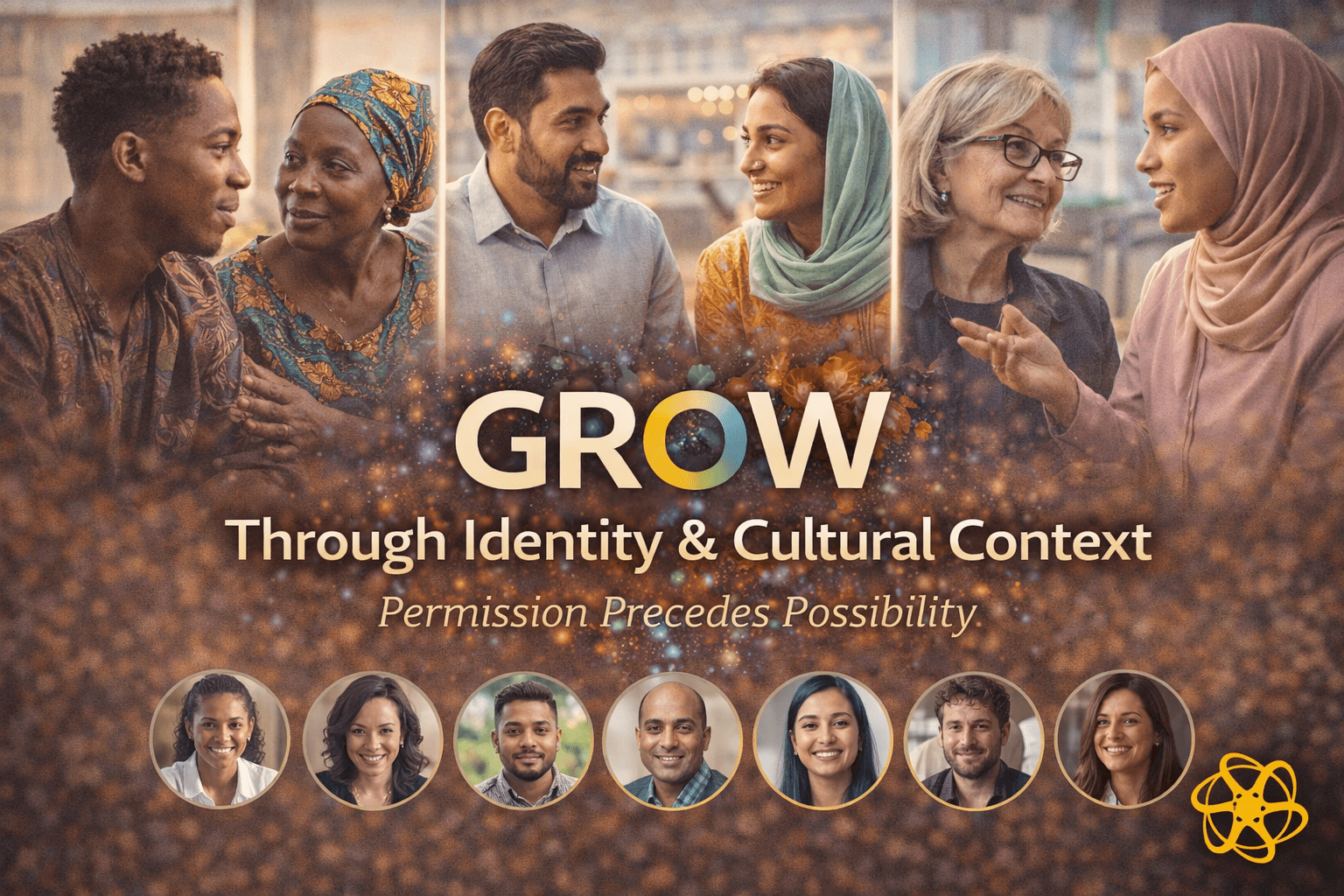
Permission Precedes Possibility
GROW through identity and cultural context matters because intention is far removed from permission, and especially because what feels possible is shaped by who a person is allowed to be — in context.
Goals, realities, options, and actions do not arise in isolation. They emerge within identity structures, cultural narratives, and social permissions that quietly define the edges of choice.
This post reframes GROW as a context-aware process, not an individual one.
1. Why Identity Shapes Every Stage of GROW
Identity answers:
- “Who am I?”
- “Who am I allowed to be?”
These answers shape:
- what goals feel legitimate
- what realities are acknowledged
- what options feel permissible
- what actions feel safe
GROW moves inside identity boundaries unless those boundaries are examined.
2. Goal Through Identity & Culture
Goals are filtered through:
- role expectations
- gender, class, race, profession
- family narratives
- organisational norms
A goal may feel unrealistic not because it is unattainable, but because it violates an identity contract.
Permission precedes aspiration.
3. Reality as a Cultural Construction
Reality is interpreted through cultural lenses.
Culture shapes:
- what is named as “normal”
- what is dismissed as “unreasonable”
- what is rewarded or punished
Coaching reality includes understanding whose rules are being followed.
4. Options and Cultural Permission
Options collapse when:
- they challenge belonging
- they threaten identity safety
- they violate unspoken norms
“What would people think?” is often the real question behind limited options.
5. Way Forward and Identity Risk
Actions feel risky when they:
- alter self-image
- disrupt roles
- change relational dynamics
Resistance here is not laziness.
It is identity protection.
6. Coaching Identity Without Rewriting It
Wholeness-informed coaching:
- honours identity
- avoids imposing new narratives
- expands permission gently
Identity is not dismantled.
It is widened.
7. Cultural Humility in Coaching
Effective coaching requires:
- curiosity about context
- awareness of privilege and constraint
- avoidance of universal assumptions
What works in one context may harm in another.
Judgement replaces generalisation.
8. GROW as Permission Work
Through identity and culture, GROW becomes:
- permission work
- dignity work
- context-sensitive growth
Choice expands as belonging is preserved.
In Essence
People do not fail to grow because they lack ambition.
They fail because growth threatens identity and belonging.
GROW succeeds when coaching honours who someone is — and gently expands who they are allowed to become.
Key Learning Points (KLPs)
- Identity shapes perceived possibility
- Culture defines permission boundaries
- Goals must feel legitimate within identity
- Reality is culturally interpreted
- Options collapse when belonging is threatened
- Resistance often protects identity
- Context-aware coaching preserves dignity
Action Points (APs)
- Explore identity and role expectations shaping goals
- Name cultural norms influencing choices
- Pace change to protect belonging
Keywords
GROW identity coaching, cultural context coaching, applied wholeness, identity safe coaching, coaching judgement, systemic coaching, permission work, Enasni Connections