The Invisible Barriers Before the First Client
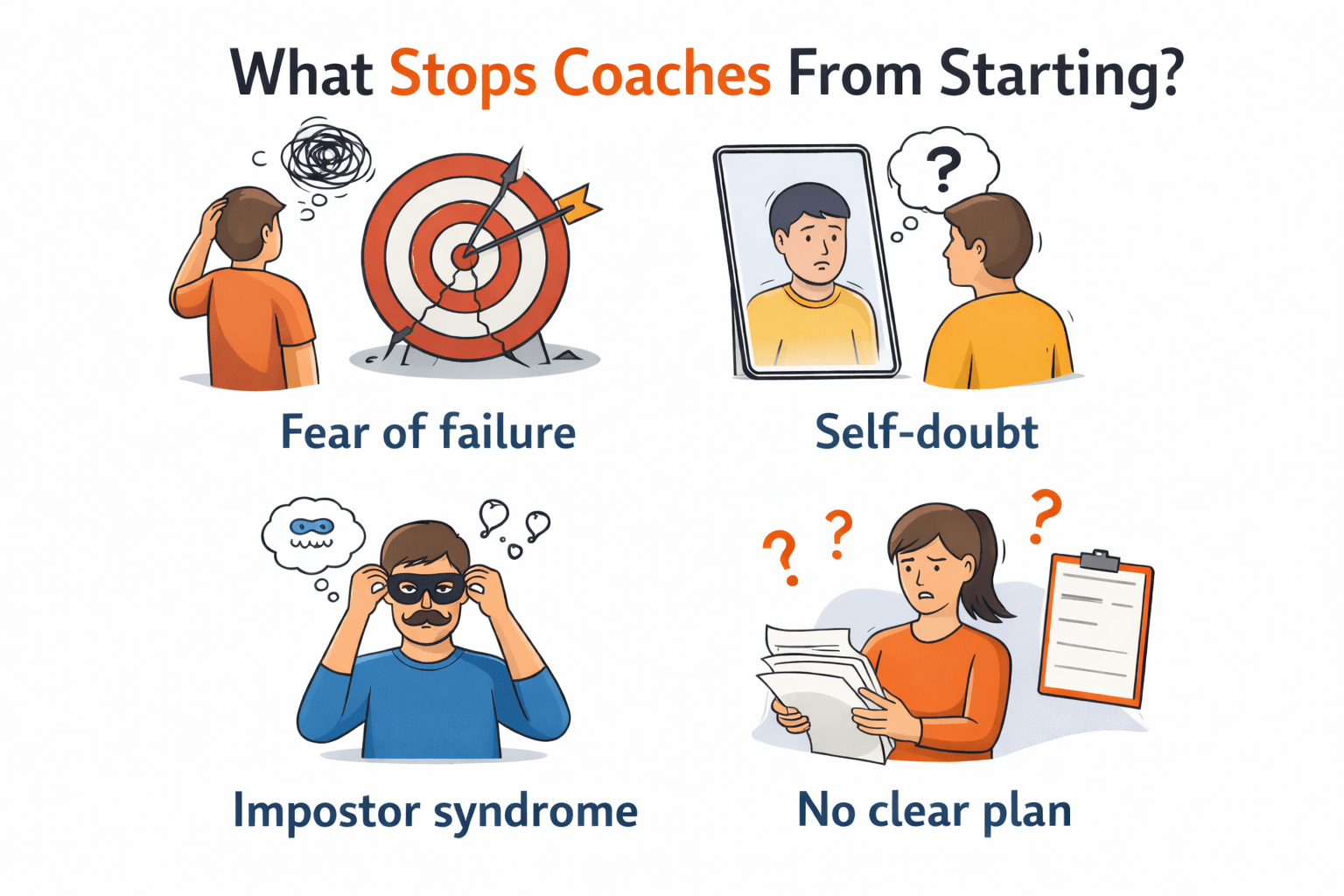
What stops coaches from starting matters because hesitation is far removed from lack of capability, and especially because many coaches delay beginning not due to incompetence, but due to unexamined belief, identity tension, and misplaced standards.
In coaching development, starting is often framed as a logistical step. In reality, starting is a psychological and relational threshold.
This post names what actually sits in the way from a wholeness perspective.
1. The Myth of “Ready”
Many coaches wait to feel ready.
Readiness is often imagined as:
- total confidence
- perfect clarity
- absence of doubt
This state rarely arrives.
Readiness is not a prerequisite.
It is a by-product of starting.
2. Fear of Incompetence Disguised as Responsibility
Common internal narratives include:
- “I need more training first.”
- “I don’t know enough yet.”
- “What if I do harm?”
While ethical caution matters, it often blends with fear of exposure.
Responsibility becomes a mask for avoidance.
3. Identity Tension: “Who Am I to Coach?”
Starting coaching activates identity questions:
- legitimacy
- authority
- permission
Many coaches struggle not with skill, but with inhabiting the role.
The transition from learner to practitioner requires identity expansion.
4. Comparison Paralysis
Exposure to polished coaches online creates:
- inflated standards
- distorted timelines
- performance pressure
Comparison replaces curiosity.
Coaches forget that mastery shown publicly reflects years of unseen practice.
5. The Fear of Real Clients
Practice sessions feel safe.
Real clients introduce:
- unpredictability
- responsibility
- emotional impact
Fear here is not irrational.
It signals the seriousness of the work.
Avoidance delays learning.
6. Over-Attachment to Technique
Some coaches delay starting because:
- tools are not “perfected”
- frameworks feel incomplete
Technique becomes a substitute for presence.
Coaching happens through relationship, instead of perfection.
7. How Mastery Actually Develops
Mastery develops through:
- early imperfection
- reflective practice
- supervision
- real feedback
No amount of preparation replaces lived experience.
8. Starting as a Developmental Act
Starting is far removed as proof of mastery.
It is a commitment to development instead.
Coaches grow by coaching.
In Essence
Coaches are rarely stopped by lack of ability.
They are stopped by belief, identity, and unrealistic expectations.
Starting is not the reward at the end of readiness — it is the beginning of becoming.
Key Learning Points (KLPs)
- Readiness is a by-product, not a prerequisite
- Responsibility can mask fear of exposure
- Identity expansion is required to start coaching
- Comparison distorts perception of competence
- Technique cannot replace presence
- Mastery develops through real practice
- Starting is a developmental milestone
Action Points (APs)
- Identify beliefs delaying the start
- Separate ethical caution from avoidance
- Begin with supervision and reflective practice
Keywords
what stops coaches from starting, coaching confidence, applied wholeness, coaching judgement, identity transition, coaching readiness, professional development, Enasni Connections